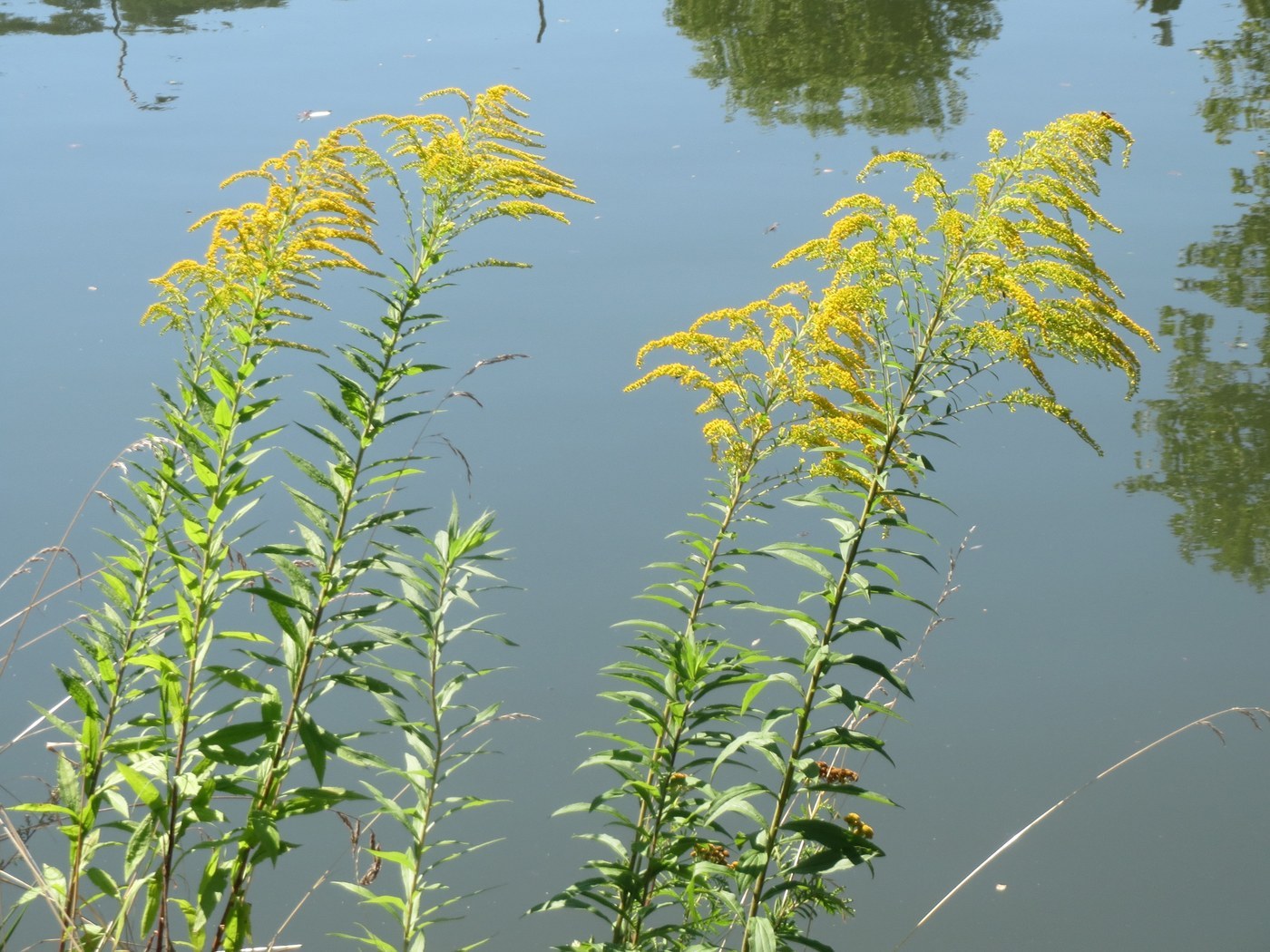
Goldenrod
Solidago canadensis
A tough, late-season perennial wildflower that lights up fields and roadsides with plumes of tiny golden flowers. Its heavy, sticky pollen is spread by insects rather than wind.
- Light
- Full sun
- Water
- Low to moderate; drought tolerant once established
- Difficulty
- Easy
Got a plant like this?
Identify any plant from a photo, free.
Overview
Goldenrod is the common name for Solidago, a genus of well over 100 species of perennials native largely to North America. It blooms from late summer into autumn, providing one of the season's most important nectar sources for pollinators.
Its pollen is heavy, sticky, and carried by insects rather than the wind, unlike ragweed, which blooms at the same time and releases wind-borne pollen.
Many species spread by rhizomes to form colonies, making goldenrod a vigorous addition to prairies, meadows, and naturalistic borders.
How to identify it
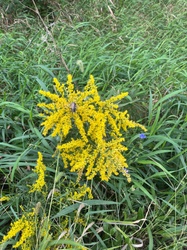
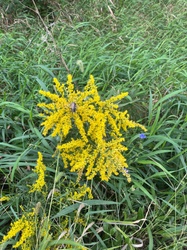
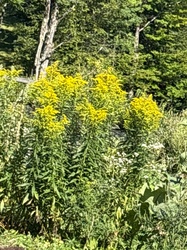
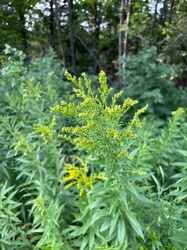
Look for arching or upright stems topped with branched clusters of small yellow flowers in late summer and fall.
- Flowers: Tiny golden-yellow daisy-like heads packed into plume-shaped or flat-topped clusters
- Leaves: Narrow, lance-shaped, often toothed, alternate along the stem
- Stems: Erect, usually unbranched below the flower cluster
- Size: Commonly 1 to 5 feet (0.3 to 1.5 m) tall depending on species
- Habit: Often colony-forming via spreading rhizomes
Care & growing
Goldenrod is undemanding and thrives in lean conditions.
- Light: Full sun for the best flowering and sturdiest stems
- Water: Drought tolerant once established; tolerates average to dry soil
- Soil: Adapts to poor, sandy, or clay soils; rich soil can encourage flopping
- Temperature: Hardy across a wide range; most are cold-hardy perennials
- Feeding: None needed
- Propagation: By seed, division, or rhizome spread; clumping cultivars like 'Fireworks' are tidier for gardens
Habitat & origin
Most goldenrods are native to North America, with additional species in Mexico, South America, and Eurasia. Solidago canadensis is widespread across the United States and Canada.
They colonize open fields, prairies, meadows, roadsides, forest edges, and disturbed ground. Some species, introduced to Europe and Asia, have become invasive there.
In gardens, well-behaved clumping cultivars are popular for late-season color in pollinator and native plantings.
Frequently asked questions
Is goldenrod invasive in the garden?
Some wild species spread aggressively by rhizomes, but well-behaved clumping cultivars such as 'Fireworks' stay tidy.
When does goldenrod bloom?
From late summer into autumn, making it one of the last major nectar sources before winter.
How can I identify goldenrod?
Look for arching or upright stems topped with branched, plume-shaped or flat-topped clusters of tiny golden-yellow flower heads in late summer and fall, with narrow, lance-shaped leaves along the stem.
Goldenrod guides
In-depth guides for identifying, growing, and caring for Goldenrod.
How to Care for Goldenrod
Grow Goldenrod (Solidago canadensis) for reliable late-summer gold. A tough, sun-loving native perennial that thrives on neglect and poor soil.
Goldenrod Identification Guide
Identify Goldenrod (Solidago) by its arching plumes of tiny golden-yellow flowers and lance-shaped leaves. This guide also clears up the common confusion with allergy-causing ragweed.
Goldenrod identified by the community
Real specimens identified with Plant Identifier.