
Gooseberry Identification Guide
A practical guide to recognizing gooseberry (Ribes uva-crispa and American Ribes species) by its thorny arching stems, lobed maple-like leaves, and striped translucent berries.
Read the full Gooseberry encyclopedia entry →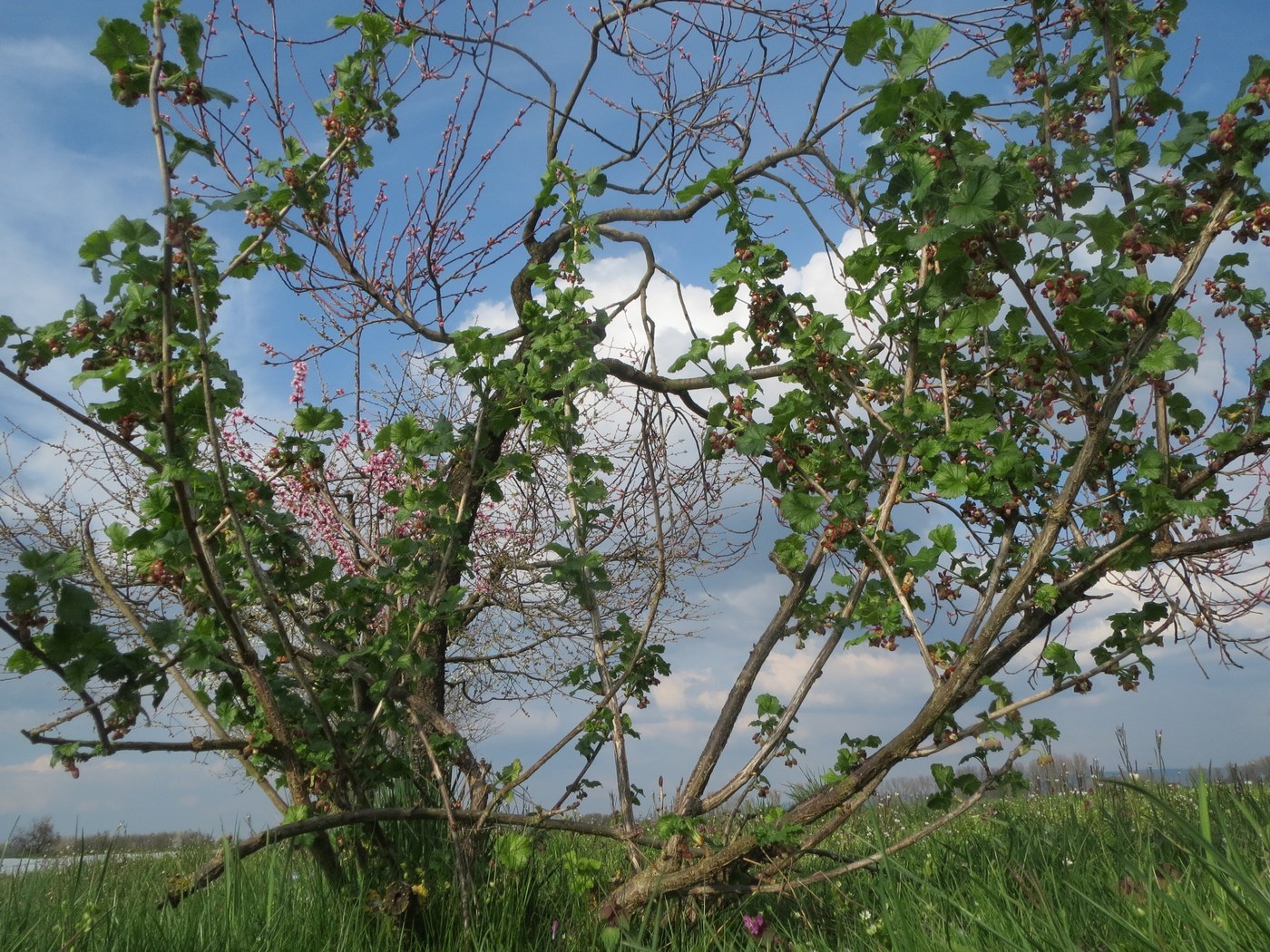
Key Identifying Features
Gooseberry is a low, spiny deciduous shrub in the currant genus Ribes, typically 3-5 ft tall and wide, forming a dense rounded mound of arching, often tangled branches. The most reliable single clue is the combination of sharp spines at each leaf node and small, rounded, lobed leaves clustered on short spurs. Unlike true currants (which are spineless), gooseberries almost always carry thorns.
- Spines: 1-3 stiff thorns at every node, sometimes with smaller bristles along the stems
- Growth: dense, low, multi-stemmed and arching, often wider than tall
- Berries: borne singly or in pairs (not long clusters), round to oval, often translucent with visible vertical veins
Leaves & Stems
Leaves are small (1-2 in.), palmately lobed with 3-5 rounded lobes, resembling a tiny maple or currant leaf, with toothed margins. They emerge early in spring on short spur shoots and are dull green, sometimes slightly hairy beneath. Stems are gray-brown, and on older European gooseberry the bark peels in thin strips. New growth is greenish and bears the characteristic nodal spines. Crushed leaves lack the strong scent of black currant.
Flowers & Fruit
Flowers are small, bell-shaped, and greenish to pinkish, hanging singly or in pairs from the leaf axils in early spring. They are easy to overlook. The fruit is the giveaway: a round to egg-shaped berry, 0.5-1 in., ripening green, yellow, red, or purple depending on cultivar. Most have translucent skin with distinct longitudinal veins and a small bristly or smooth tip where the old flower remains attached. Berries hang under the branches, partly hidden by leaves.
How to Tell It Apart from Look-Alikes
- Currants (red/black): No spines; fruit in long hanging clusters (strigs) rather than singles or pairs.
- Wild Ribes / mountain gooseberry: Same genus and very similar; identify by region and berry color rather than worrying about distinguishing them.
- Buffaloberry: Has silvery scaly leaves arranged oppositely; gooseberry leaves are green and alternate.
- Blackberry/bramble: Far longer canes, compound leaves with leaflets, and aggregate (raspberry-like) fruit, not single veined berries.
Where You'll Find It
Cultivated gooseberries grow in temperate gardens worldwide. Wild and naturalized Ribes favor cool, moist woodland edges, hedgerows, ravines, and rocky slopes across the northern hemisphere. They tolerate part shade and like rich, well-drained soil. In North America several native gooseberries grow wild in forests and along streams.
Quick ID Checklist
- Low arching shrub, 3-5 ft, denser than tall
- Sharp spines at the leaf nodes
- Small 3-5 lobed maple-like leaves on short spurs
- Berries single or paired, round, often translucent with vertical veins
- Small greenish-pink bell flowers in early spring
- Cool, moist temperate habitat or garden bed
Frequently asked questions
How do I tell a gooseberry from a currant bush?
Gooseberries have spines at the leaf nodes and bear berries singly or in pairs, while currants are thornless and produce berries in long hanging clusters.
Are the translucent veins on the berry a reliable sign?
Yes. Most gooseberries show distinct longitudinal (lengthwise) veins through a semi-translucent skin, which is one of the easiest features to confirm in hand.
What color are ripe gooseberries?
It varies by cultivar — they can ripen green, yellow, amber, red, or deep purple. The small bristly or smooth tip where the old flower remains attached is another consistent feature.
What features best identify a gooseberry shrub?
Look for a low, dense, arching shrub with sharp spines at the leaf nodes, small 3-5 lobed maple-like leaves on short spurs, and round to oval berries borne singly or in pairs.