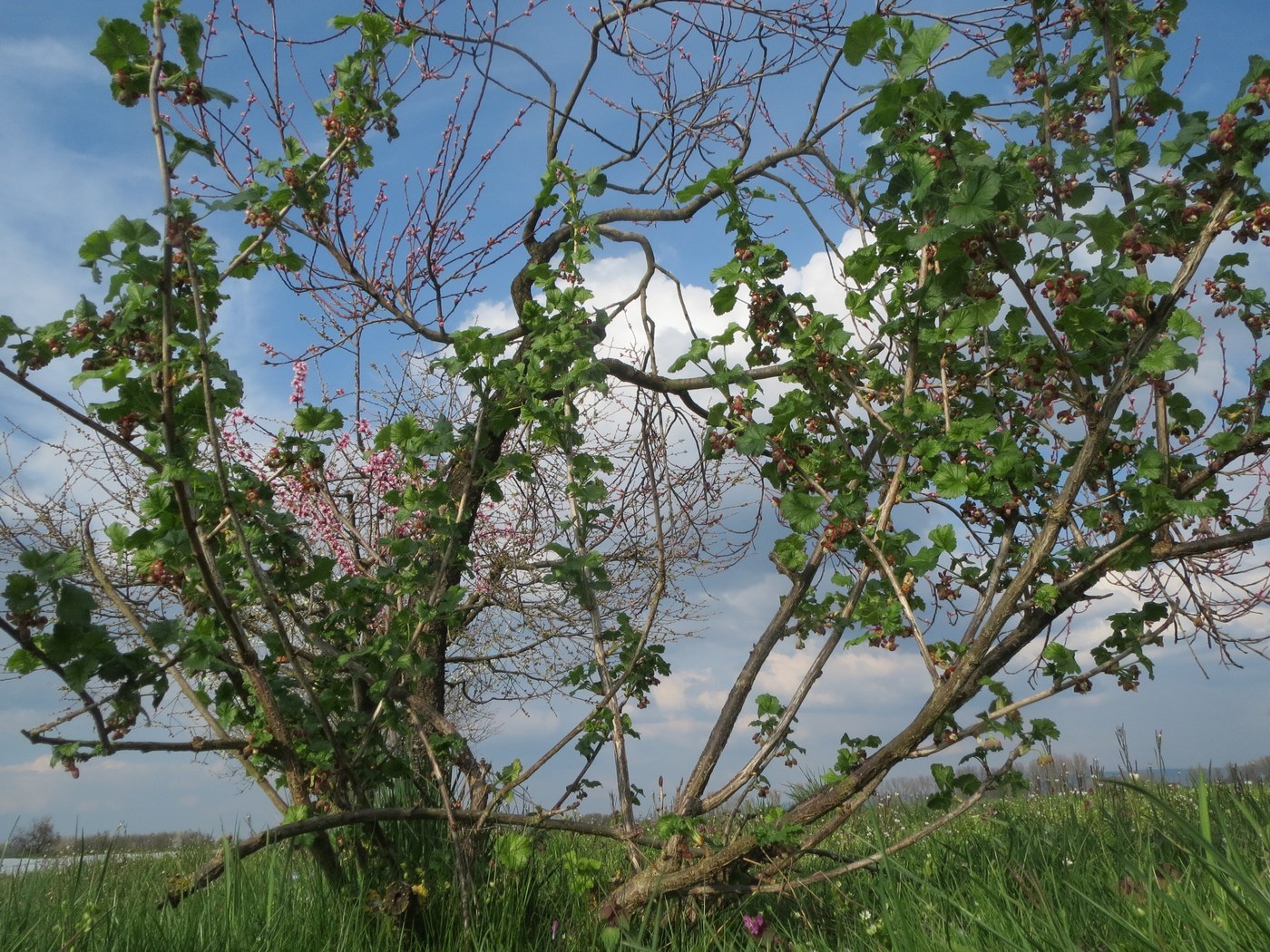
Gooseberry
Ribes uva-crispa
A thorny deciduous shrub in the currant family that produces translucent berries on arching, spiny stems. It is hardy, productive and tolerant of cool climates.
- Light
- Full sun to partial shade
- Water
- Keep evenly moist; weekly in dry spells
- Difficulty
- Easy
Got a plant like this?
Identify any plant from a photo, free.
Overview
The gooseberry is a compact, spiny deciduous shrub in the genus Ribes, closely related to currants. It has been cultivated in Europe for centuries and remains a backyard favorite in Britain and northern Europe.
Plants grow to roughly 1 m tall and wide, forming a dense, arching tangle of thorny stems. Berries ripen in early to mid-summer and range from green to red, yellow or purple depending on cultivar.
Gooseberries are valued for thriving in cooler, partially shaded gardens where many fruits struggle, and for cropping heavily with little intervention.
How to identify it
Look for a low, rounded, very thorny shrub bearing small lobed leaves and pendant berries.
- Leaves: Small, 3- to 5-lobed, maple-like, 2-5 cm wide, dull green
- Stems: Arching and woody, armed with sharp spines at the leaf nodes
- Flowers: Small, greenish to pink-tinged, bell-shaped, in spring
- Fruit: Round to oval berries 1-2.5 cm, often with translucent skin and visible veins; green, red, yellow or purple
- Size: Typically 0.6-1.2 m tall and wide
Care & growing
Gooseberries are forgiving and well suited to cool-temperate gardens.
- Light: Full sun for the best fruiting, but tolerates partial shade
- Water: Keep soil evenly moist, especially as fruit swells; mulch to conserve moisture
- Soil: Fertile, well-drained loam, slightly acidic to neutral
- Temperature: Very cold-hardy (to about -30C); needs winter chill to fruit well
- Feeding: A balanced or potash-rich feed in late winter; avoid excess nitrogen
- Propagation: Hardwood cuttings in autumn root readily; prune to an open goblet shape to improve airflow and reduce mildew
Habitat & origin
Ribes uva-crispa is native to Europe, the Caucasus and northern Africa, growing wild in hedgerows, woodland edges and rocky slopes.
It is widely cultivated across Britain, northern and central Europe, and cool regions of North America. It prefers climates with cold winters and mild, moist summers and dislikes intense heat.
Frequently asked questions
Why are my gooseberries covered in white powder?
That is American gooseberry mildew. Improve airflow with open pruning, avoid overhead watering, and choose resistant cultivars.
Do gooseberries need a pollination partner?
No, they are self-fertile, so a single bush will still crop well.
How long until a new bush fruits?
Plants usually begin cropping in their second or third year and are productive for 10-15 years.
Gooseberry guides
In-depth guides for identifying, growing, and caring for Gooseberry.
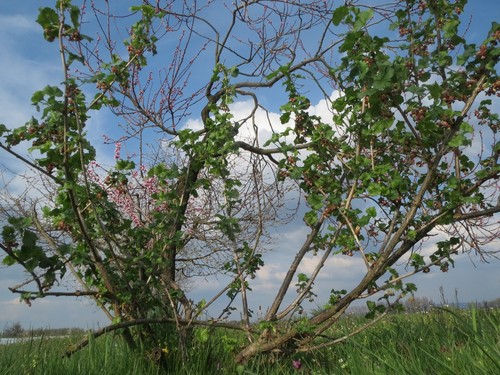
How to Care for Gooseberry
An easy, cool-climate deciduous shrub; give it sun to part shade, rich moist soil, and annual pruning for a healthy, well-shaped bush.
Gooseberry Identification Guide
A practical guide to recognizing gooseberry (Ribes uva-crispa and American Ribes species) by its thorny arching stems, lobed maple-like leaves, and striped translucent berries.