
Grand Fir Identification Guide
How to identify Grand Fir (Abies grandis) by its flat, glossy needles arranged in two neat horizontal rows and its strong citrus-tangerine scent when crushed. Covers fir vs. spruce and other firs.
Read the full Grand Fir encyclopedia entry →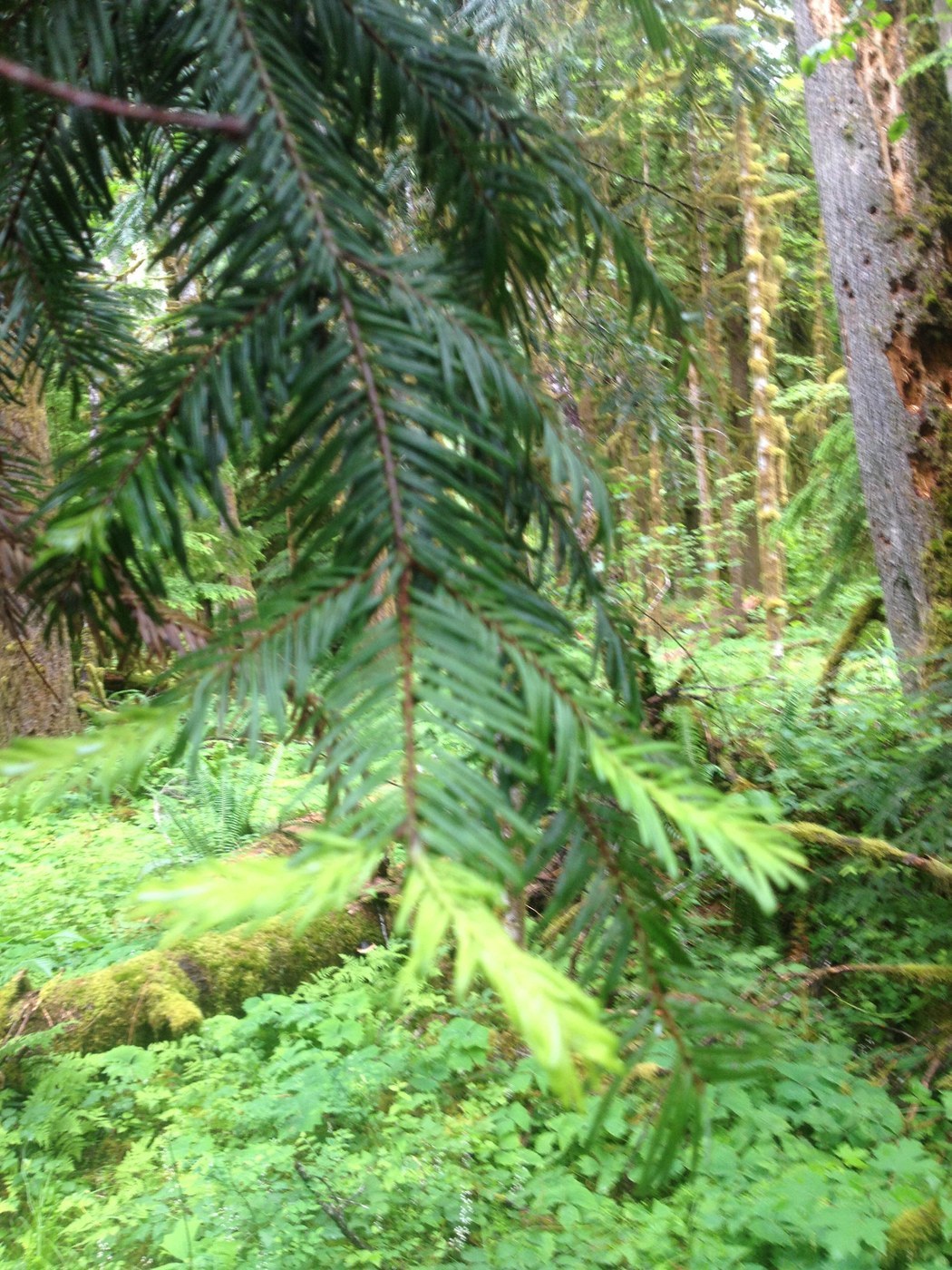
Key Identifying Features
Grand Fir (Abies grandis) is a tall Pacific Northwest fir easily recognized by needles that lie in two flat, comb-like horizontal rows and a strong citrus or tangerine fragrance when crushed. Like all true firs, it has flat needles attached by suction-cup-like bases and upright cones that disintegrate on the tree.
Leaves & Stems
- Needles flat and grooved on top, glossy dark green above with two white stomatal bands beneath, and rounded or notched at the tip (not sharp).
- Arranged in two distinct horizontal rows spreading out from the twig, giving a flattened, two-ranked spray — a hallmark of Grand Fir.
- Needles of varying lengths, roughly 1 to 2 inches, longer ones outermost.
- Crushed needles release a strong citrus/orange smell.
- Twigs smooth; needle bases leave flat, round scars (not the woody pegs of spruce).
Flowers & Fruit
- Seed cones upright (erect) on the upper branches, 2 to 4 inches long, green to brownish.
- Cones break apart on the tree at maturity, scattering scales and seeds, so whole fir cones are rarely found on the ground — only the central spikes remain.
- Bracts are hidden, not protruding.
How to Tell It Apart from Look-Alikes
- Spruces have sharp, square needles on woody pegs that roll between the fingers and hanging cones; firs have flat, soft needles and upright cones.
- Douglas-fir (not a true fir) has needles all around the twig and hanging cones with three-pointed bracts sticking out.
- Pacific silver fir and subalpine fir have needles that sweep upward over the twig rather than lying in two flat rows.
- Noble/red fir have needles curving upward and grow at higher elevations.
- The flat two-ranked spray plus citrus scent points to Grand Fir.
Where You'll Find It
Moist valleys and lower mountain slopes of the Pacific Northwest — coastal Oregon and Washington, the northern Rockies of Idaho and Montana, and British Columbia — often in mixed forest along streams at low to mid elevations. Popular as an ornamental and Christmas tree for its glossy foliage.
Quick ID Checklist
- Flat needles in two horizontal rows, notched tips
- Two white bands underneath; glossy green above
- Strong citrus/tangerine smell when crushed
- Upright cones that fall apart on the tree
- Smooth twigs with round flat needle scars
Frequently asked questions
What does Grand Fir smell like?
Crushed Grand Fir needles release a strong citrus or tangerine scent, which is one of the easiest ways to confirm the species.
How can I tell Grand Fir from a spruce?
Grand Fir has flat, soft needles that lie in two flat rows and leave round scars, plus upright cones. Spruces have sharp, square needles on woody pegs and hanging cones.
Why don't I find whole Grand Fir cones on the ground?
True fir cones, including Grand Fir, sit upright and disintegrate on the branch at maturity, dropping scales and seeds while the central spike stays on the tree.
How is Grand Fir different from subalpine and Pacific silver fir?
Grand Fir needles spread in two flat horizontal rows, while those firs have needles that sweep up and over the top of the twig, and they grow at higher elevations.