
How to Care for Grass Pink Orchid
Grow the Grass Pink Orchid in sun and constantly moist, acidic bog conditions for vivid magenta flowers — a specialist terrestrial orchid.
Read the full Grass Pink Orchid encyclopedia entry →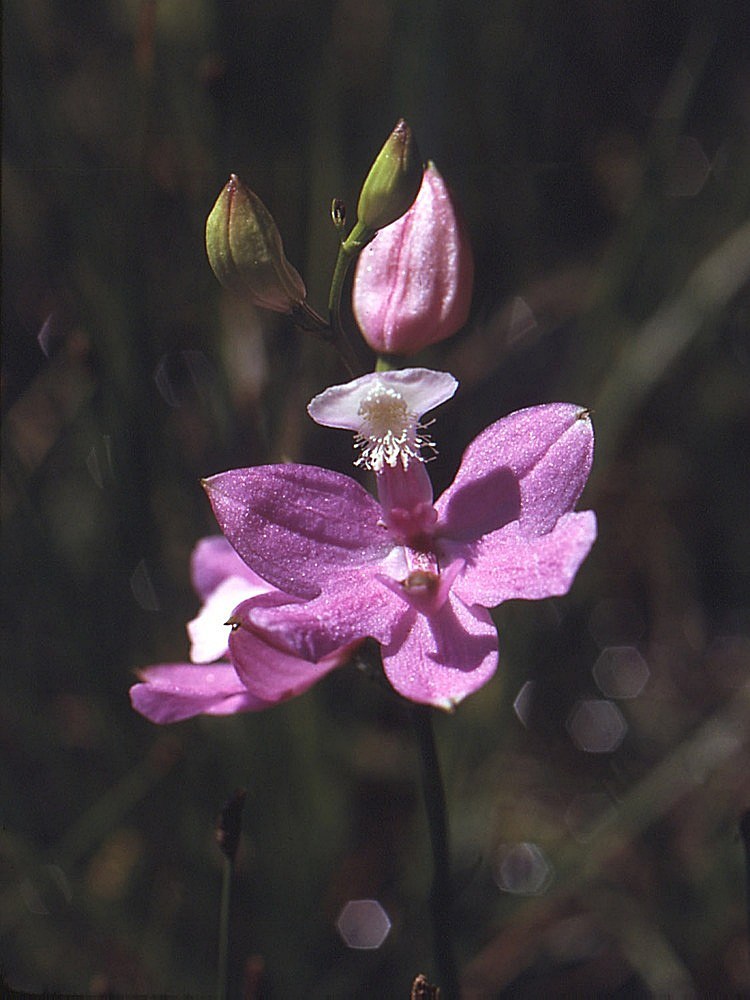
The Grass Pink Orchid (Calopogon tuberosus) is a striking terrestrial bog orchid producing spikes of vivid magenta-pink flowers above grassy foliage. It is a challenging plant that demands specialized constantly moist, acidic bog conditions and bright light, making it a rewarding project for the dedicated grower.
Light
Give the Grass Pink Orchid full sun to light shade. As a native of open, sunny bogs and wet meadows, it needs bright light to flower well and to keep its slender foliage sturdy. Insufficient light leads to weak, floppy growth and few blooms.
Water
This orchid requires constantly moist conditions and never dries out during the growing season. Its roots and corm sit in permanently damp, acidic bog media. Use pure, low-mineral water such as rainwater or distilled water — tap water minerals harm bog plants. Keep the medium saturated in spring and summer, then reduce moisture as the plant goes dormant in fall.
Soil & Potting
Grow it in an acidic, low-nutrient bog mix such as live sphagnum moss combined with peat and coarse sand. The medium must stay wet yet not stagnant. A tall pot standing in a tray of pure water, or a dedicated bog garden, keeps the roots consistently moist. Never use ordinary rich potting soil or fertilizer-laden mixes, which will kill it.
Humidity & Temperature
The Grass Pink appreciates high humidity around its foliage, matching its native wetland habitat. It is a temperate, cold-hardy orchid that requires a genuine cold winter dormancy: as temperatures drop, the corm rests dormant beneath the surface and must experience winter chill to bloom the following year. Keep it cool and barely moist through dormancy.
Feeding
Feed very sparingly, if at all. Bog orchids are adapted to nutrient-poor conditions and are easily damaged by fertilizer. A greatly diluted, low-strength orchid feed applied occasionally during active growth is the most it should ever receive; when in doubt, do not feed.
Propagation
Propagate by dividing the corms during winter dormancy, separating offset corms that form beside the parent. It can also be raised from its dust-fine seed, but seed propagation requires sterile flasking techniques and is slow and difficult, so division is the practical home method.
Repotting / Pruning
Repot during dormancy in late winter, refreshing the sphagnum and bog medium every year or two to keep it clean and acidic. Handle the small corms gently and reset them just below the surface. No real pruning is needed — simply remove spent flower spikes and let the foliage die back naturally into dormancy.
Common Problems & Pests
The biggest risks are cultural: mineral-laden water, drying out, and overly rich media all quickly cause decline. Crown or corm rot can set in if the medium is stagnant rather than fresh and saturated. Skipping the winter cold dormancy prevents flowering. Pests are few, though slugs and aphids may target soft new growth in a bog setup.
Seasonal Care Tips
Start active growth in spring with warmth, sun, and constant moisture, and enjoy the magenta blooms in late spring to summer. Keep the medium saturated all season with pure water. As fall arrives let the plant die back and provide a cold, barely moist dormancy through winter, then repot or divide before growth resumes.
Frequently asked questions
Why is the Grass Pink Orchid considered hard to grow?
It demands very specific bog conditions: constantly moist, acidic, low-nutrient media, pure mineral-free water, bright light, and a genuine cold winter dormancy. Getting all of these right at once makes it a specialist plant.
What kind of water should I use for a Grass Pink Orchid?
Use only low-mineral water such as rainwater or distilled water. The minerals in tap water build up and damage this bog orchid, so mineral-free water is essential.
Does the Grass Pink Orchid need a winter rest?
Yes. It requires a genuine cold winter dormancy, during which the corm rests below the surface. Without this cold rest period it will fail to bloom the following season.
What soil mix does a Grass Pink Orchid need?
Use an acidic, low-nutrient bog mix such as live sphagnum moss with peat and coarse sand, kept constantly wet. Never use regular potting soil or fertilizer-rich media, which will kill it.