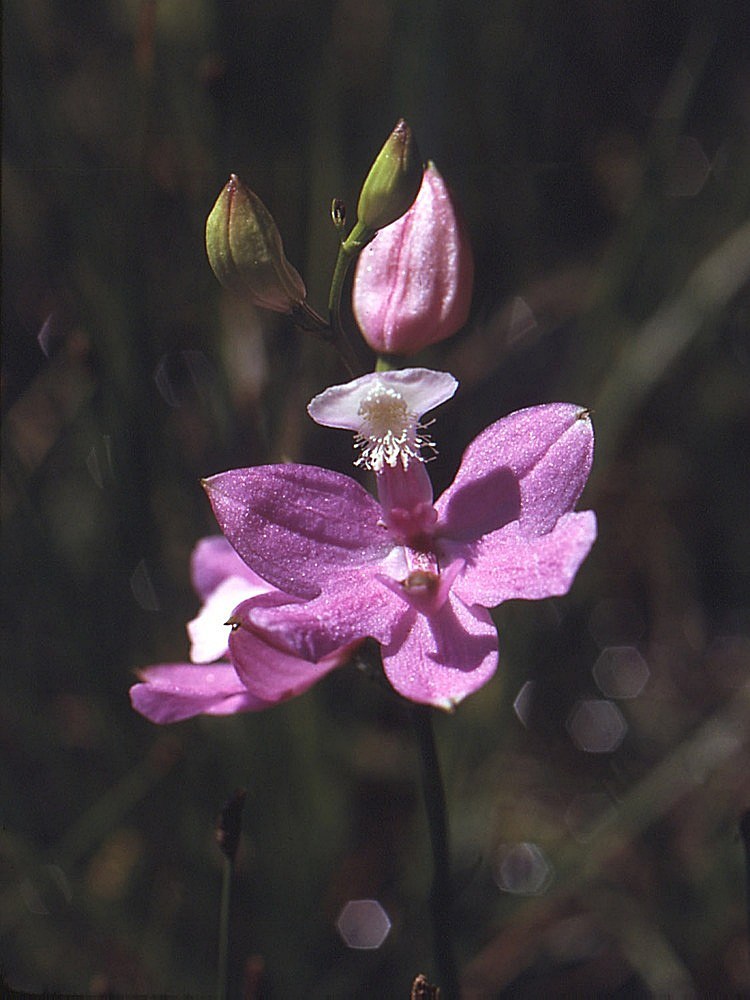
Grass Pink Orchid
Calopogon tuberosus
Grass Pink is a North American terrestrial bog orchid known for its magenta-pink, non-resupinate blooms whose lip sits on top of the flower. It grows from a corm in acidic wetlands and is notoriously difficult to cultivate outside its native habitat.
- Light
- Full sun to light shade
- Water
- Constantly moist, acidic bog conditions
- Difficulty
- Hard
Got a plant like this?
Identify any plant from a photo, free.
Overview
Grass Pink (Calopogon tuberosus) is a hardy terrestrial orchid native to wetlands across eastern and central North America. It produces a slender, grass-like leaf and an upright spike of vivid pink to magenta flowers in late spring and summer.
Unlike most orchids, its flowers are non-resupinate, meaning the lip (labellum) is held at the top rather than the bottom. The bright yellow, bristle-like hairs on the lip mimic pollen-bearing stamens, tricking bees into landing.
It is a prized native wildflower but a challenge in cultivation, requiring acidic, perpetually wet bog conditions that few gardeners can replicate.
How to identify it
Look for these distinguishing traits:
- A single narrow, grass-like leaf emerging from the base, often as tall as the flower stalk
- An erect spike bearing 2 to 15 magenta-pink flowers that open in succession
- Non-resupinate flowers with the showy, fringed lip positioned at the top
- A cluster of yellow, club-tipped hairs on the lip mimicking pollen
- Overall height of 30 to 90 cm (12 to 36 in), growing from an underground corm
Care & growing
Grass Pink is one of the more demanding native orchids and is best left to specialist bog gardens.
- Light: Full sun encourages strong flowering; tolerates light shade
- Water: Keep the substrate constantly saturated with low-mineral water (rain or distilled); never let it dry out
- Soil: Acidic, nutrient-poor mix of live sphagnum and peat with sand; pH around 4 to 5
- Temperature: Cold-hardy roughly USDA zones 3 to 9; requires a winter dormancy with cool temperatures
- Feeding: Avoid fertilizer; bog plants are adapted to lean soils and burn easily
- Propagation: By corm offsets or, with difficulty, from dust-like seed requiring mycorrhizal fungi
Habitat & origin
Native across eastern and central North America, from Canada south to Florida and west to Texas, with related populations in the Caribbean.
It inhabits acidic bogs, fens, wet meadows, sphagnum seeps, and pine savannas where soils stay saturated and nutrient-poor. It is most often grown in dedicated carnivorous-plant or bog gardens rather than ordinary borders.
Frequently asked questions
Why is the flower upside down compared to other orchids?
Grass Pink is non-resupinate, so its lip stays at the top instead of twisting to the bottom. The lip's yellow hairs imitate pollen to lure bees.
Can I grow Grass Pink in a normal flower bed?
No. It needs constantly wet, acidic, nutrient-poor bog soil. In ordinary garden soil it will quickly rot or dry out and die.
Is it endangered?
The species as a whole is widespread, but wild populations are threatened by wetland drainage, so it is protected in some areas. Buy nursery-propagated plants rather than collecting.
Does it need a cold winter?
Yes. The corm requires a cool dormancy period to bloom reliably the following season.
Grass Pink Orchid guides
In-depth guides for identifying, growing, and caring for Grass Pink Orchid.
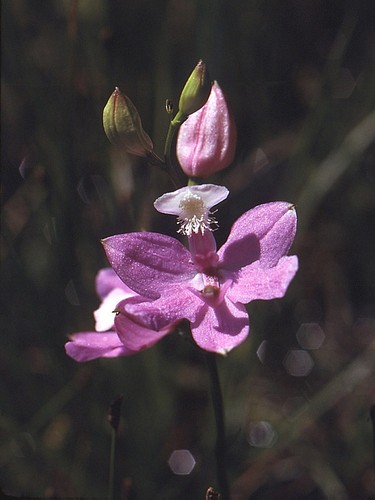
How to Care for Grass Pink Orchid
Grow the Grass Pink Orchid in sun and constantly moist, acidic bog conditions for vivid magenta flowers — a specialist terrestrial orchid.
Grass Pink Orchid Identification Guide
How to recognize the grass pink orchid (Calopogon tuberosus) in bogs and wet meadows, including its unusual non-resupinate flower and grass-like leaf.