
How to Care for Gray Pine
Care guide for Pinus sabiniana: a drought-hardy California native pine with airy grey-green needles, an open branching habit, and massive cones.
Read the full Gray Pine encyclopedia entry →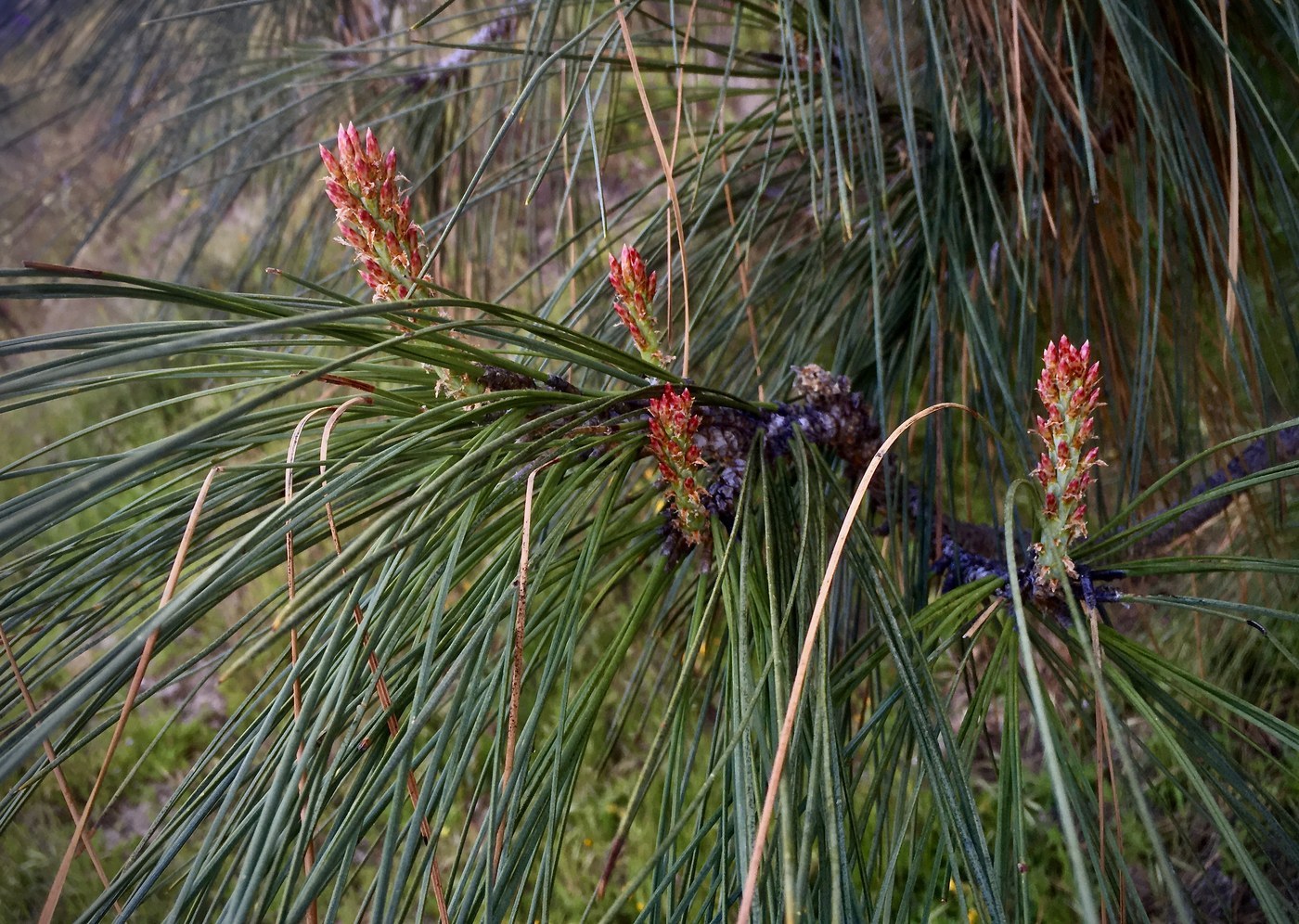
Gray Pine (Pinus sabiniana), also called Foothill or Digger Pine, is a distinctive California native conifer with sparse, airy grey-green needles, a characteristically forked and open branching habit, and exceptionally large, heavy cones. Adapted to hot, dry foothill slopes, it is an outstanding choice for tough, low-water landscapes where its ghostly silhouette makes a memorable specimen.
Light
Plant Gray Pine in full sun. As a species of open, sun-baked foothills, it demands abundant direct light for healthy growth and its characteristic sparse, silvery canopy. It has no tolerance for shade and should be given a wide, unobstructed sunny position.
Water
Gray Pine is very drought-tolerant once established and is superbly adapted to long, dry summers. Water young trees occasionally through their first year or two to establish deep roots, then withhold supplemental irrigation. Mature trees actively resent summer water and can decline if planted in irrigated, wet ground; keep them dry.
Soil & Potting
It thrives in lean, rocky, fast-draining soils, including poor, gravelly, and serpentine substrates that defeat many other trees. Excellent drainage is essential; it will not tolerate heavy, wet, or compacted ground. It accepts a range of pH and needs no soil enrichment. This is a plant for dry, infertile sites where little else prospers.
Humidity & Temperature
Gray Pine is built for hot, dry Mediterranean-climate summers and cool, wet winters (roughly USDA zones 7-9). It withstands intense summer heat and drought, and tolerates winter cold and light snow. It has no need for humidity and in fact prefers dry air; damp, humid, or poorly ventilated conditions do not suit it.
Feeding
This native pine needs essentially no feeding. It is adapted to nutrient-poor soils and fertilizing is unnecessary and can even encourage weak, disease-prone growth. Skip fertilizer entirely on established trees; if a young tree seems stalled, a very light application of a balanced feed in spring is the most it ever needs.
Propagation
Propagation is from seed harvested from the large woody cones. Seeds benefit from a period of cold, moist stratification to improve germination, then are sown in deep containers to accommodate the fast-developing taproot. Transplant young trees while still small, as the deep root makes larger specimens difficult to move. Cuttings are not practical for pines.
Repotting / Pruning
Gray Pine needs minimal pruning; remove only dead, damaged, or crossing limbs, ideally in late winter. Its naturally open, forking form should be preserved rather than sheared. Because it develops a strong taproot, plant it in its permanent position while young and avoid disturbing established roots. Container seedlings should be moved to deep pots and planted out early.
Common Problems & Pests
A tough, resilient tree with few problems in a suitable dry site. The main causes of decline are overwatering and poor drainage, which invite root rot. Bark beetles and pine engravers can attack drought-stressed or damaged trees, so keep specimens healthy and avoid wounding the trunk. Its very large, heavy cones fall with force, so site it away from paths and seating.
Seasonal Care Tips
- Spring: Sow stratified seed; plant young trees while small so the taproot establishes; minimal or no feeding.
- Summer: Withhold water from established trees; they are adapted to bone-dry summers.
- Autumn: Collect the large cones for seed; a good planting window as cooler, wetter weather returns.
- Winter: The tree rests through cool, wet weather; do any light structural pruning now.
Frequently asked questions
How much water does a Gray Pine need?
Very little once established. Water young trees occasionally for the first year or two, then stop. Mature trees are adapted to bone-dry summers and can decline if given regular summer irrigation or planted in wet soil.
Why are the needles on my Gray Pine so sparse and grey?
That is completely normal and characteristic of the species. Gray Pine naturally has an airy, open canopy of thin grey-green needles that casts light shade, giving it a distinctive ghostly appearance rather than the dense look of other pines.
What kind of soil does Gray Pine need?
Lean, rocky, fast-draining soil is ideal, including poor gravelly and serpentine ground. The critical requirement is excellent drainage; it will not tolerate heavy, wet, or compacted soil, and it needs no fertility or enrichment.
Can I transplant a large Gray Pine?
It is best to plant it young. Gray Pine develops a deep taproot early, which makes established trees very difficult to move successfully. Grow it in a deep container and plant it into its permanent spot while still small.