
Great Blue Lobelia Identification Guide
Identify Great Blue Lobelia by its tall spike of two-lipped blue flowers with white throat stripes, its leafy unbranched stem, and its love of moist ground, plus how it differs from Cardinal Flower.
Read the full Great Blue Lobelia encyclopedia entry →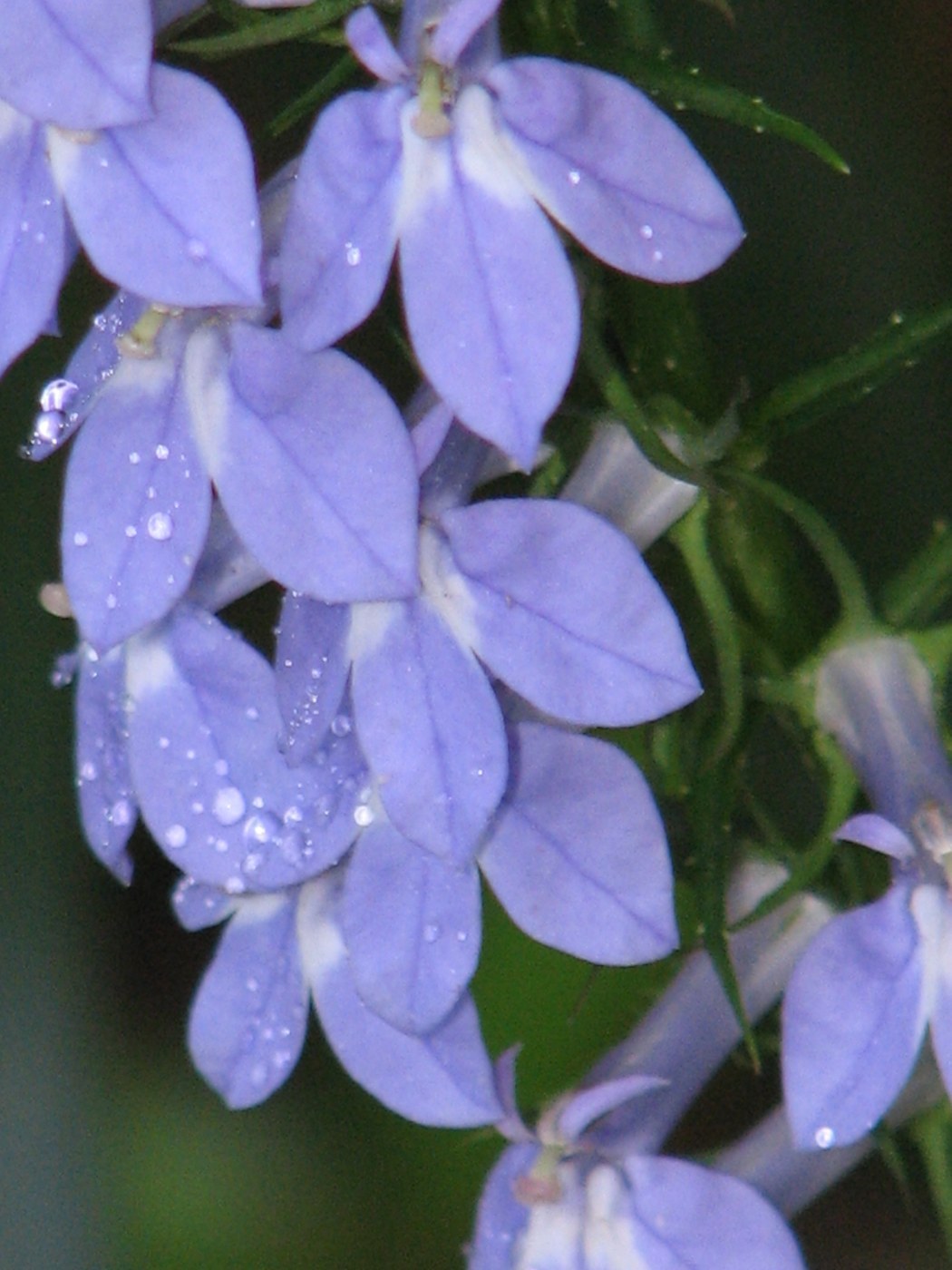
Key Identifying Features
Great Blue Lobelia (Lobelia siphilitica) is a striking late-summer native of moist habitats across eastern and central North America, and the blue counterpart to red Cardinal Flower. Recognize it by:
- A dense, upright spike of vivid blue flowers at the top of the stem
- Tubular, two-lipped flowers with a 3-lobed lower lip and 2-lobed upper lip
- White stripes or markings in the throat of each flower
- An unbranched, leafy stem 2-3 feet tall
- Flowers stacked tightly in the leaf axils up the spike
Leaves & Stems
The stem is erect, stout, and usually single (unbranched), often slightly hairy and ridged. Leaves are alternate, lance-shaped to oval, 2-6 inches long, with irregularly toothed margins, tapering to a point and stalkless or nearly so. Leaves continue right up among the flowers as small leaf-like bracts. Like other lobelias, the plant has milky sap. Plants often grow in small clumps.
Flowers & Fruit
Each flower is about 1 inch long, bright blue (occasionally white), and tube-shaped, splitting into a two-lipped face typical of the bellflower family. The lower lip has three lobes streaked with white at the base, helping bumblebees (the main pollinators) find the entrance. The flowers open in a crowded terminal raceme, blooming from the bottom upward, late summer into fall (August-October). The fruit is a small two-chambered capsule holding many tiny seeds.
How to Tell It Apart from Look-Alikes
- Cardinal Flower (Lobelia cardinalis): same structure and habitat but brilliant scarlet-red flowers; if it is red, it is Cardinal Flower, if blue, Great Blue Lobelia. They sometimes hybridize.
- Other small lobelias (e.g., Lobelia inflata, L. spicata): much smaller, paler flowers scattered on slimmer stems; Great Blue's flowers are large, deep blue, and densely packed.
- Blue salvias or vervains: have square stems (mints/vervains) or different flower shapes; lobelia's split, lipped tube and white throat are distinctive.
Where You'll Find It
Great Blue Lobelia favors moist to wet, partly shaded ground: stream banks, wet meadows, marsh edges, low woods, ditches, and the borders of ponds. It tolerates full sun where soil stays damp and is widespread through the eastern and midwestern U.S. and into Canada.
Quick ID Checklist
- Tall spike of deep blue two-lipped tubular flowers
- White stripes in the flower throat
- Lower lip 3-lobed, upper lip 2-lobed
- Unbranched leafy stem, 2-3 ft tall
- Toothed, lance-shaped alternate leaves; milky sap
- Moist habitat; blooms late summer into fall (blue, not red)
Frequently asked questions
How is Great Blue Lobelia different from Cardinal Flower?
They share the same flower structure and moist habitats, but Great Blue Lobelia has vivid blue flowers while Cardinal Flower (Lobelia cardinalis) has brilliant scarlet-red flowers. Color is the fastest way to tell them apart.
What features identify Great Blue Lobelia?
Look for the dense terminal spike of inch-long, deep blue, two-lipped tubular flowers with white-striped throats, an unbranched leafy stem 2-3 feet tall, and toothed lance-shaped alternate leaves with milky sap.
What pollinates Great Blue Lobelia?
Mainly bumblebees, which are strong enough to push into the two-lipped tubular flowers. The white stripes in the throat act as nectar guides directing them inside.
When and where does it bloom?
It blooms from late summer into fall, roughly August to October, in moist or wet partly shaded sites like stream banks, wet meadows, and pond margins across eastern and central North America.