
Groundsel Identification Guide
Identify common groundsel (Senecio vulgaris) by its rayless yellow flower heads with black-tipped bracts, deeply lobed leaves, and fluffy white seed clusters.
Read the full Groundsel encyclopedia entry →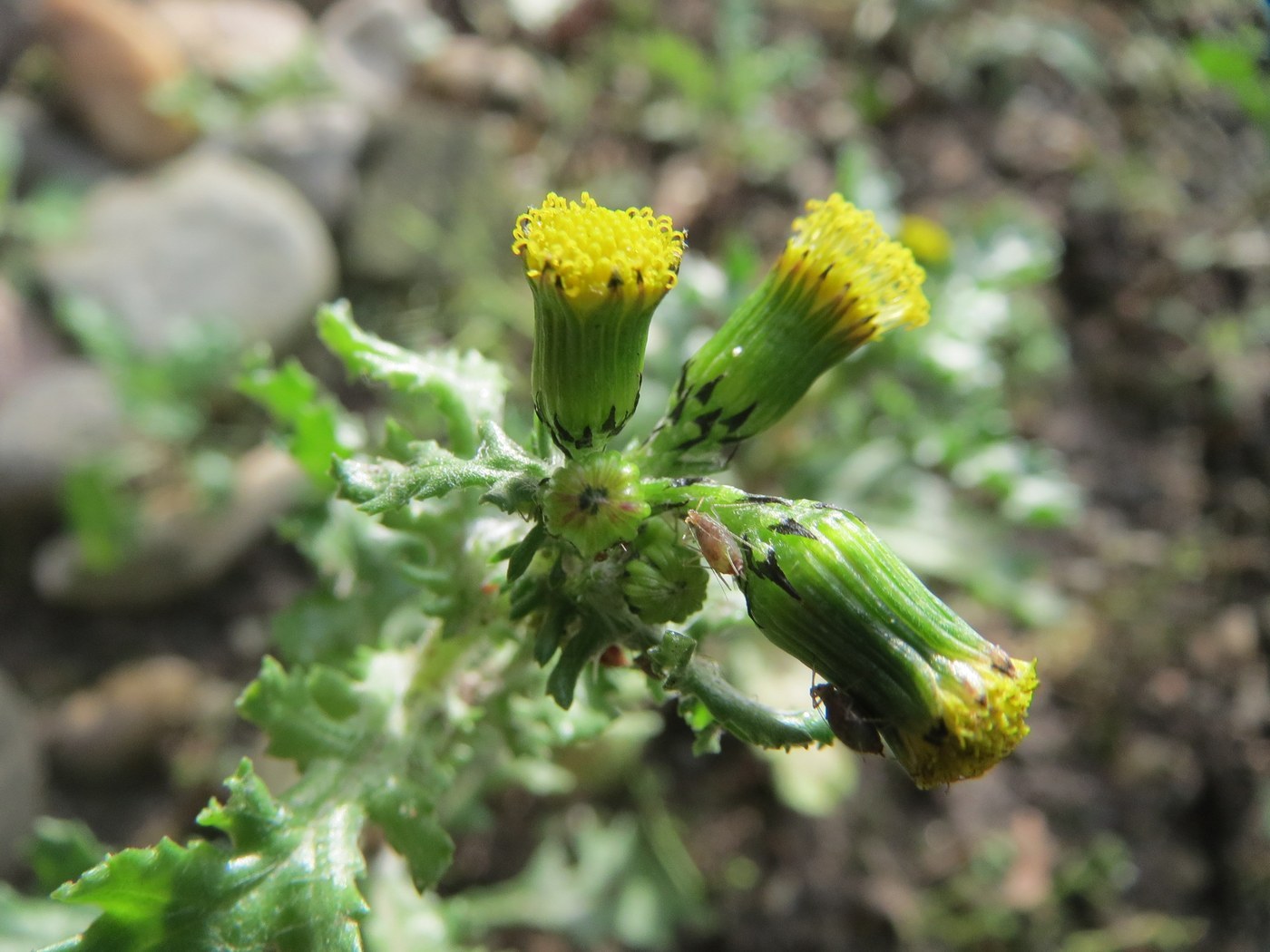
Key Identifying Features
Common groundsel (Senecio vulgaris) is a small, fast-growing annual broadleaf weed in the aster family. Its standout features are small, cylindrical yellow flower heads that never fully open (rayless), ringed by black-tipped bracts, and fluffy white seed clusters like a tiny dandelion puff. It is a frequent cool-season weed of gardens and cultivated soil.
- Rayless yellow flower heads that stay nearly closed, brush-like
- Black-tipped green bracts at the base of each flower head
- Deeply lobed, irregularly toothed leaves
- White, fluffy pappus seed heads
Leaves & Stems
Leaves are alternate, deeply and irregularly lobed (pinnatifid) with blunt, toothed lobes, somewhat fleshy, and bright to dark green. Lower leaves taper to a stalk; upper leaves clasp the stem with small lobed ears. Stems are succulent, hollow, often purplish near the base, branching, and mostly smooth or slightly cottony, reaching 6-18 inches.
Flowers & Fruit
Groundsel flowers nearly year-round in mild climates, mainly spring and fall. The heads are small, narrow, cylindrical, yellow, and lack showy ray petals, appearing as little tufts; the surrounding involucral bracts have conspicuous black tips, which is a key diagnostic. Flowers quickly turn to round, fluffy white seed heads (pappus) that disperse on the wind, so a plant often shows flowers and seed heads at once.
How to Tell It Apart from Look-Alikes
- Sow thistle and dandelion: have showy yellow ray flowers; groundsel heads are rayless and brush-like with black-tipped bracts.
- Common ragwort (Senecio jacobaea): has bright yellow rayed daisy flowers and is taller; common groundsel is small and rayless.
- Pineappleweed: has cone-shaped greenish-yellow heads and a pineapple smell, but ferny, finely divided leaves, not lobed succulent ones.
The rayless yellow heads + black-tipped bracts + lobed leaves + fluffy seed puffs confirm common groundsel.
Where You'll Find It
Groundsel grows in cool-season, disturbed, fertile ground: gardens, flower beds, nurseries, vegetable plots, sidewalk cracks, and waste areas across North America, Europe, and beyond. It germinates in cool weather and can complete several generations a year.
Quick ID Checklist
- Small annual, 6-18 inches, somewhat succulent
- Rayless, brush-like yellow flower heads
- Black-tipped bracts beneath the heads
- Deeply lobed, toothed leaves
- Fluffy white seed puffs
- Cool-season garden and disturbed-ground weed
Frequently asked questions
Why do groundsel flowers look like they never open?
Common groundsel has rayless flower heads, meaning it lacks the showy outer petals of daisies or dandelions. The heads stay narrow and brush-like, made only of small yellow disk florets.
What is the easiest confirming detail?
Look at the bracts at the base of each flower head: they have distinct black tips. Combined with the rayless yellow heads and lobed leaves, this confirms common groundsel.
How fast does groundsel spread?
Very fast. It matures quickly, produces abundant wind-dispersed seeds, and can complete several generations in a single growing season, especially in cool weather.