
How to Care for Guava Tree
Grow Guava (Psidium guajava), a warm-climate small tree with handsome peeling bark and glossy leaves that thrives in full sun and regular watering.
Read the full Guava Tree encyclopedia entry →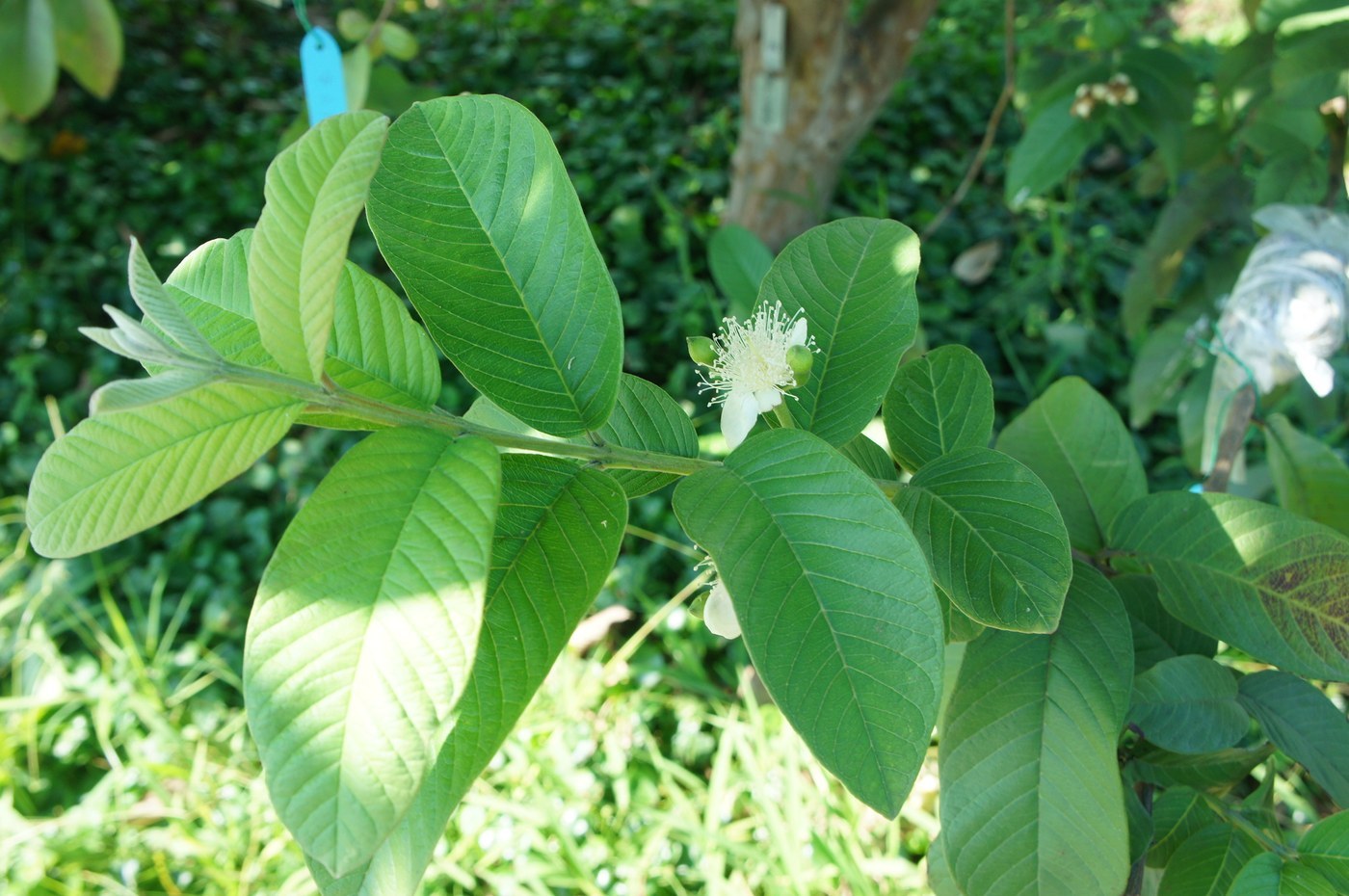
The Guava (Psidium guajava) is an attractive small tropical tree grown as an ornamental for its smooth mottled peeling bark, glossy ribbed leaves, and pretty white flowers with fluffy stamens. It is fast-growing, adaptable, and easy to please in warm climates or as a container specimen.
Light
Guava wants full sun for strong, compact growth and abundant flowering. Give it at least six to eight hours of direct sun daily. In cooler regions grow it in a large pot that can be moved to the sunniest sheltered spot, or under glass, and provide as much bright light as possible.
Water
Water regularly to keep the soil evenly moist during active growth, especially for young and container-grown plants. Established trees are moderately drought-tolerant and can withstand short dry spells, but consistent moisture produces the best growth and flowering. Let the top of the soil dry slightly between waterings and never leave the roots waterlogged.
Soil & Potting
Guava tolerates a wide range of soils, from sand to clay-loam, but grows best in deep, fertile, well-drained ground rich in organic matter. It handles a broad pH range. In containers, use a fertile, free-draining potting mix and a pot with generous drainage holes; the plant adapts well to container life and can be kept compact by pot size and pruning.
Humidity & Temperature
A tropical and subtropical plant, guava thrives in warmth and humidity and grows year-round in frost-free climates. Young plants are frost-tender and should be protected or brought indoors below about freezing; mature trees may take a light frost with some dieback. Average to high humidity suits it well; grow it in a warm, sheltered position.
Feeding
Guava is a hungry, fast grower that responds well to regular feeding. Apply a balanced fertilizer every one to two months during the growing season, or use a slow-release fertilizer supplemented with occasional feeds. Container plants especially benefit from steady feeding. Ease off in the cooler, dormant months.
Propagation
Guava can be raised from fresh seed, which germinates readily in warm, moist conditions, though seedlings vary. For plants true to a chosen form, propagate by semi-hardwood cuttings, air layering, or grafting. Take cuttings in warm weather and root them in a humid, warm environment with bottom heat for best results.
Repotting / Pruning
Repot container plants every year or two in spring into a slightly larger pot with fresh mix, or refresh the topsoil if keeping the tree compact. Prune after flowering or in early spring to shape the canopy, remove crossing or crowded branches, and control size; guava responds vigorously to pruning and can be kept as a small tree or large shrub. Pinching young shoots encourages bushiness.
Common Problems & Pests
Guava can attract aphids, scale, mealybugs, whitefly, and fruit flies, and mite infestations in dry indoor air. Keep plants healthy and inspect regularly, treating pests early with appropriate methods. Fungal leaf spot, anthracnose, and rust may appear in humid, crowded conditions; improve airflow and remove affected leaves. Root rot follows waterlogging, so ensure sharp drainage.
Seasonal Care Tips
In spring, repot, prune, and resume regular feeding as growth restarts. Through the warm months, water consistently, feed steadily, and watch for pests. In autumn, reduce feeding and watering as growth slows. In winter, protect from frost, keep container plants warm and bright, and water sparingly while the tree rests.
Frequently asked questions
How much sun does a Guava tree need?
Full sun is best, at least six to eight hours daily, for compact growth and good flowering. In cool climates, grow it in a pot in the sunniest sheltered spot or under glass.
How often should I water a Guava tree?
Water regularly to keep the soil evenly moist during active growth, especially for young and potted plants. Established trees tolerate short dry spells but grow best with consistent moisture.
Can I grow a Guava tree in a pot?
Yes, guava adapts well to containers. Use a fertile, free-draining mix and a pot with good drainage, feed regularly, and prune to keep it compact. Repot every year or two in spring.
Will a Guava tree survive frost?
Young plants are frost-tender and need protection or indoor shelter below freezing. Mature trees may withstand a light frost with some dieback, but guava is best grown in frost-free, warm conditions.