Guava Tree
Psidium guajava
A hardy tropical fruiting tree producing fragrant fruit and recognizable smooth, peeling bark. It is fast-growing, adaptable, and tolerant of a range of soils.
- Light
- Full sun
- Water
- Regular; moderately drought-tolerant once established
- Difficulty
- Easy
Got a plant like this?
Identify any plant from a photo, free.
Overview
The common guava is a small evergreen tropical tree grown throughout the warm regions of the world for its fragrant fruit. It is fast-growing, productive, and remarkably tolerant of poor soils and varied conditions.
Guava fruit can have white, pink, yellow, or red flesh depending on the variety. The tree's distinctive smooth, peeling bark and fragrant blossoms also make it recognizable.
How to identify it
Identifying features:
- Size & habit: Small evergreen tree or large shrub, 3-10 m, often with multiple trunks
- Bark: Smooth, coppery, peeling in thin flakes to reveal a mottled greenish surface
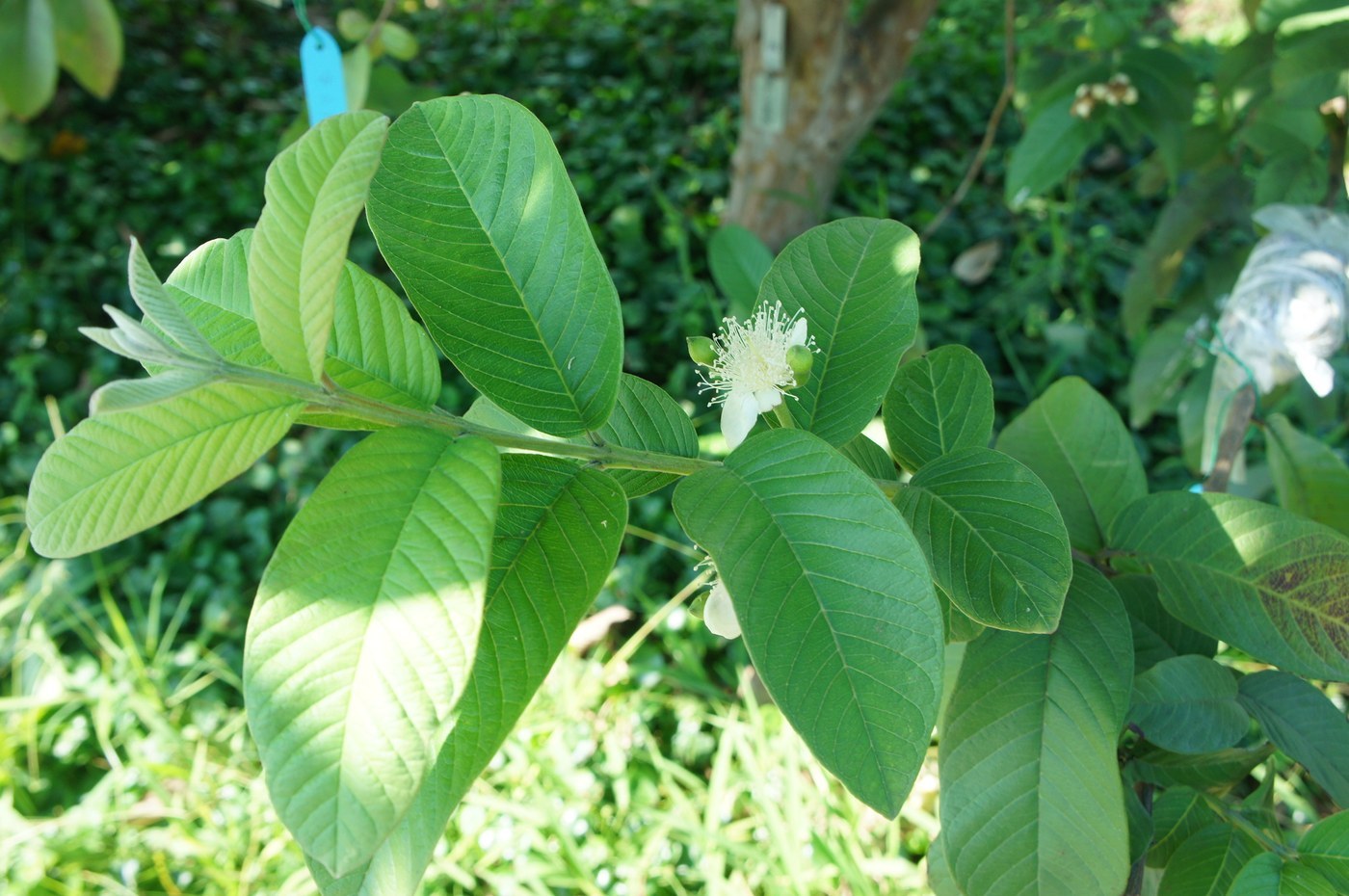
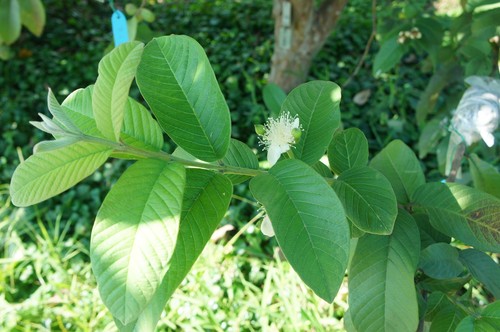
- Leaves: Oval to oblong, opposite, 5-15 cm, with prominent parallel veins and a leathery texture
- Flowers: White, about 2.5 cm, with five petals and a prominent tuft of stamens
- Fruit: Round to pear-shaped, 4-12 cm, with green to yellow skin and fragrant white, pink, or red flesh containing many small hard seeds
Care & growing
Light: Full sun for the best fruiting.
Water: Water regularly for good fruit, though established trees tolerate short dry spells.
Soil: Highly adaptable; grows in sandy, loamy, or clay soils with reasonable drainage, pH 4.5-7.0.
Temperature: Tropical to subtropical; best in USDA zones 9-11. Young plants are frost-sensitive, though mature trees may resprout after light frost.
Feeding: Feed regularly during growth; responds well to organic matter.
Propagation: Grown from seed, cuttings, air-layering, or grafting. Prune to control size and shape; it can become weedy where conditions suit it.
Habitat & origin
The common guava is native to Mexico, Central America, and northern South America, where it grows in a range of tropical habitats.
It has been spread throughout the tropics and subtropics worldwide and is now cultivated in India (the largest producer), Southeast Asia, Africa, and the Caribbean. In some regions, such as Hawaii, it has become an invasive weed.
Frequently asked questions
How long until a guava tree fruits?
Guavas are fast; trees from cuttings or grafts often fruit within 2-3 years, and seedlings within 3-4 years.
Are guava trees cold-hardy?
Mature trees tolerate light frost and may resprout from the base, but young plants are frost-sensitive and best grown in frost-free climates or containers.
Why is my guava tree dropping fruit?
Fruit drop can result from irregular watering, nutrient stress, or pest pressure such as fruit flies; consistent care and fruit protection help.
Guava Tree guides
In-depth guides for identifying, growing, and caring for Guava Tree.
How to Care for Guava Tree
Grow Guava (Psidium guajava), a warm-climate small tree with handsome peeling bark and glossy leaves that thrives in full sun and regular watering.
Guava Tree Identification Guide
Identify the common guava (Psidium guajava) by its smooth peeling mottled bark, prominently veined opposite leaves, fluffy white flowers, and aromatic round fruit.