Hackberry Identification Guide
Identify hackberry (Celtis occidentalis) by its distinctive warty corky bark, asymmetrical toothed leaves with three main veins from the base, and small dark single-stoned berry-like drupes.
Read the full Hackberry encyclopedia entry →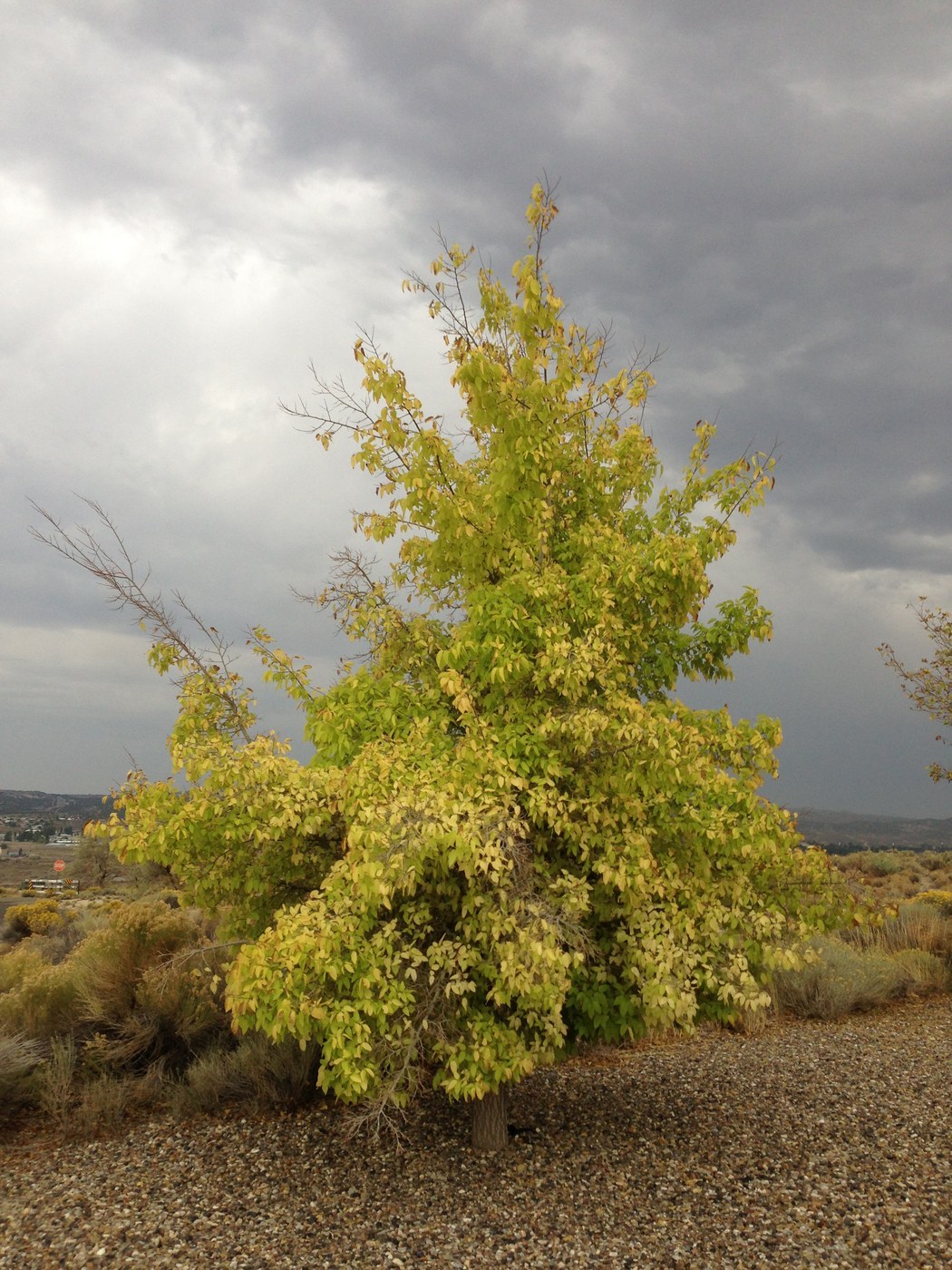
Key Identifying Features
Common hackberry (Celtis occidentalis) is a medium to large deciduous tree in the hemp/elm family (Cannabaceae), typically 40–60 feet tall with a rounded, spreading crown. Its most famous diagnostic feature is the bark covered in distinctive corky, warty ridges and bumps. Add to that lopsided, asymmetrical leaves with three veins fanning from an uneven base, and small dark berry-like fruits, and the tree is easy to name.
- Warty, corky, ridged gray bark (unmistakable)
- Asymmetrical leaf bases with 3 main veins from the base
- Small, single-seeded dark purple-red drupes on slender stalks
Leaves & Stems
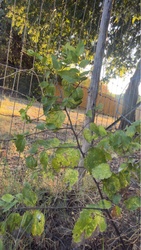
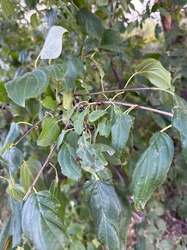
Leaves are alternate, simple, ovate to lance-shaped, 2–5 inches long, with a sharply pointed tip and an unmistakable uneven (asymmetrical) base—one side of the leaf meets the stalk lower than the other. Margins are toothed (serrate) on the upper two-thirds but typically smooth near the base. Three prominent veins arise from the leaf base (palmate-pinnate venation), like an elm or mulberry. The upper surface is medium green and often rough; many leaves show "nipple gall" bumps caused by tiny psyllid insects—a frequent and helpful clue. Foliage turns pale yellow in fall. Twigs are slender and zigzag slightly.
Flowers & Fruit
Flowers are tiny, greenish, and inconspicuous, appearing in spring with the leaves; they are wind-pollinated and easily overlooked. The fruit is a small round drupe about 1/4 inch across, on a slender individual stalk, ripening from orange-red to dark purple or brownish-black in fall and often persisting into winter. Each contains a single hard, pitted stone. The drupes are eagerly eaten by birds—an important wildlife food source and a good seasonal identifier.
How to Tell It Apart from Look-Alikes
- Elms (Ulmus) have similar asymmetrical toothed leaves but their bark is furrowed (not warty), and their fruit is a flat winged samara, not a fleshy drupe.
- Sugarberry (Celtis laevis/laevigata) is a southern relative with smoother bark, narrower mostly smooth-margined leaves, and orange-red fruit.
- Mulberry (Morus) has milky sap and elongated multiple fruit; hackberry has clear sap and single drupes.
The corky warty bark + lopsided three-veined toothed leaves + single dark drupe combination is conclusive for hackberry.
Where You'll Find It
Hackberry is native to central and eastern North America, tolerant of poor soils, drought, wind, and urban conditions. It grows in floodplains, woodland edges, fencerows, prairies, and city streets, often as a tough pioneer or shade tree. Look for it in bottomlands and disturbed open ground as well as planted along streets and parks.
Quick ID Checklist
- Corky, warty, ridged gray bark (the top clue)
- Alternate leaves with asymmetrical base and toothed upper margins
- Three main veins from the leaf base
- Frequent nipple-gall bumps on leaves
- Small dark purple drupes on individual stalks, one stone each
- Floodplain, fencerow, prairie, or urban setting
Frequently asked questions
What is the single best way to recognize a hackberry?
Look at the bark: hackberry has unmistakable corky, warty ridges and bumps on otherwise gray bark, a feature shared by few other trees of its size and region.
How do I tell hackberry from an elm?
Both have asymmetrical toothed leaves with three basal veins, but elm bark is furrowed rather than warty, and elms produce flat winged seeds (samaras) instead of hackberry's small fleshy dark drupes.
What are the bumps on hackberry leaves?
They are 'nipple galls' caused by tiny psyllid insects. They are harmless to the tree and actually serve as a useful identification clue.
How big does a hackberry tree get?
Hackberry is a medium to large tree, usually 40 to 60 feet tall, with a rounded, spreading crown and slightly zigzag twigs. Its corky warty bark makes it recognizable from a distance.
Hackberry identified by the community
Recent Hackberry specimens identified with Plant Identifier.