
Hardy Geranium Identification Guide
How to recognize true hardy geraniums (cranesbills) by their deeply lobed palmate leaves, symmetric five-petaled flowers, and beaked seed pods — and tell them from bedding pelargoniums.
Read the full Hardy Geranium encyclopedia entry →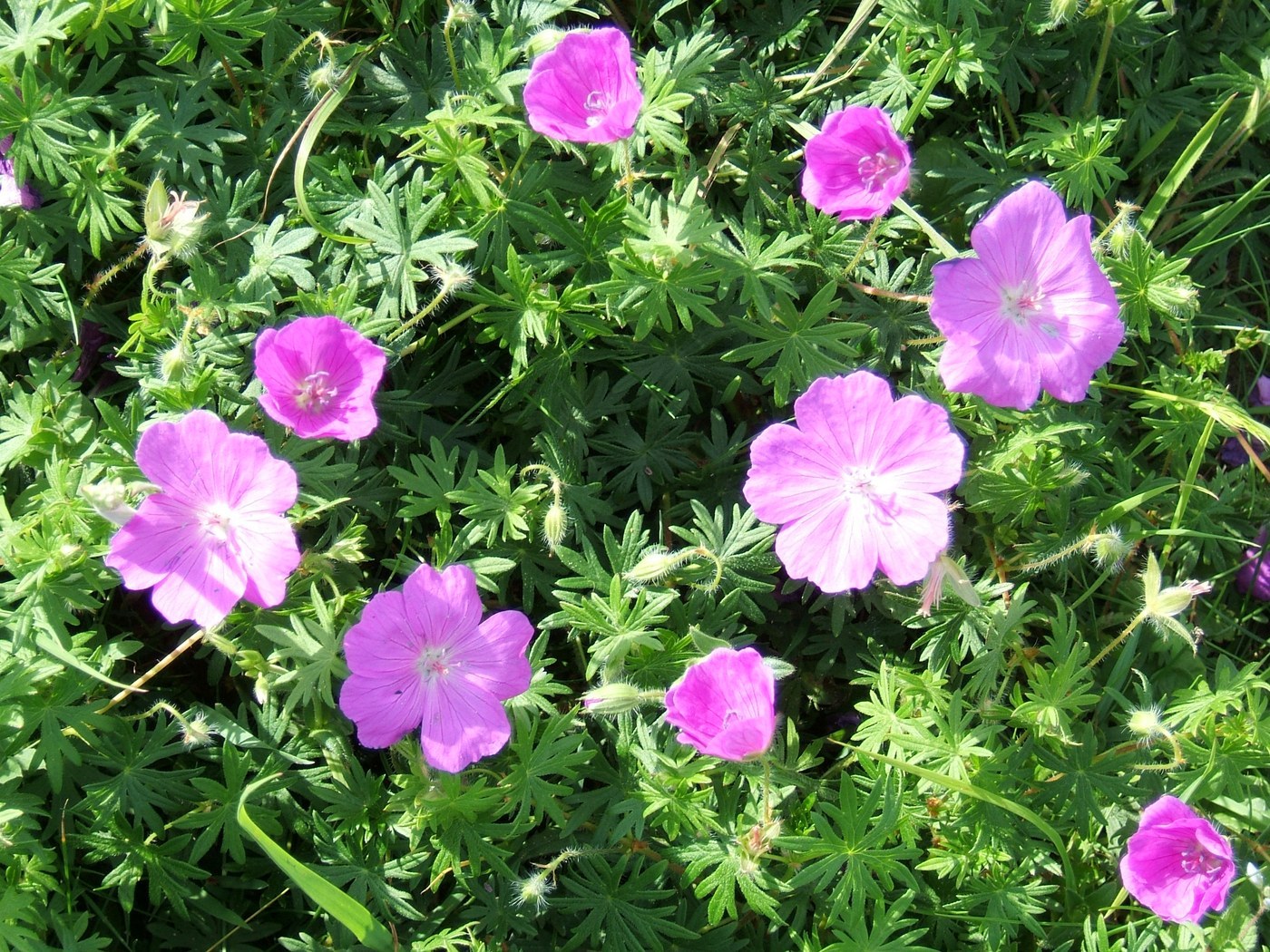
Key Identifying Features
Hardy geranium, or cranesbill, refers to true Geranium species (Geraniaceae) — perennial plants distinct from the tender "geraniums" sold for summer pots, which are actually Pelargonium. The giveaway is the combination of rounded, deeply lobed palmate leaves and symmetrical, saucer-shaped five-petaled flowers, followed by the long "crane's bill" seed pod.
- Flowers radially symmetric (regular), 5 equal petals, often with darker veins
- Leaves palmately lobed or divided, roughly circular in outline
- Fruit a distinctive long, pointed beak resembling a crane's bill
- Mounding, clump-forming perennial habit — fully winter hardy
Leaves & Stems
The leaves are the quickest tell: roughly round to kidney-shaped in outline, then cut into 5–7 lobes that are themselves toothed or further divided. Many are softly hairy and some are aromatic when crushed. Foliage often colors red or orange in autumn. Stems are slender, branching, sometimes reddish at the swollen nodes, forming a spreading mound rather than an upright stalk.
Flowers & Fruit
Flowers are flat and open, usually 2–4 cm across, in blue, violet, magenta, pink, or white, very often with fine darker veins radiating from a paler center. Each flower has 5 petals and 10 stamens. After bloom, the ovary elongates into the signature slender beaked capsule; when ripe it springs open, flinging seeds. This beak is the clearest confirmation that you have a true Geranium.
How to Tell It Apart from Look-Alikes
- Pelargonium (bedding "geranium"): flowers are slightly two-lipped (zygomatic) with the upper two petals marked differently, leaves are often round with a horseshoe band, and the plant is frost-tender. True hardy geraniums have evenly symmetric flowers and survive winter outdoors.
- Mallows (Malva): also have veined pink five-petaled flowers, but leaves are shallowly lobed and the fruit is a flat ring of segments, not a beak.
- Buttercups: five glossy yellow petals but compound or palmate leaves and a cluster of dry seeds, no beak.
Where You'll Find It
Hardy geraniums are mainstays of perennial borders, woodland edges, and ground-cover plantings, tolerating sun or part shade and most soils. Wild species (such as herb Robert and meadow cranesbill) grow on roadsides, hedgerows, meadows, and waste ground across temperate regions.
Quick ID Checklist
- Symmetric 5-petaled flower, often veined
- Round, palmately lobed leaves
- Beaked "crane's bill" seed pod
- Mounding, clump-forming, winter-hardy perennial
- NOT two-lipped flowers or horseshoe-marked leaves (that's Pelargonium)
Frequently asked questions
What is the difference between a hardy geranium and the geraniums I buy for summer pots?
Pot geraniums are really Pelargoniums, which are frost-tender and have slightly two-lipped flowers. Hardy geraniums are true Geranium species (cranesbills) with evenly symmetric flowers that survive winter outdoors.
Where does the name cranesbill come from?
From the seed pod. After flowering the fruit elongates into a long, slender, pointed beak that resembles a crane's bill, which is the most reliable feature for confirming a true Geranium.
Are the dark lines on the petals important for ID?
They help. Many hardy geraniums have fine darker veins radiating across the petals from a paler eye, a common and useful trait, though flower color itself varies widely between species.
Is the strong-smelling weed herb Robert a hardy geranium?
Yes. Herb Robert (Geranium robertianum) is a true cranesbill with deeply divided ferny leaves that often turn red, small pink flowers, and the typical beaked seed pods.