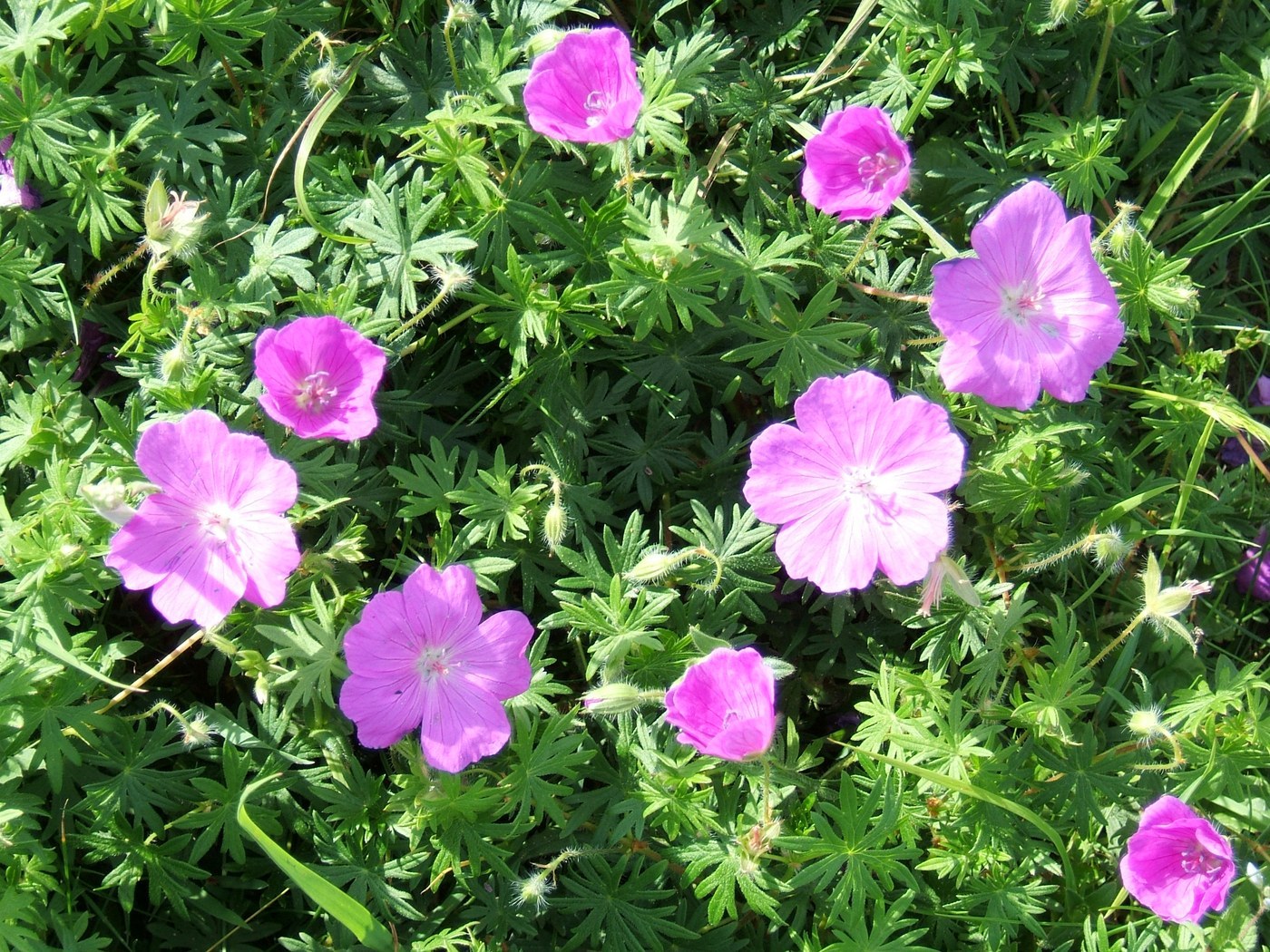
Hardy Geranium
Geranium sanguineum
Hardy geranium, or cranesbill, is a tough, long-lived perennial that forms spreading mounds of deeply lobed leaves covered in saucer-shaped flowers. Unlike the tender bedding "geraniums" (Pelargonium), these true geraniums are cold-hardy and low-maintenance.
- Light
- Full sun to part shade
- Water
- Moderate; even moisture
- Difficulty
- Easy
Got a plant like this?
Identify any plant from a photo, free.
Overview
Hardy geraniums (genus Geranium) are the true geraniums, distinct from the tender annual bedding plants sold as "geraniums," which are actually Pelargonium. They are prized as dependable, hard-working perennials.
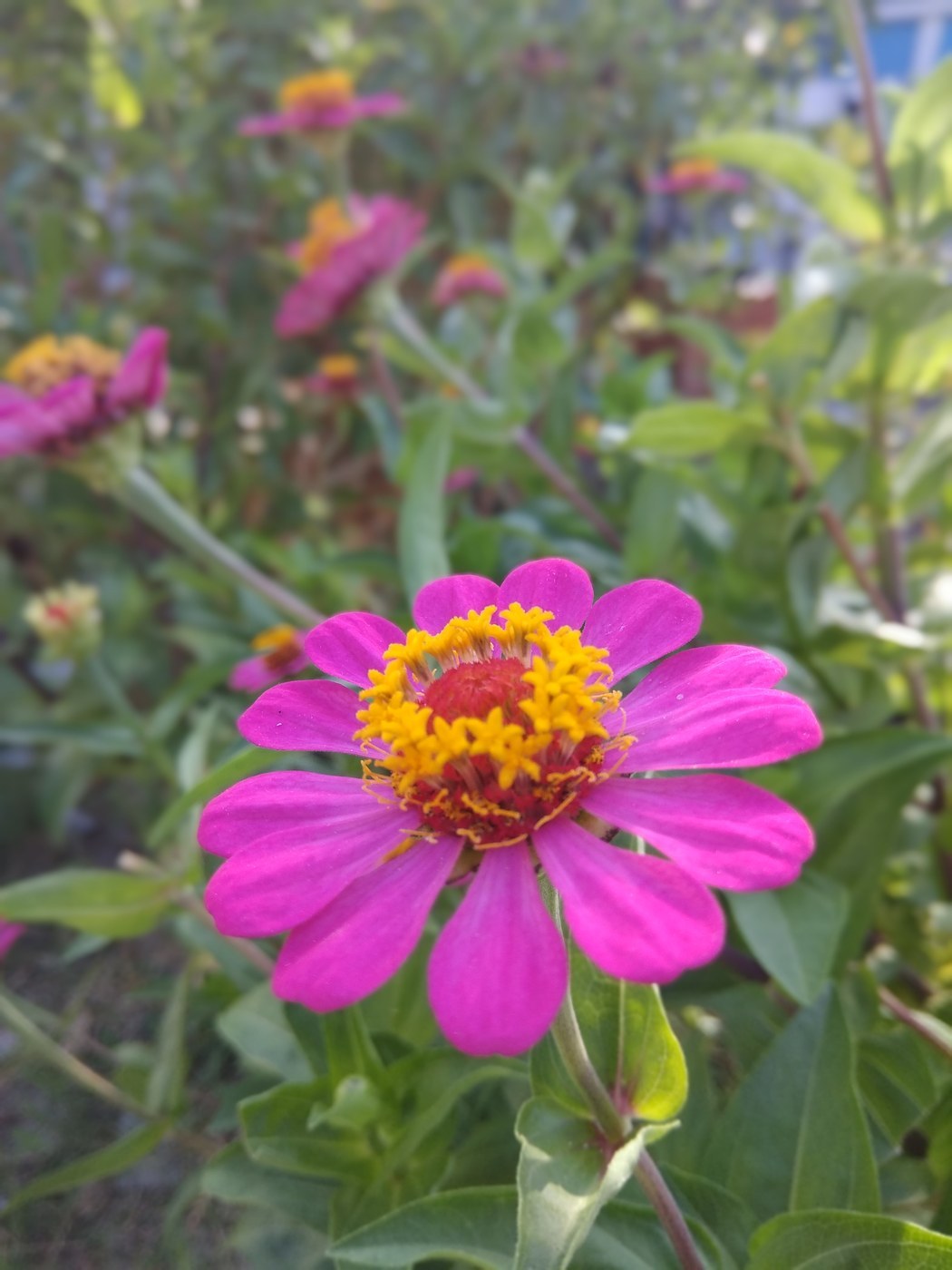
They form weed-suppressing mounds of attractive, often deeply cut foliage and produce a long succession of five-petaled flowers in blue, purple, pink, magenta, or white.
The common name "cranesbill" comes from the long, beak-like seed capsule that resembles a crane's bill.
How to identify it
Identify by rounded, lobed leaves and beaked seed pods.
- Flowers: Five-petaled, saucer- or cup-shaped, often with darker veins, in blue, purple, pink, magenta, or white
- Leaves: Palmately lobed and divided, often deeply cut, frequently coloring red in autumn
- Seed pods: Long, narrow, crane's-bill-shaped capsules that spring open to fling seed
- Habit: Spreading, mounding clumps usually 6-24 in tall
Care & growing
One of the easiest perennials to grow.
- Light: Full sun to partial shade; some tolerate fairly deep shade
- Water: Moderate, even moisture; established plants tolerate short dry spells
- Soil: Adaptable to most well-drained soils
- Temperature: Very cold-hardy, many to USDA zone 4
- Feeding: Minimal; a little compost in spring is enough
- Propagation: Division in spring or fall is easiest; also from cuttings or seed
- Tip: Shear back hard after the first bloom to refresh foliage and encourage reblooming
Habitat & origin
The genus Geranium is found across temperate regions worldwide, including Europe, Asia, and North America. Geranium sanguineum, the bloody cranesbill, is native to Europe and parts of Asia, growing in dry grassland, woodland edges, and rocky slopes.
Hardy geraniums are widely planted as groundcover, edging, and filler in mixed borders and woodland gardens.
Frequently asked questions
What's the difference between hardy geranium and the geraniums at the garden center?
Hardy geraniums are true Geranium, cold-hardy perennials. The common bedding "geraniums" are tender Pelargonium, a different genus grown as annuals in cold climates.
Should I cut back hardy geraniums?
Yes. Shearing the whole plant back after the first flush of bloom encourages fresh foliage and often a second round of flowers.
Do hardy geraniums spread?
They form spreading clumps that fill space well, but most are not aggressively invasive and are easy to divide or control.
Will hardy geraniums grow in shade?
Many tolerate partial or even dry shade, though flowering is usually best with at least a few hours of sun.
Hardy Geranium guides
In-depth guides for identifying, growing, and caring for Hardy Geranium.
How to Care for Hardy Geranium
Grow the bloody cranesbill (Geranium sanguineum): an easy, long-blooming perennial for sun or part shade in well-drained garden soil.
Hardy Geranium Identification Guide
How to recognize true hardy geraniums (cranesbills) by their deeply lobed palmate leaves, symmetric five-petaled flowers, and beaked seed pods — and tell them from bedding pelargoniums.