
Harebell Identification Guide
Recognize Harebell by its delicate nodding blue bells on thread-thin stems, its withered round basal leaves, and its toughness on rocky, exposed ground.
Read the full Harebell encyclopedia entry →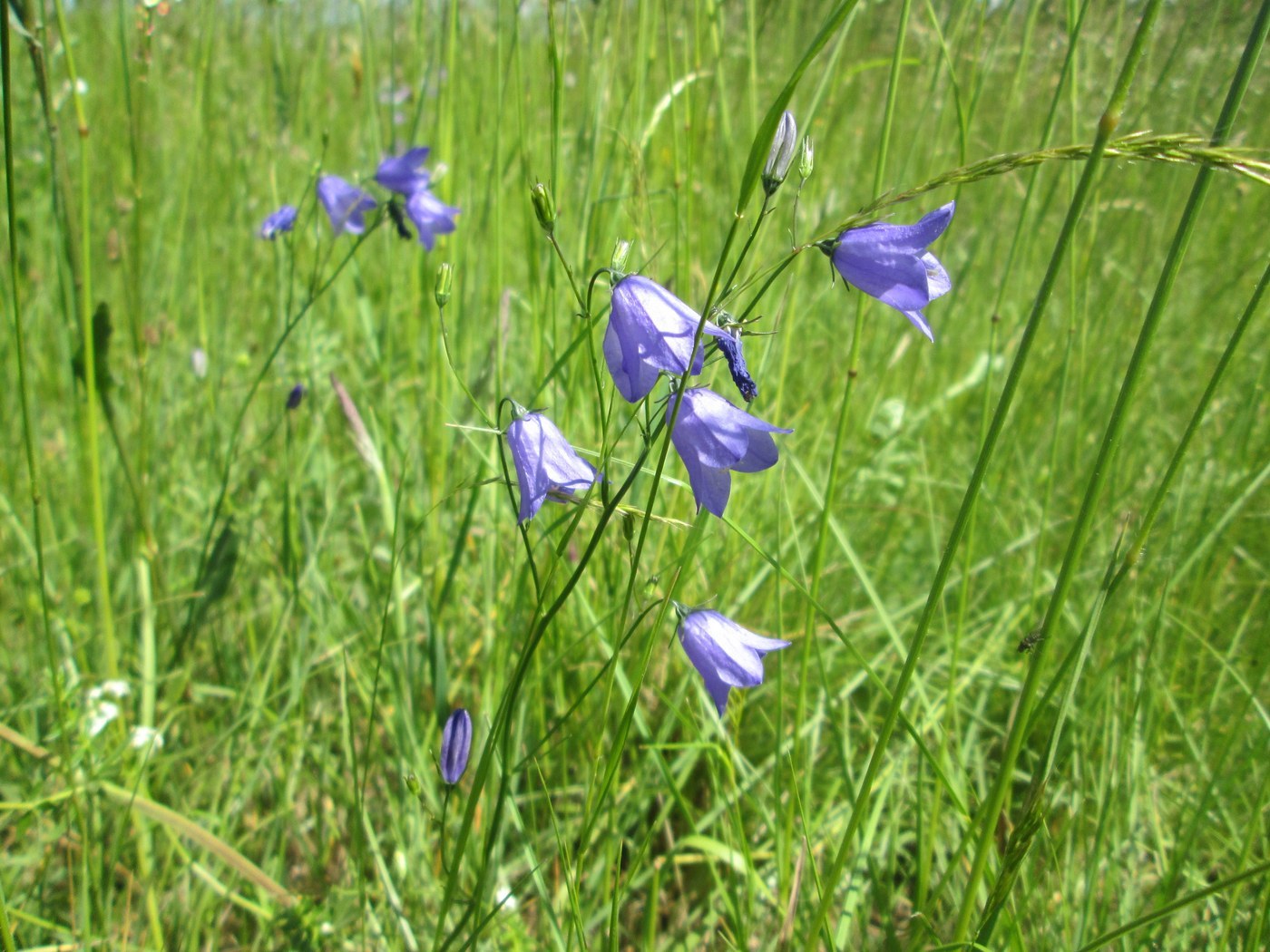
Key Identifying Features
Harebell (Campanula rotundifolia), also called Bluebell of Scotland, is a dainty but surprisingly tough perennial found across the Northern Hemisphere. Identify it by:
- Nodding, bell-shaped blue-violet flowers about 1/2 to 1 inch long
- Extremely slender, wiry stems that seem too thin for the flowers
- Flowers with five shallow, pointed lobes flaring at the bell's mouth
- Plants 6-18 inches tall, often nodding and trembling in the breeze
- A surprisingly delicate look on harsh, rocky ground
Leaves & Stems
Harebell has a famous leaf trick reflected in its species name rotundifolia ("round-leaved"): the basal leaves are small, rounded to heart-shaped, and stalked, but they usually wither away before the flowers open. The leaves you see on the flowering stem are completely different: narrow, grass-like, and linear, alternate along the thread-thin stems. So at bloom time you typically find a wiry stem with narrow leaves and no visible round basal leaves. Stems are smooth and often branch near the top, each branch ending in one or a few flowers.
Flowers & Fruit
The flowers are clear blue to violet (rarely white), broadly bell-shaped, and hang downward so rain shelters the pollen. Inside, a single style and five stamens sit at the base. Bloom time is long, early summer into fall (June-September). The fruit is a small, dry, nodding capsule that, when ripe, opens by tiny pores near its base and shakes out fine seeds as the wind rattles the stem. Even in fruit, the slender nodding habit is recognizable.
How to Tell It Apart from Look-Alikes
- Other Campanula species (e.g., garden bellflowers): usually have larger, more upward-facing flowers and broader, persistent leaves; Harebell is daintier with narrow stem leaves and nodding bells.
- Spreading Bellflower / Creeping Bellflower (Campanula rapunculoides): an invasive with flowers in a tall one-sided spike and persistent toothed leaves, much coarser than Harebell.
- Virginia Bluebells (Mertensia): clustered pink-to-blue trumpet flowers on a leafy, succulent plant in spring woods, very different.
The thread-thin stem + small nodding blue bell + narrow stem leaves combination is the giveaway.
Where You'll Find It
Harebell is a plant of exposed, well-drained, often rocky places: cliff ledges, alpine and arctic tundra, dry meadows, dunes, gravelly roadsides, and prairie hills. It tolerates wind, cold, and thin soil across North America, Europe, and Asia, frequently appearing where few other flowers persist.
Quick ID Checklist
- Nodding blue-violet bell, ~1/2-1 in, with 5 pointed lobes
- Very slender, wiry stems
- Narrow, grass-like leaves on the stem
- Round basal leaves usually withered by bloom time
- 6-18 in tall on rocky or exposed ground
- Long bloom, early summer to fall
Frequently asked questions
Why are the round leaves missing on my Harebell?
The species name rotundifolia refers to its small round basal leaves, but these typically wither away before flowering. At bloom time you usually see only the narrow, grass-like leaves on the wiry stem, which is normal.
Is Harebell the same as the Bluebell of Scotland?
Yes. Campanula rotundifolia is widely known as the Bluebell of Scotland (and Harebell in North America). Note this differs from the English Bluebell (Hyacinthoides), which is an unrelated woodland bulb.
How can such a delicate plant survive on cliffs?
Despite its fragile look, Harebell is a hardy perennial with a deep, tough root system that lets it thrive in thin, well-drained soil on cliffs, tundra, dunes, and gravelly slopes exposed to wind and cold.
What color are Harebell flowers?
Typically clear blue to violet, occasionally white. The nodding, five-lobed bell shape is consistent regardless of the exact shade.