Harebell
Campanula rotundifolia
A delicate, wiry perennial bearing nodding blue bell-shaped flowers on thread-like stems. Found across the Northern Hemisphere, it is famed as the bluebell of Scotland.
- Light
- Full sun to partial shade
- Water
- Low to moderate; well-drained
- Difficulty
- Easy
Got a plant like this?
Identify any plant from a photo, free.
Overview
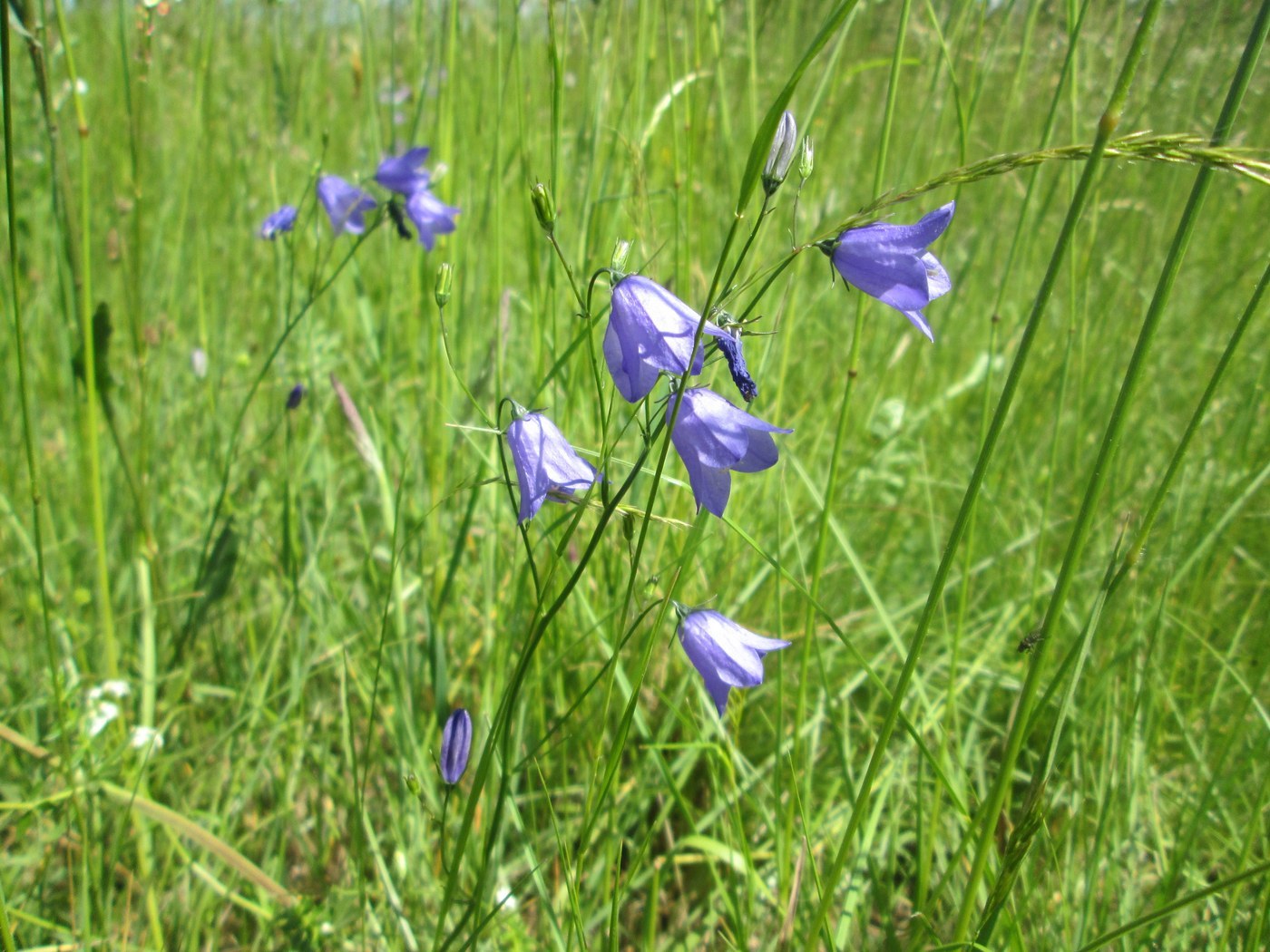
Harebell is a dainty yet tough wildflower with nodding, violet-blue bells dancing on slender, almost invisible stems. Despite its fragile appearance, it is remarkably hardy and grows across the cooler regions of the Northern Hemisphere.
Known in Scotland as the bluebell, it carries rich folklore and is associated with fairies and witches. The species name rotundifolia ("round-leaved") refers to the rounded basal leaves that often wither before the plant blooms.
How to identify it
- Flowers: Nodding, bell-shaped, about 1 inch long, in blue to violet (rarely white), borne loosely on wiry stems
- Leaves: Round to heart-shaped at the base (often gone by bloom time); stem leaves narrow and grass-like
- Stems: Very slender, wiry, 6-20 inches tall
- Habit: Tufted, airy perennial spreading by thin rhizomes
- Bloom time: Summer into early autumn
Care & growing
Harebell is undemanding and well suited to naturalistic plantings.
- Light: Full sun to light shade
- Water: Low to moderate; needs good drainage and tolerates dry, rocky sites
- Soil: Lean, gritty, well-drained soil; thrives in poor ground
- Temperature: Very cold hardy, USDA zones 3-7
- Feeding: None needed; rich soil reduces flowering
- Propagation: Easy from seed or by division; self-sows gently
Habitat & origin
Campanula rotundifolia has a wide circumpolar distribution across temperate and subarctic regions of North America, Europe, and Asia.
It grows on dry grasslands, rocky slopes, cliffs, meadows, dunes, and open woodland edges, often clinging to thin soils where larger plants cannot compete. Its adaptability to harsh, exposed sites makes it a familiar sight in mountains and along coastlines.
Frequently asked questions
Is harebell the same as the English bluebell?
No. The English bluebell is Hyacinthoides non-scripta. Harebell (Campanula rotundifolia) is a different plant, known confusingly as the bluebell of Scotland.
Why are the basal leaves often missing?
The round basal leaves that give the species its name usually wither away before or as the plant flowers, leaving only the narrow stem leaves visible at bloom time.
Does harebell spread aggressively?
It spreads gently by thin rhizomes and self-seeding but is not aggressive, making it a welcome addition to rock gardens and meadows.
Can harebell tolerate poor soil?
Yes, it actually prefers lean, well-drained soils and thrives on rocky or sandy ground where richer-soil plants would crowd it out.
Harebell guides
In-depth guides for identifying, growing, and caring for Harebell.
How to Care for Harebell
Grow delicate nodding blue harebell bells in sunny, sharply drained soil. An easy, airy native perennial for rock gardens and meadows.
Harebell Identification Guide
Recognize Harebell by its delicate nodding blue bells on thread-thin stems, its withered round basal leaves, and its toughness on rocky, exposed ground.