Hellebore Identification Guide
Identify hellebores (Lenten and Christmas rose) by their evergreen, leathery palmate leaves and nodding, long-lasting winter-to-spring cup flowers.
Read the full Hellebore encyclopedia entry →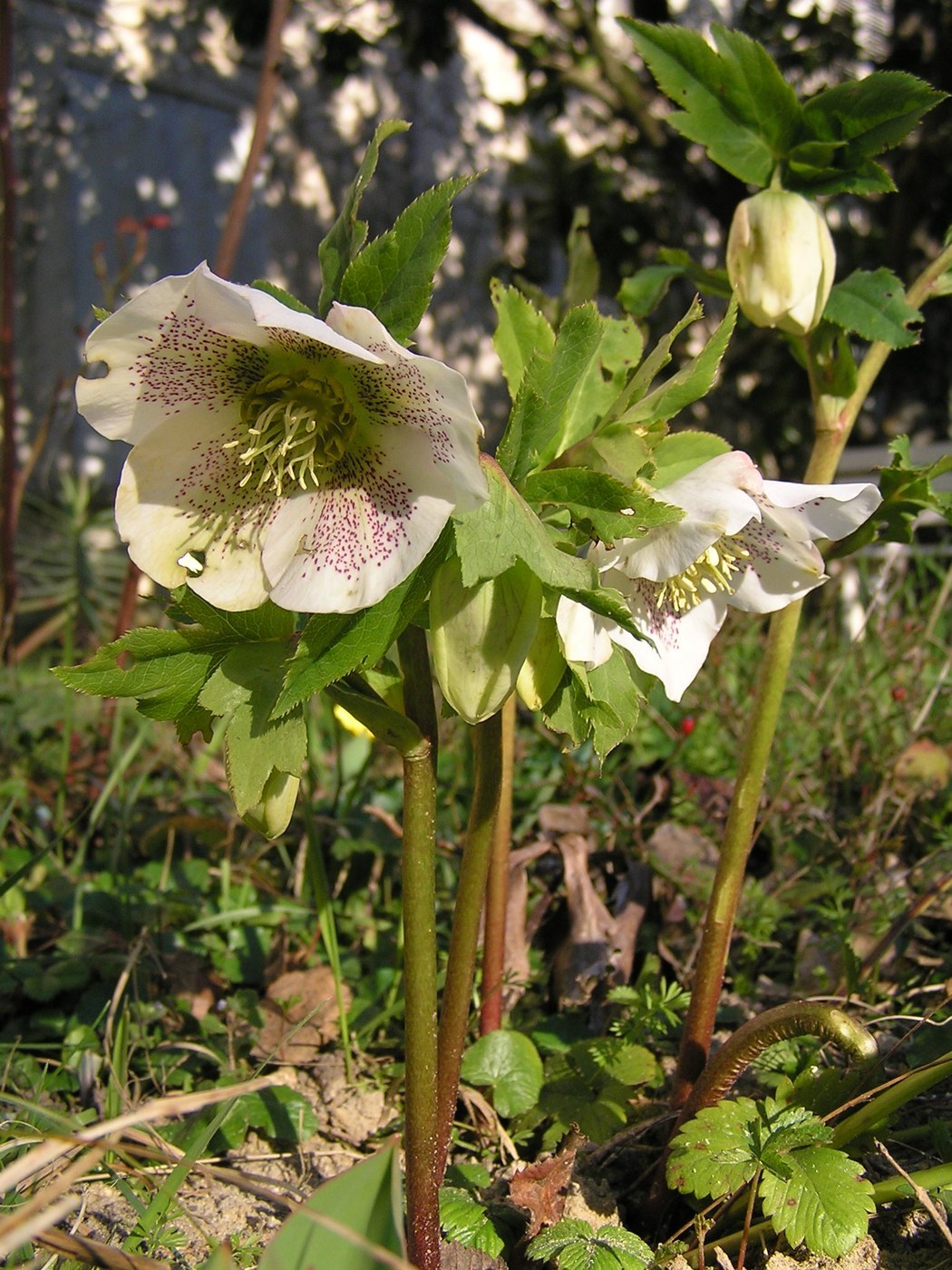
Key Identifying Features
Hellebores (genus Helleborus, including the Lenten rose and Christmas rose) are prized for blooming in late winter to early spring, often through snow. Look for nodding, cup-shaped flowers above evergreen, leathery, deeply divided leaves.
- Flowers: nodding 5-petaled cups (actually sepals) in white, green, pink, purple, near-black, or spotted
- Leaves: leathery, evergreen, palmately divided, toothed
- Bloom: winter to spring, very long-lasting
- Habit: low clumps in shade
Leaves & Stems
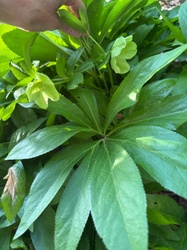
Leaves are thick, leathery, dark green, and palmately divided into several (often 7-9) lance-shaped, serrated leaflets radiating like fingers, on sturdy stalks from the base or low stems. Most are evergreen, persisting through winter (older leaves often blacken and should be trimmed). Plants form low, dense clumps.
Flowers & Fruit
The showy "petals" are actually five persistent sepals forming a bowl- or cup-shaped, usually nodding flower, with a ring of small tubular nectaries inside. Colors run from pure white and green to pink, plum, slate, and almost black, often freckled or picotee-edged. Flowers last for weeks, gradually turning green as they age and set clustered, pod-like follicles of seed. The Christmas rose (H. niger) blooms white in midwinter; the Lenten rose (H. × hybridus) blooms in late winter/early spring in many colors.
How to Tell It Apart from Look-Alikes
- Hosta: undivided, parallel-veined leaves and summer lily flowers — hellebore leaves are divided into finger-like leaflets and bloom in winter.
- Wild geranium / cranesbill: palmately lobed leaves too, but soft, not leathery/evergreen, and flat summer flowers.
- Bergenia: leathery evergreen leaves but rounded and undivided with pink spring flower clusters.
- Buttercups (relatives): similar flower nectaries but small yellow flowers and soft foliage.
The defining combo is leathery evergreen palmate leaves + nodding cup flowers blooming in winter/early spring.
Where You'll Find It
Hellebores are planted in shady to part-shade borders, woodland gardens, and under deciduous trees, where their winter bloom shines. They like rich, moist, well-drained soil. They are not native to North America (Europe/Asia) but are widely grown and can self-seed into garden colonies.
Quick ID Checklist
- Leathery, evergreen leaves
- Leaves palmately divided into toothed leaflets
- Nodding, cup-shaped flowers (5 sepals)
- Blooms in winter to early spring
- Flowers long-lasting, aging to green
- Low shade-garden clumps
Frequently asked questions
Why is my hellebore blooming in winter?
That's its signature trait. Christmas rose blooms in midwinter and Lenten rose in late winter to early spring, often through snow, which is one of the easiest ways to identify the genus.
Are the colorful petals really petals?
No. The showy parts are actually persistent sepals, which is why the flowers last for weeks and gradually turn green as they age. The true petals are reduced to small nectaries inside.
How do I tell a hellebore from a hosta when not in bloom?
Hellebore leaves are leathery, evergreen, and divided into finger-like toothed leaflets, while hosta leaves are large, undivided, and parallel-veined, and die back in winter.
Hellebore identified by the community
Recent Hellebore specimens identified with Plant Identifier.