Hellebore
Helleborus orientalis
An evergreen shade perennial that blooms in late winter and early spring, when little else does, with nodding, cup-shaped flowers in white, pink, plum, and green. Long-lived and deer-resistant.
- Light
- Partial to full shade
- Water
- Keep soil evenly moist
- Difficulty
- Easy
Got a plant like this?
Identify any plant from a photo, free.
Overview
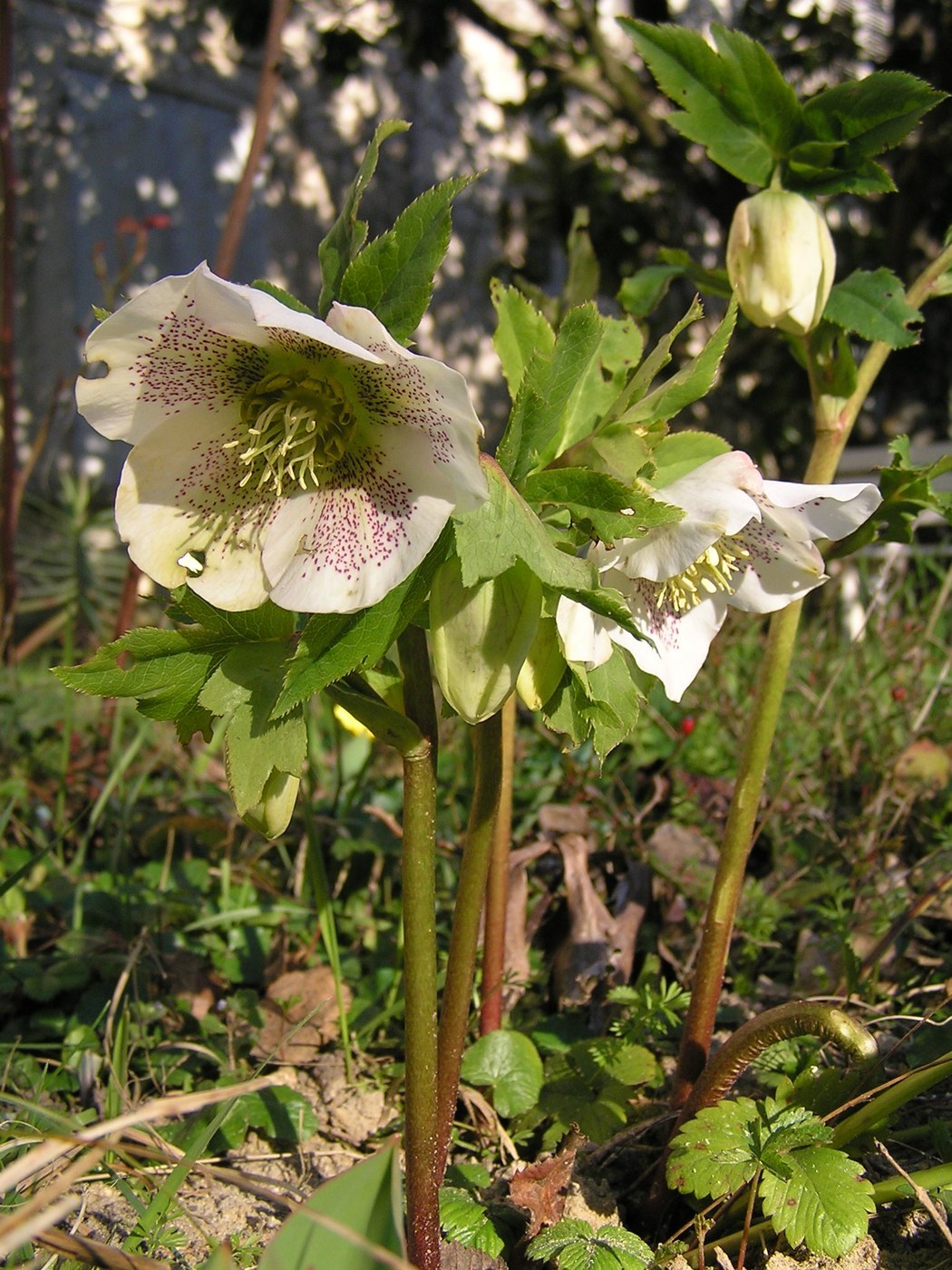
Hellebores are treasured for flowering in the depths of winter and earliest spring, their nodding, cup-shaped blooms appearing when the garden is otherwise bare. The Lenten rose, Helleborus orientalis and its hybrids, opens around the Christian season of Lent in shades from pure white to deep plum, often speckled inside.
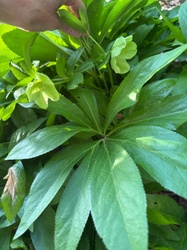
The leathery, deeply divided evergreen leaves provide year-round structure in the shade garden. Plants are long-lived, slowly forming substantial clumps.
Tough, shade-loving, and resistant to deer and rabbits, hellebores are a prized choice for woodland borders.
How to identify it
- Flowers: Nodding, cup- or saucer-shaped, 2-3 in. wide, in white, pink, rose, plum, yellow, or green, often with spotted interiors; the showy parts are actually sepals
- Leaves: Leathery, evergreen, deeply divided into toothed leaflets, dark green
- Habit: Clumping mound 1-2 ft tall
- Bloom time: Late winter to early spring, very long-lasting
- Note: Flowers face downward and persist for weeks as they age to green
Care & growing
Light: Partial to full shade; appreciates dappled light beneath deciduous trees.
Water: Keep soil evenly moist; tolerates some dryness in summer once established.
Soil: Rich, humusy, well-drained, neutral to slightly alkaline soil.
Temperature: Hardy in USDA zones 4-9; flowers withstand frost and snow.
Feeding: Topdress with compost in fall or feed lightly in late winter.
Propagation: By division in early fall, or from seed (hybrids vary and take years to bloom). Cut away tattered old leaves in late winter to showcase the emerging flowers.
Habitat & origin
Helleborus orientalis is native to the woodlands and scrubby slopes of Greece, Turkey, and the Caucasus, where it grows in shade and rich, rocky soil.
Other hellebore species range across Europe and Asia. The genus is widely cultivated in temperate shade and woodland gardens, valued for its rare winter bloom.
Frequently asked questions
When do hellebores bloom?
From late winter into early spring, often starting in January or February depending on the type and climate, when few other plants are flowering.
Are hellebores evergreen?
Many, including the Lenten rose, keep leathery evergreen foliage year-round. Trimming tattered old leaves in late winter helps the new flowers stand out.
Why are my hellebore flowers facing down?
Nodding, downward-facing blooms are natural for many hellebores, a trait that protects the flowers from winter weather. Newer hybrids have more outward-facing blooms.
Hellebore guides
In-depth guides for identifying, growing, and caring for Hellebore.
How to Care for Hellebore
Grow long-lived Helleborus orientalis in shade with rich, moist, well-drained soil for elegant winter-to-spring blooms.
Hellebore Identification Guide
Identify hellebores (Lenten and Christmas rose) by their evergreen, leathery palmate leaves and nodding, long-lasting winter-to-spring cup flowers.
Hellebore identified by the community
Real specimens identified with Plant Identifier.