Henbane Identification Guide
How to identify henbane (Hyoscyamus niger), a foul-smelling nightshade with sticky-hairy lobed leaves and funnel-shaped greenish-yellow flowers veined in purple. Includes look-alikes.
Read the full Henbane encyclopedia entry →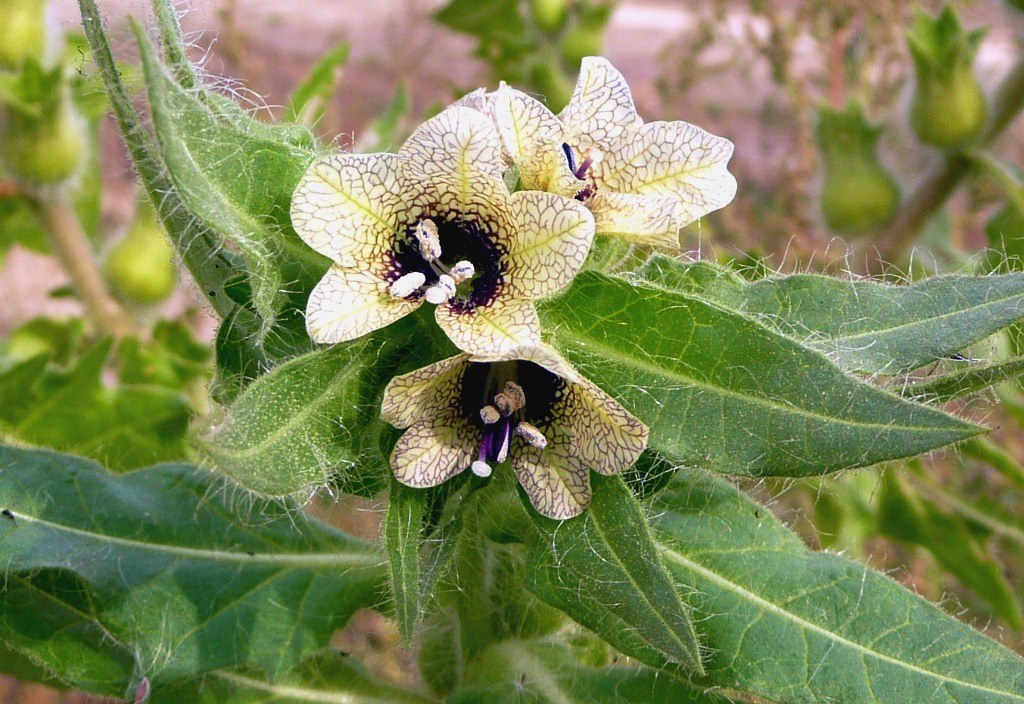
Key Identifying Features
Henbane (Hyoscyamus niger) is a coarse, strongly foul-smelling member of the nightshade family, growing as an annual or biennial. Identify it by its sticky, glandular-hairy, gray-green lobed leaves, its distinctive funnel-shaped dull yellow flowers netted with purple veins and dark purple throats, and its row of urn-shaped seed capsules along an arching stem.
- Whole plant clammy, hairy, and rank-smelling
- Coarsely lobed/toothed grayish-green leaves that clasp the stem
- Greenish-yellow flowers with a purple-veined network and dark center
- Pineapple-shaped seed capsules with a lid, in a one-sided row
- Plants 1 to 3 feet tall
Leaves & Stems
Leaves are large, soft, and covered in sticky glandular hairs that make them feel tacky and smell unpleasant when touched. They are grayish-green, oblong, and coarsely lobed or jaggedly toothed, with the upper leaves clasping the stout, hairy stem directly (no stalk). The plant forms a leafy rosette in its first year (when biennial) and a branching, glandular-hairy flowering stem the next. The overall impression is of a soft, drooping, slightly greasy-looking weed.
Flowers & Fruit
The flowers are funnel- to bell-shaped, about 1 to 1.5 inches across, and a muddy greenish-yellow to cream color heavily netted with fine purple-brown veins, with a deep purple throat and purple stamens. They are borne in a leafy, one-sided coil that uncurls as it blooms. Each flower matures into a distinctive urn- or pineapple-shaped capsule enclosed in the persistent calyx, opening by a lid (circumscissile) to release many small seeds. Flowering occurs in summer.
How to Tell It Apart from Look-Alikes
- Jimsonweed (Datura): Has large white or violet trumpet flowers and spiny round seed pods, not netted yellow flowers or lidded urn capsules.
- Mulleins (Verbascum): Are woolly, not sticky-glandular, and have flat yellow flowers in tall spikes without purple veining.
- Other nightshades: Lack the rank smell, the purple-veined dull-yellow flowers, and the lidded capsules.
The rank odor, sticky glandular hairs, purple-veined yellow flowers, and lidded urn fruits together are unmistakable.
Where You'll Find It
Henbane grows on disturbed, dry, often calcareous or sandy ground: roadsides, waste places, old farmyards, fields, dumps, and gravelly banks. Native to Eurasia and North Africa, it is naturalized across parts of North America, where it grows mostly as a weed of disturbed ground.
Quick ID Checklist
- Coarse weed, 1 to 3 ft, rank smell
- Sticky glandular hairs all over
- Grayish, coarsely lobed, stem-clasping leaves
- Dull yellow flowers with purple veins and dark throat
- Lidded urn/pineapple-shaped capsules in a one-sided row
- Found on disturbed dry ground
Frequently asked questions
What does henbane smell like?
It has a strong, rank, unpleasant odor, especially when the sticky glandular-hairy leaves are bruised, which is one of the first clues to its identity.
How do I tell henbane from jimsonweed?
Henbane has dull greenish-yellow flowers netted with purple veins and lidded urn-shaped seed capsules, while jimsonweed has large white or violet trumpet flowers and spiny round seed pods.
What do the flowers look like up close?
They are funnel-shaped, about an inch across, muddy yellow with a fine network of purple-brown veins and a dark purple throat and stamens, borne in a one-sided uncurling coil.
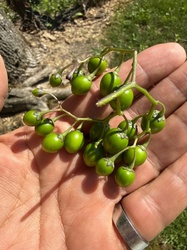
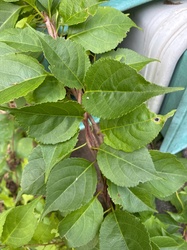
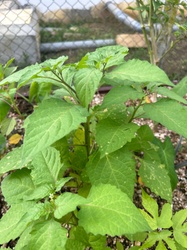
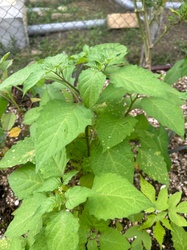
Henbane identified by the community
Recent Henbane specimens identified with Plant Identifier.