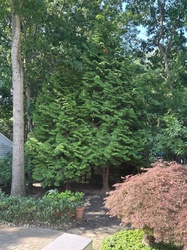
Hinoki Cypress Identification Guide
Identify Hinoki Cypress (Chamaecyparis obtusa) by its rich green, flat sprays of scale foliage marked with white Y-shaped lines underneath and its softly cupped, shell-like fans.
Read the full Hinoki Cypress encyclopedia entry →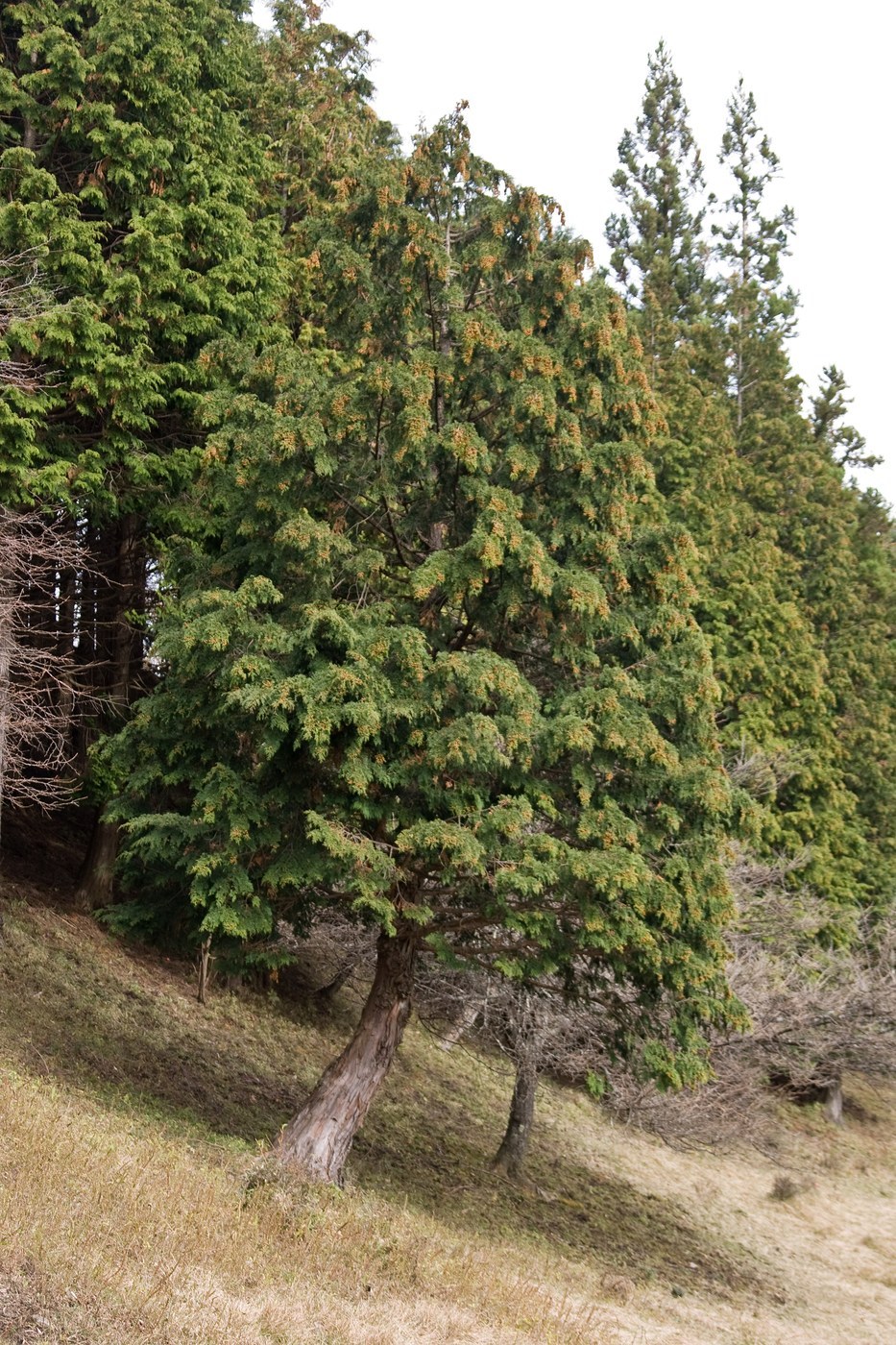
Key Identifying Features
Hinoki Cypress (Chamaecyparis obtusa) is a Japanese false-cypress grown from large forest trees to countless dwarf ornamental cultivars. In gardens it is prized for its rich green, glossy, flat sprays of foliage that curl into rounded, shell- or cup-shaped fans, giving a layered, sculptural texture. Sizes range from 2-ft dwarf mounds to 40+ ft trees, depending on cultivar.
- Foliage: dense, flat, fan-like sprays; soft and slightly cupped
- Texture: layered, shell-like, often described as "cloud" foliage
- Color: deep glossy green (gold and blue cultivars exist)
Leaves & Stems
Leaves are tiny, blunt-tipped scales pressed against the twig (the species name obtusa refers to the blunt tips). They form flattened sprays, but the foliage tends to curl or cup, giving a rounded, shell-like or fan-shaped appearance rather than lying perfectly flat. The diagnostic feature is on the underside: pale white stomatal markings shaped like a "Y" or blunt "X" between the scales. Foliage is glossy deep green above. Bark is reddish-brown and peels in long, soft fibrous strips. Crushed foliage has a mild resinous scent.
Flowers & Fruit
Seed cones are small, round, woody, and only about 1/3 inch (8-10 mm) across, made of 8-12 shield-shaped scales, ripening orange-brown - notably small and ball-like. Tiny reddish pollen cones appear at branch tips. The small round cones help separate it from arborvitae's elongated urn cones.
How to Tell It Apart from Look-Alikes
- Sawara cypress (Chamaecyparis pisifora): very similar, but foliage tips are sharp/pointed, undersides have white X- or butterfly-shaped marks, and sprays are flatter and less cupped.
- Arborvitae (Thuja): flatter, fern-like sprays, upright elongated urn cones, and a sweet aroma; no shell-like cupping.
- Atlantic/Lawson cypress: different white-marking patterns and cone sizes.
- Junipers: rounded 3-D foliage and berry-like cones, not flat cupped sprays.
The glossy green cupped shell-like sprays + blunt scale tips + Y-shaped white underside marks + tiny round woody cones confirm hinoki cypress.
Where You'll Find It
Native to Japan (an important timber and temple-building tree there), hinoki cypress is hugely popular in gardens, bonsai, conifer collections and foundation plantings worldwide, with hundreds of cultivars ('Nana Gracilis', 'Crippsii' gold, etc.). Look for it in specimen plantings and Japanese-style gardens in part to full sun.
Quick ID Checklist
- Flat sprays of scale foliage that cup into shell/fan shapes
- Blunt-tipped scales; glossy deep green
- White Y- or blunt X-shaped marks on the underside
- Small round woody cones ~1/3 in with shield scales
- Reddish peeling fibrous bark; many dwarf cultivars
Frequently asked questions
How do I tell hinoki from sawara cypress?
Check the foliage: hinoki has blunt scale tips and Y-shaped white underside markings, with cupped shell-like sprays. Sawara has sharp-pointed tips and X- or butterfly-shaped white marks on flatter sprays.
How is it different from arborvitae?
Hinoki produces small round woody ball cones and cupped, shell-like foliage, while arborvitae has flat fern-like sprays and elongated upright urn-shaped cones with a sweeter aroma.
What do the white markings mean?
They are stomatal bands (breathing pores) on the leaf underside. Their distinctive Y or blunt-X shape is a reliable feature for identifying hinoki cypress among false-cypresses.
Why are there so many sizes?
Hinoki cypress has hundreds of cultivars, from 2-foot dwarf mounds used in rock gardens and bonsai to 40-foot-plus trees, so size alone won't identify it - rely on foliage and cone features.
Hinoki Cypress identified by the community
Recent Hinoki Cypress specimens identified with Plant Identifier.