
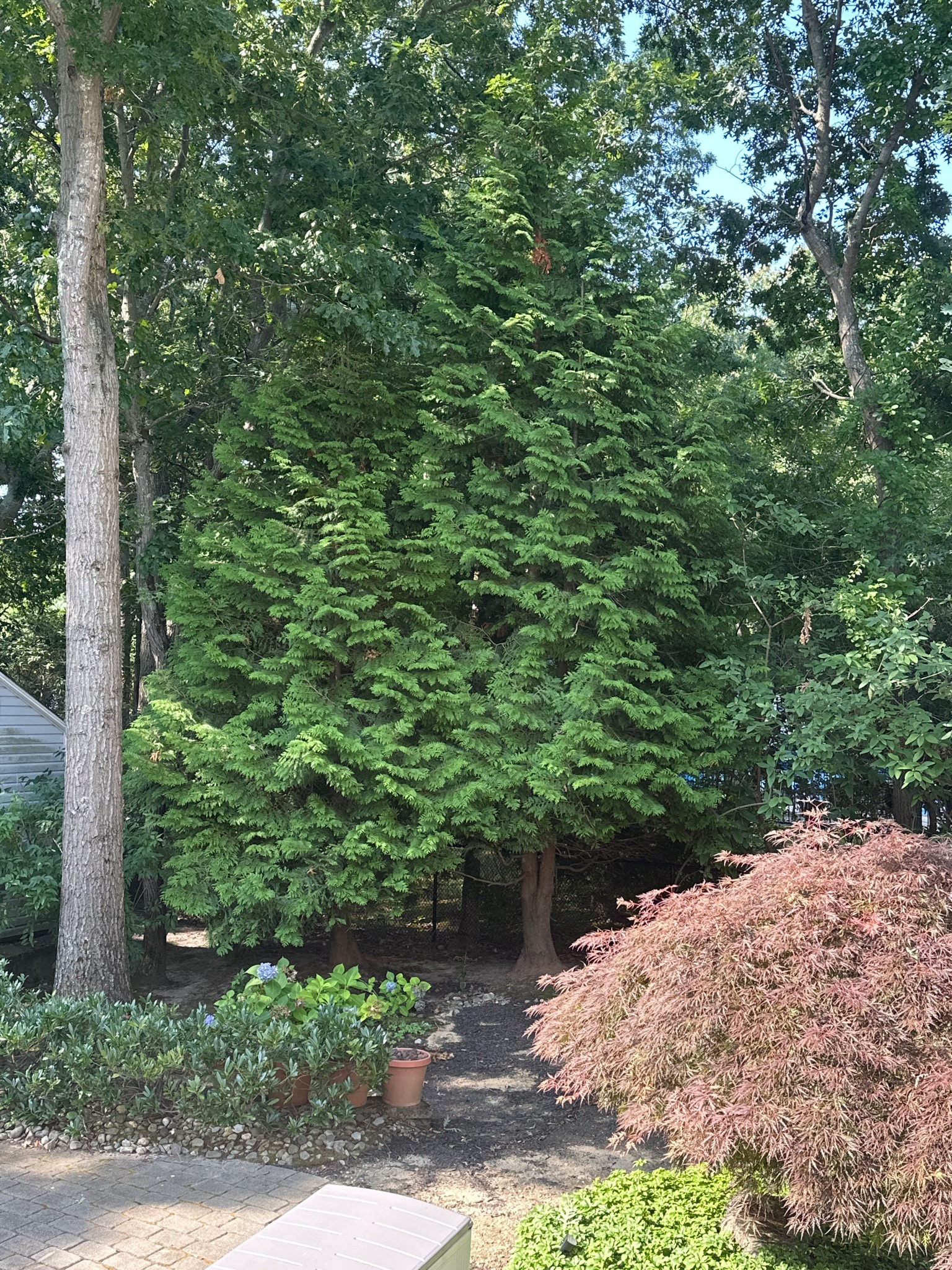
Hinoki Cypress
Chamaecyparis obtusa
An evergreen conifer with dense, graceful, fan-like fronds of dark green foliage. It features reddish-brown fibrous bark and a neat, broadly pyramidal or conical growth habit.
- Light
- Full sun to partial shade (4 to 6+ hours of direct light daily).
- Water
- Requires regular watering when young to establish a deep root system. Once mature, keep soil moderately moist; water during extended dry spells.
- Growth
- Perennial evergreen tree or large shrub with a pyramidal, dense, slow-to-moderate growth rate, maturing to 50-75 feet tall in nature, though cultivars remain much smaller.
Care instructions
Plant in full sun to partial shade in moist, well-draining, slightly acidic soil. Protect young trees from harsh, dry winter winds. Apply a balanced evergreen fertilizer in early spring if growth is sluggish.
Growing details
Sunlight
Full sun to partial shade (4 to 6+ hours of direct light daily).
Watering
Requires regular watering when young to establish a deep root system. Once mature, keep soil moderately moist; water during extended dry spells.
Soil
Prefers fertile, moist, well-drained, acidic to neutral soil (pH 5.0 to 7.0). Does not tolerate wet or waterlogged conditions.
Hardiness zone
USDA Zones 4 to 8
Growth habit
Perennial evergreen tree or large shrub with a pyramidal, dense, slow-to-moderate growth rate, maturing to 50-75 feet tall in nature, though cultivars remain much smaller.
Bloom season
Non-flowering; produces small, spherical seed cones in late summer to autumn.
Propagation
Propagated primarily through semi-hardwood cuttings taken in late autumn or winter, or via seed stratifying.
Common pests & issues
Susceptible to root rot in poorly drained soils. Can occasionally suffer from juniper scale, bagworms, spider mites, or winter desiccation.
Similar species
Thuja occidentalis (Eastern Arborvitae) has flat, scale-like sprays but lacks the distinctly layered fan-like appearance and white 'X' stomatal markings on the underside of foliage found on Chamaecyparis obtusa.