
How to Care for Holly
Grow glossy evergreen English holly with our care guide covering light, watering, pruning, and berry production for a lush hedge or specimen.
Read the full Holly encyclopedia entry →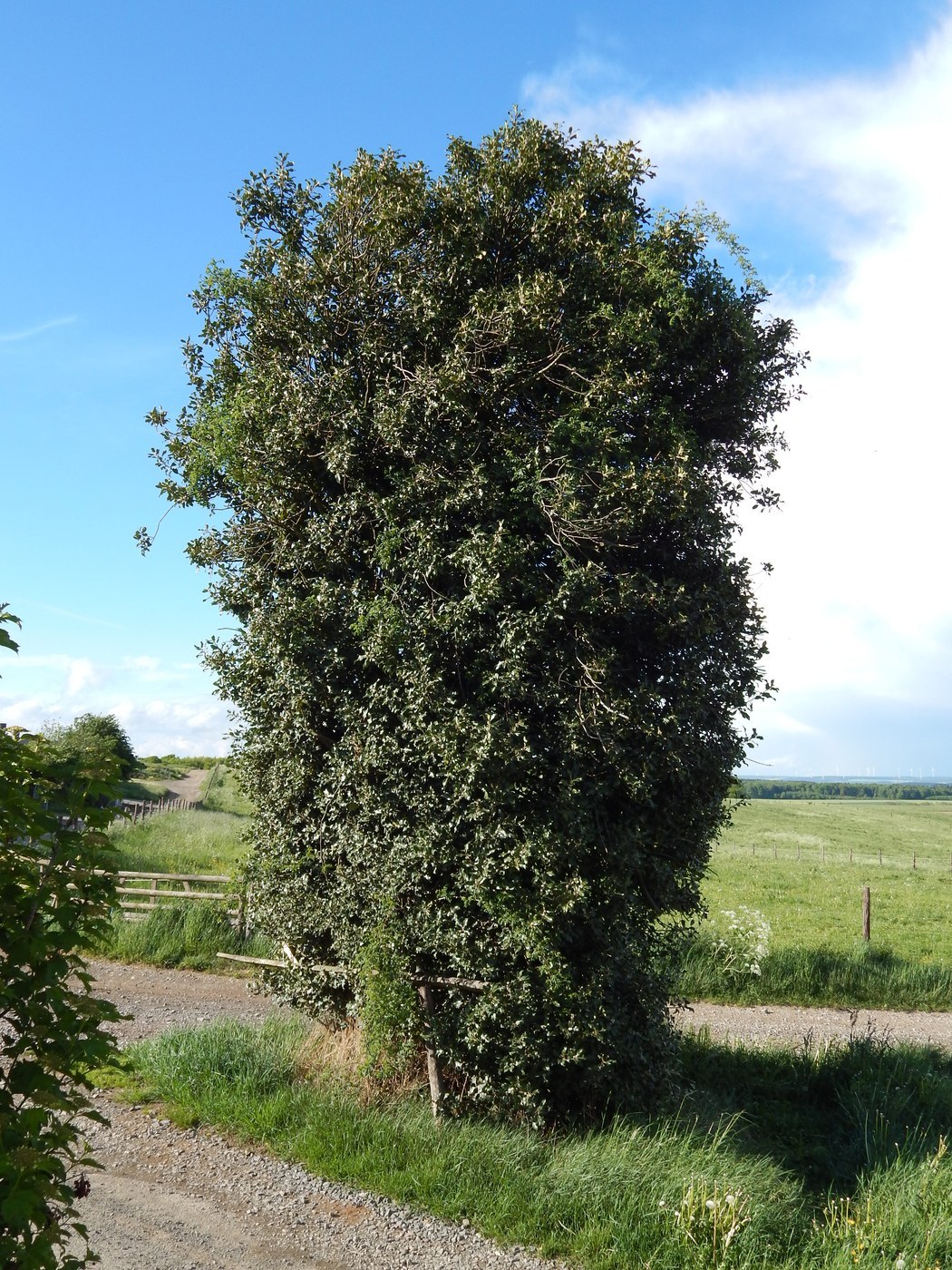
English holly (Ilex aquifolium) is a slow-growing evergreen shrub or small tree prized for its glossy, spine-edged leaves and bright winter berries. It is an easy, long-lived plant that rewards patient growers with dense, sculptural year-round structure.
Light
Holly performs best in full sun to part shade. Full sun produces the densest growth and the heaviest berry set, while plants in partial shade grow more openly and hold slightly larger, darker leaves. Variegated cultivars need several hours of direct sun to keep their gold or cream markings crisp; too much shade dulls the variegation and thins the canopy.
Water
Provide moderate, even moisture, especially during the first two or three years while roots establish. Aim to keep the soil consistently moist but never waterlogged, watering deeply once or twice a week in dry spells and letting the top inch dry slightly between soakings. Mature plants tolerate short dry periods but respond to summer drought with leaf drop and reduced berrying. A mulch ring conserves moisture and buffers root temperature.
Soil & Potting
Holly prefers a fertile, humus-rich, well-drained soil that is slightly acidic to neutral. It dislikes heavy, compacted, or perpetually soggy ground. Improve stiff clay with organic matter and coarse grit to open drainage. Container specimens do well in a loam-based potting mix amended with bark for aeration; choose a pot with generous depth for the taproot-leaning root system.
Humidity & Temperature
This is a cool-temperate plant that shrugs off frost and thrives in mild, humid maritime climates. It handles a wide range of temperatures but appreciates shelter from harsh, drying winter winds that scorch the foliage. In hot, arid regions give afternoon shade and extra moisture to prevent leaf bronzing.
Feeding
Holly is a light feeder. An annual spring application of a balanced slow-release fertilizer or a top-dressing of compost is usually enough. An acid-formulated feed helps in alkaline soils where leaves yellow between the veins. Avoid heavy late-season nitrogen, which pushes soft growth vulnerable to cold damage.
Propagation
Most holly is propagated from semi-hardwood cuttings taken in late summer to autumn, dipped in rooting hormone and set in a gritty, free-draining mix under humidity. Rooting is slow, often taking several months. Species holly can also be grown from seed, but the seed needs a long cold stratification and may take one to two years to germinate. Remember that holly is dioecious: to get berries you need a berry-bearing female plant with a compatible male pollinator nearby.
Repotting / Pruning
Holly tolerates hard pruning and is a classic hedging and topiary subject. Trim to shape in late spring or summer once the main flush has hardened; hollies also break readily from old wood if you need to renovate an overgrown plant. Prune female plants after the flowers if you want to preserve the developing berries. Repot container plants every two to three years into the next size up, refreshing the top layer of mix in the intervening years.
Common Problems & Pests
Holly leaf miner tunnels blister-like trails through the foliage; pick off and destroy affected leaves. Scale insects and holly aphids can colonize stems and leaf undersides, producing sticky honeydew and sooty mold; treat with horticultural oil. Yellowing leaves usually signal alkaline soil, poor drainage, or nutrient shortage. Sudden leaf drop most often follows drought stress or transplant shock. Good airflow and clean-up of fallen leaves limit fungal leaf spots.
Seasonal Care Tips
Plant in autumn or early spring while the soil is workable and moist. Water attentively through the first summers. Shear hedges in mid to late summer. Mulch in autumn to protect roots over winter, and shelter young or newly planted specimens from cold winds. Enjoy the berry display through winter, and prune any storm-damaged growth in early spring.
Frequently asked questions
Why does my holly have no berries?
Holly plants are either male or female, and only females bear berries, and only when a compatible male grows nearby to pollinate them. Check that you have a berrying female plus a pollinator, and give it full sun and steady moisture for the best set.
How fast does holly grow?
English holly is slow-growing, often adding only 6 to 12 inches a year. This makes it excellent for tight, formal hedges but means you should start with a healthy plant and be patient while it fills in.
Can I grow holly in a pot?
Yes. Use a deep container with a loam-based, well-drained mix, keep it evenly moist, and feed lightly each spring. Repot every two to three years and shelter it from drying winter winds.
When should I prune holly?
Trim in late spring or summer after the main flush of growth hardens. Holly tolerates hard cutting and resprouts from old wood, so you can renovate overgrown plants, though pruning females after flowering preserves the berries.