
Holly Identification Guide
Identify Holly (Ilex) by its glossy, often spiny-margined leaves, separate male and female plants, and bright red (or black) berries on the female shrubs.
Read the full Holly encyclopedia entry →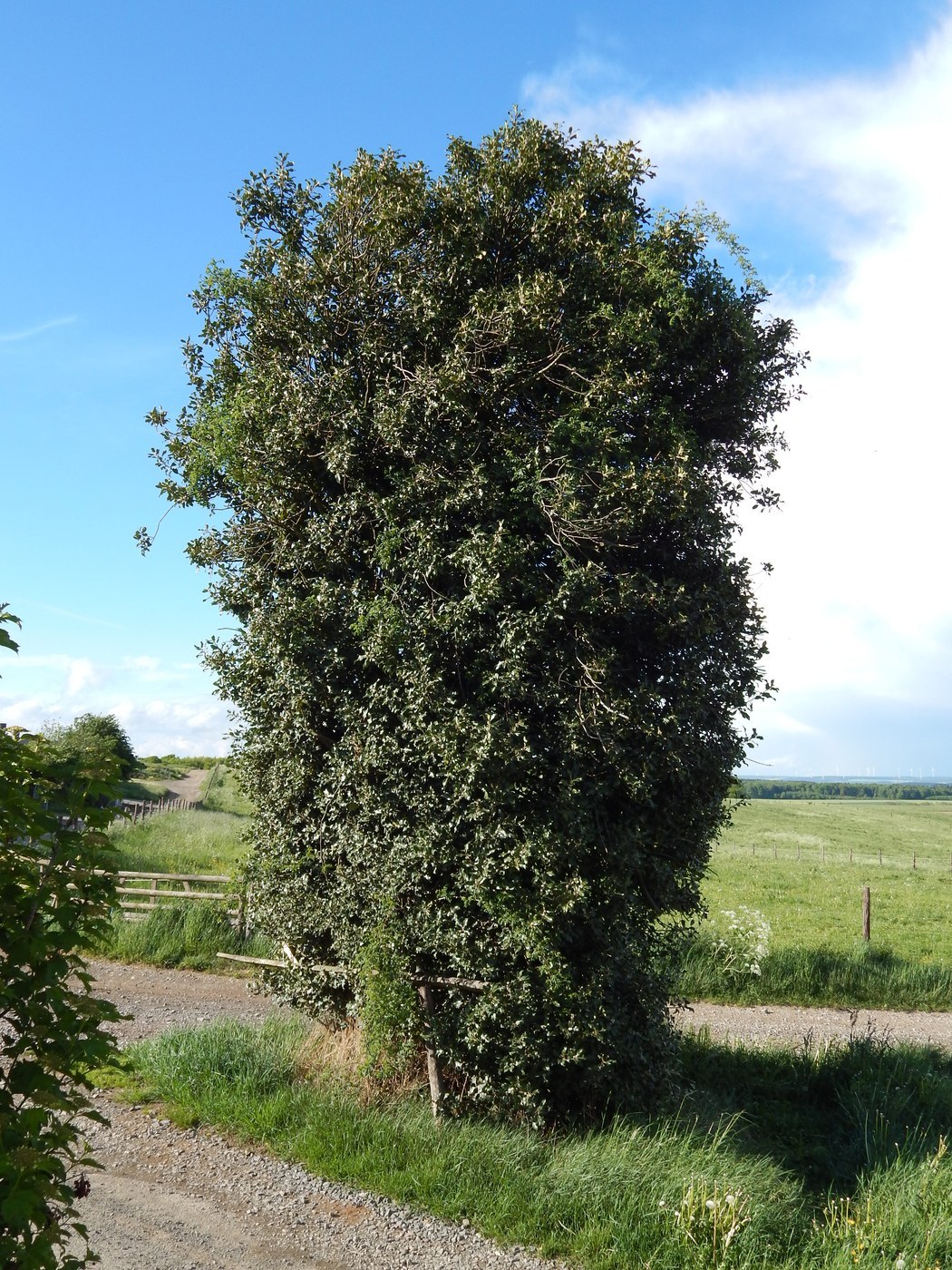
Key Identifying Features
Holly (genus Ilex) is the classic evergreen shrub or tree of winter holiday imagery. The familiar types are recognized by glossy, leathery leaves with spiny-toothed margins and bright red berries clustered along the stems of female plants.
- Glossy, leathery, often spine-tipped leaves
- Bright red berries (some species black, yellow, or orange)
- Separate male and female plants (dioecious) — only females fruit
- Alternate leaf arrangement; smooth gray bark
Leaves & Stems
Leaves are alternate, leathery and glossy dark green, classically wavy-edged with stiff, sharp marginal spines (as in English and American holly). Note that many hollies — and even the upper leaves of spiny species — can be smooth-edged, so spininess varies. Smaller-leaved types like Japanese holly (Ilex crenata) have tiny, finely toothed, box-like leaves. Stems are smooth and gray-green to gray; the wood is dense. Most ornamental hollies are evergreen, though some (like winterberry) are deciduous.
Flowers & Fruit
Hollies are dioecious: male and female flowers occur on separate plants, so you need both nearby for berries. Flowers are small, white to greenish, four-petaled, in late spring, fragrant and bee-visited. Only female plants bear fruit — small, round, hard berry-like drupes, most famously bright red but black (inkberry), yellow, or orange in some species, ripening in fall and persisting through winter.
How to Tell It Apart from Look-Alikes
- Oregon grape (Mahonia) has spiny holly-like leaflets but they are compound and bears blue berries and yellow flower spikes.
- Boxwood / Japanese holly confusion: boxwood has opposite, smooth-edged leaves, while Japanese holly has alternate, finely toothed leaves and black berries.
- Holly oak has acorns, not berries.
- The combination of alternate glossy leaves (often spiny) + separate sexes + clustered red berries confirms Holly.
Where You'll Find It
Hollies are planted worldwide in temperate gardens as hedges, screens, and specimens, and many species are native to woodlands of North America, Europe, and Asia. They tolerate sun to shade and acidic, well-drained soils; birds spread the berries, naturalizing some species.
Quick ID Checklist
- Glossy leathery leaves, often spiny-margined
- Alternate leaf arrangement
- Red (or black/yellow) berries on female plants
- Separate male and female shrubs
- Small white 4-petaled spring flowers
Frequently asked questions
Why doesn't my holly have berries?
Hollies are dioecious — berries form only on female plants, and only when a male holly grows nearby to pollinate them. A berryless holly may be male or an unpollinated female.
Are all holly leaves spiny?
No. Spiny margins are typical of English and American holly, but many species (and the upper leaves of spiny ones) are smooth-edged, so spininess alone isn't definitive.
How do I tell holly from Oregon grape?
Oregon grape has spiny, holly-like leaflets that are part of a compound leaf and bears blue berries with yellow flower clusters, while true holly has simple leaves and red or black berries.
Is Japanese holly really a holly?
Yes, Ilex crenata is a true holly, but it has small, finely toothed, box-like leaves and black berries, making it easy to mistake for boxwood, which has opposite smooth-edged leaves.