How to Care for Hollyhock
Hollyhocks (Alcea rosea) are towering cottage-garden favorites with tall spires of colorful, saucer-shaped summer flowers.
Read the full Hollyhock encyclopedia entry →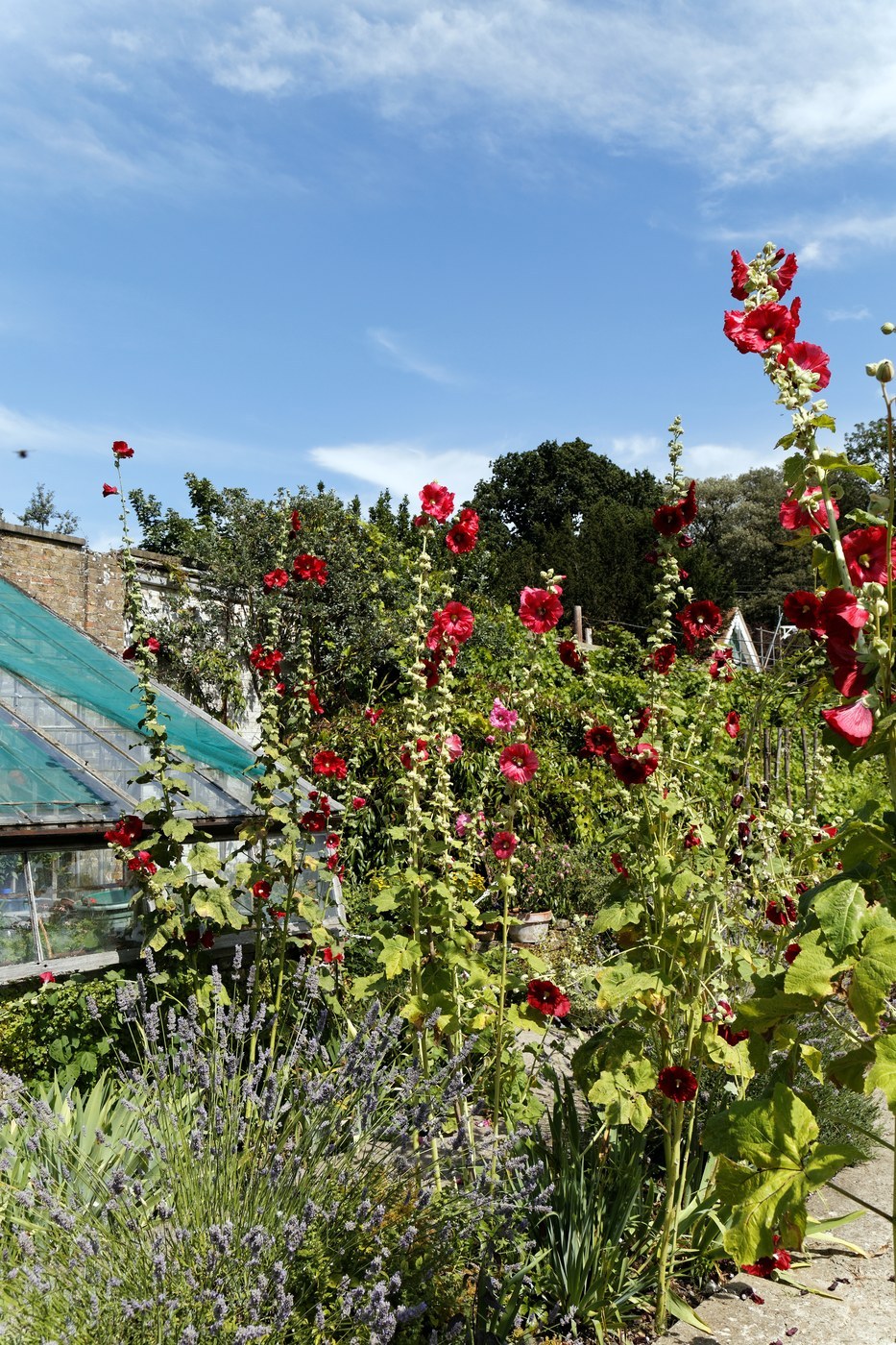
Hollyhocks are classic cottage-garden plants prized for their dramatic tall spires densely lined with large, saucer-shaped flowers in a wide range of colors. Usually grown as short-lived perennials or biennials, they are easy to grow and reseed themselves generously.
Light
Give hollyhocks full sun, at least 6 hours daily, for the strongest stems and most abundant flowers. In too much shade they grow lanky, flower poorly, and become more prone to disease. A sunny spot with good air movement is ideal.
Water
Water moderately, applying water at the base of the plant rather than overhead. Keeping the foliage dry greatly reduces the risk of rust, the plant's most common disease. Provide consistent moisture during dry spells, especially for these deep-rooted, thirsty growers.
Soil & Potting
Grow in rich, deep, well-drained soil enriched with organic matter. Hollyhocks are heavy feeders with long taproots and appreciate fertile ground. They dislike soggy soil. Because of their height and taproot, they are best grown in the ground rather than containers.
Humidity & Temperature
They are hardy in temperate climates and tolerate a wide range of conditions. Humid, still air encourages rust, so spacing and airflow matter. Plants benefit from cool winters and warm summers, and most behave as biennials, forming a rosette the first year and flowering the next.
Feeding
Feed with compost or a balanced fertilizer in spring and again as flower stalks develop, since hollyhocks are hearty feeders. Rich soil supports the tall growth and heavy bloom. Avoid excessive nitrogen, which promotes leafy growth at the expense of flowers.
Propagation
Hollyhocks are grown mainly from seed and self-sow freely, often returning year after year. Sow seed in late spring or summer for bloom the following year, or start earlier indoors. Transplant young seedlings carefully to avoid disturbing the taproot.
Repotting / Pruning
Stake tall stems in exposed sites to prevent them from toppling. After flowering, cut spent stalks back; leaving a few seed heads allows self-sowing. Removing rust-affected lower leaves through the season improves appearance and slows disease spread.
Common Problems & Pests
Hollyhock rust is the signature problem, showing as orange pustules on leaf undersides; improve airflow, water at the base, and remove infected leaves promptly. Watch for aphids, spider mites, and leaf-chewing caterpillars or sawfly larvae. Slugs may damage young plants. Good sanitation and clearing debris at season's end reduce recurrence.
Seasonal Care Tips
In spring, sow seed and feed as growth resumes, thinning seedlings to space them well. Through summer, water at the base, stake tall spires, and remove rust-affected leaves. After bloom, cut back stalks, leaving a few seed heads for self-sowing. In autumn clear old foliage to reduce overwintering disease, and mulch crowns in cold regions.
Frequently asked questions
What are the orange spots on my hollyhock leaves?
That is hollyhock rust, a common fungal disease. Water at the base to keep foliage dry, improve air circulation, remove and dispose of affected leaves promptly, and clear old debris at season's end.
Are hollyhocks perennials or biennials?
Most hollyhocks behave as short-lived perennials or biennials, forming a leafy rosette the first year and flowering the next. They self-sow so freely, though, that they often seem to return every year.
Why are my hollyhocks falling over?
Their tall flower spires can topple in wind or rich, shady conditions. Grow them in full sun for sturdier stems, and stake tall spikes in exposed sites to keep them upright.
How do I get hollyhocks to come back each year?
Let a few spent flower stalks form seed heads and drop seed, or scatter collected seed where you want plants. They self-sow readily, so new plants will appear and bloom the following season.
Hollyhock identified by the community
Recent Hollyhock specimens identified with Plant Identifier.