Hollyhock
Alcea rosea
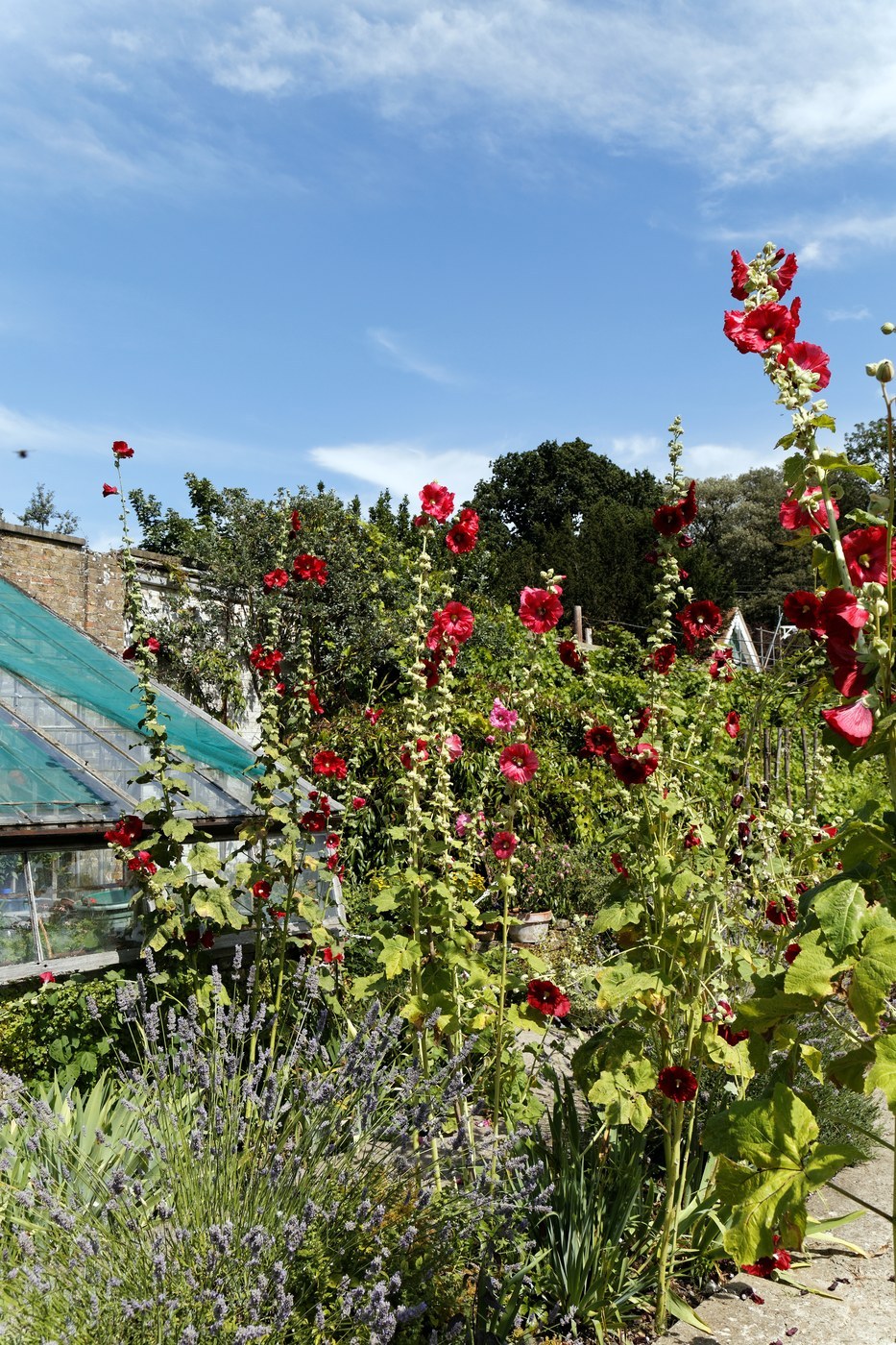
Hollyhock is a towering cottage-garden biennial bearing tall spires of large, saucer-shaped flowers. Its dramatic height makes it a classic backdrop for fences and walls.
- Light
- Full sun
- Water
- Moderate; water at the base
- Difficulty
- Easy
Got a plant like this?
Identify any plant from a photo, free.
Overview
Hollyhock (Alcea rosea) is a stately member of the mallow family, sending up flower spikes that can reach 6-8 feet or more. Large single or double blooms in white, pink, red, purple, yellow and near-black open progressively up the stem in summer.
Usually grown as a biennial or short-lived perennial, it forms a rosette the first year and flowers the next, then self-seeds prolifically. It's one of the most recognizable old-fashioned cottage-garden plants.
How to identify it
Few garden plants match the hollyhock's tall, flowered spires.
- Flowers: large (3-5 in), saucer- or funnel-shaped, single or double, arranged up a tall spike
- Leaves: large, rounded, lobed and coarsely textured, forming a basal rosette and clasping the stem
- Habit: erect, columnar; flower spikes commonly 5-8 ft tall
- Stems: tall, sturdy, sometimes needing support in wind
Care & growing
Hollyhocks are easy in sun but prone to rust disease.
- Light: full sun
- Water: moderate; water at the base to keep foliage dry and reduce rust
- Soil: rich, well-drained soil
- Temperature: hardy in zones 3-8
- Feeding: a spring feed supports their large size
- Maintenance: remove rust-spotted lower leaves; stake tall spikes in exposed sites; let some seed pods ripen for self-sowing
- Propagation: from seed sown in summer for bloom the following year
Habitat & origin
Alcea rosea is thought to have originated in Asia, likely China, and has been cultivated for centuries across Europe and beyond. It is not a wild plant of a single defined range but a long-domesticated garden flower.
It thrives in sunny, sheltered spots and is a hallmark of cottage gardens, growing happily along fences, walls and the backs of borders worldwide.
Frequently asked questions
Why do my hollyhock leaves have orange spots?
That's hollyhock rust, a common fungal disease. Remove affected leaves, water at the base, improve air circulation, and avoid wetting the foliage.
Are hollyhocks annuals or perennials?
They're usually biennial, growing leaves the first year and flowering the second, then self-seeding. Some behave as short-lived perennials.
Do hollyhocks need staking?
In windy or exposed spots, yes. Their tall spikes can topple, so stake them or plant against a sheltering fence or wall.
Will hollyhocks come back each year?
Individual plants are short-lived, but they self-seed abundantly, so the patch typically renews itself with volunteer seedlings.
Hollyhock guides
In-depth guides for identifying, growing, and caring for Hollyhock.
Hollyhock identified by the community
Real specimens identified with Plant Identifier.