Hollyhock Identification Guide
Identify hollyhock by its towering flower spikes of large funnel-shaped blooms and big, rounded, lobed leaves.
Read the full Hollyhock encyclopedia entry →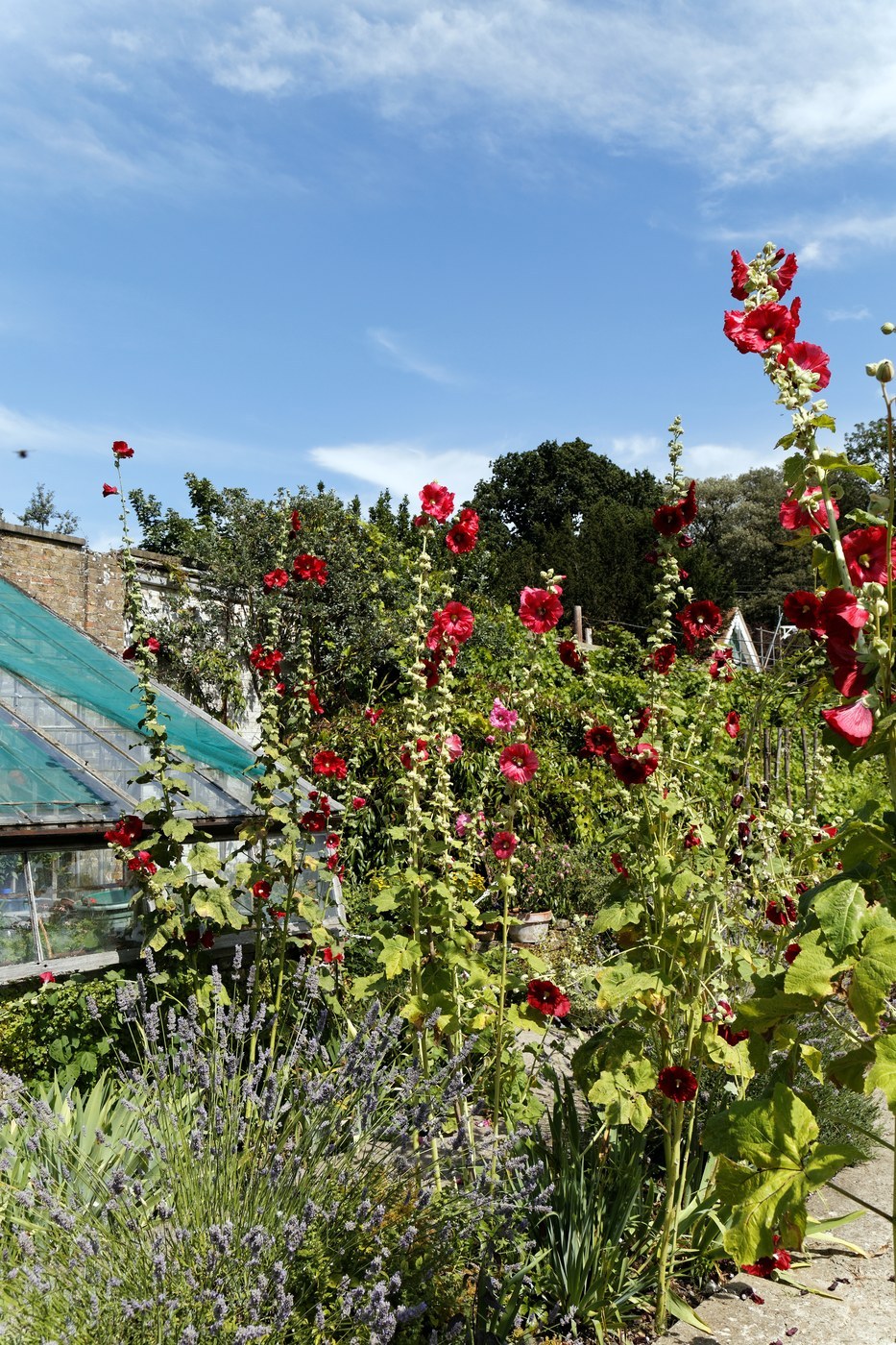
Key Identifying Features
Hollyhock (Alcea rosea) is unmistakable for its tall, stately flower spike — often 1.5–2.5 m (5–8 ft) high — lined with large, funnel- to saucer-shaped flowers. As a member of the mallow family, each bloom has the family's signature central column of fused stamens projecting from the throat.
- Very tall, single flowering spike
- Large (8–12 cm) five-petaled funnel flowers up the stem
- Staminal column in the flower center (mallow trait)
- Big, rough, rounded lobed leaves
Leaves & Stems
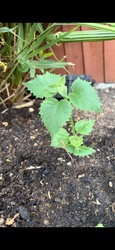
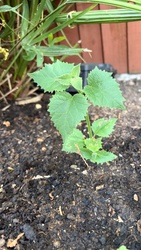
Leaves are large, rounded to heart-shaped, palmately 3–7 lobed with crinkled, toothed edges, and feel rough and hairy on both sides. They are largest near the base (up to 20 cm wide) and reduce in size up the stem. The stem is stout, erect, hairy, and usually unbranched, rising like a column. Hollyhock is typically a biennial or short-lived perennial: a leafy basal rosette the first year, then the tall bloom spike the second.
Flowers & Fruit
Flowers open from the bottom of the spike upward over many weeks in summer. Each has five broad petals that may be flat or ruffled, single or double, in white, pink, red, purple, yellow, or near-black. At the center, the stamens are fused into a tube around the style — the classic mallow column. The fruit is a flat, round, disk-like schizocarp (a "cheese") that breaks into wedge-shaped seed segments, just like other mallows.
How to Tell It Apart from Look-Alikes
- Common mallow (Malva): Same flower structure and staminal column but much smaller, sprawling plant with smaller flowers — not a tall spike.
- Rose of Sharon / Hibiscus: Also mallow-family with a staminal column, but they are woody shrubs with branching stems, not a single tall herbaceous spike.
- Foxglove: Tall spike too, but foxglove flowers are tubular bells with spotted throats and no staminal column.
The single tall spike + large funnel flowers + central staminal column + rough lobed leaves confirm hollyhock.
Where You'll Find It
A cottage-garden icon, hollyhock is grown along fences, walls, and the backs of borders for its height. It self-seeds prolifically and often naturalizes along roadsides, alleys, and old homesteads. It prefers full sun and rich, well-drained soil, and is frequently marked by orange rust fungus spots on the leaves — itself a near-diagnostic clue.
Quick ID Checklist
- Tall, unbranched flower spike (often 6+ ft)
- Large funnel-shaped five-petaled flowers
- Central column of fused stamens in each flower
- Big, rough, lobed, hairy leaves
- Flowers opening bottom-to-top
- Often shows orange rust spots on foliage
Frequently asked questions
How do I know a tall flower spike is a hollyhock and not a foxglove?
Check the flower: hollyhock has large open funnel-shaped blooms with a central column of fused stamens, while foxglove has tubular, spotted bells with no staminal column. Hollyhock leaves are also large, rounded, and lobed.
Is hollyhock related to common mallow?
Yes, both are in the mallow family and share the central staminal column and disk-shaped 'cheese' seed fruit. Hollyhock is simply much taller, with a single columnar flower spike.
Why are there orange spots on my hollyhock leaves?
That's hollyhock rust, a common fungal disease that produces orange-brown pustules on leaf undersides. It's so typical of the plant that it can even help confirm the ID.
Why did my hollyhock not flower the first year?
Hollyhock is usually biennial — it forms a basal rosette of leaves in year one and sends up its tall flowering spike in year two before setting seed.
Hollyhock identified by the community
Recent Hollyhock specimens identified with Plant Identifier.