
Holy Basil Identification Guide
Identify holy basil (tulsi) by its hairy stems, slightly toothed aromatic leaves with a clove-like scent, and tall purple-tinged flower spikes.
Read the full Holy Basil encyclopedia entry →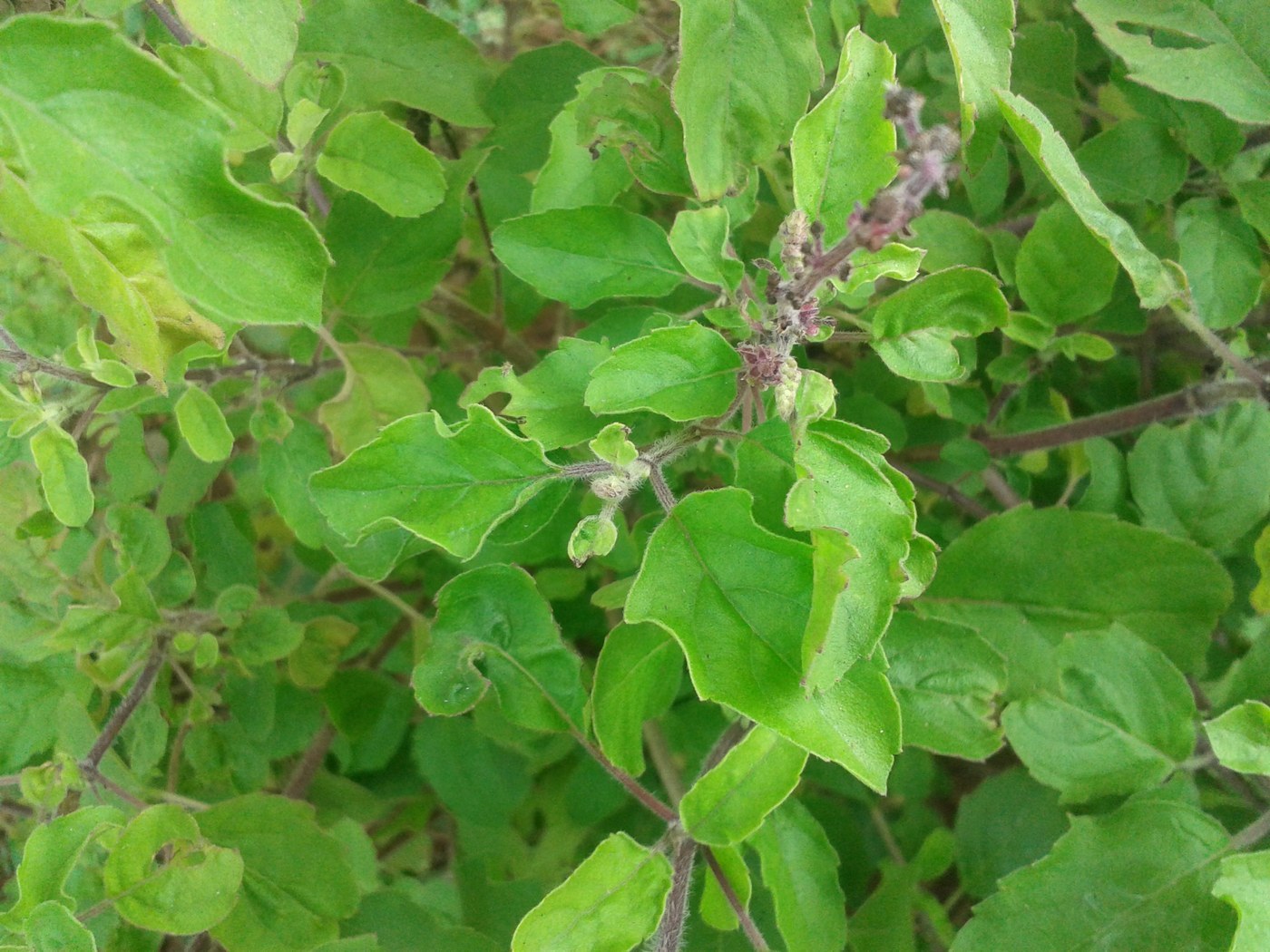
Key Identifying Features
Holy basil (Ocimum tenuiflorum, syn. O. sanctum), known as tulsi, is an aromatic perennial in the mint family (Lamiaceae) revered in India. Unlike sweet basil, tulsi has a spicy, clove-like, peppery aroma rather than a sweet anise-licorice scent. The plant is hairier and more upright, often with purple-tinged stems and leaves.
- Erect, much-branched plant 30–60 cm (1–2 ft) tall
- Hairy stems and leaves, often purple-flushed
- Oval leaves with slightly toothed, often wavy margins
- Clove-scented foliage
- Slender flower spikes of small purple-to-lilac flowers
Leaves & Stems
Leaves are oval to oblong, 2–5 cm long, with a lightly toothed (serrate) margin and a softly hairy surface. They grow in opposite pairs on square, hairy stems that may be green or purplish. Several cultivated types exist: Rama (green), Krishna (purple-leaved), and the wilder Vana form. The whole plant feels soft-hairy and releases a strong clove aroma when touched.
Flowers & Fruit
Flowers form on elongated, whorled spikes (racemes) at the stem tips — small two-lipped purple, lilac, or pinkish-white flowers arranged in tiers around the spike, with purple-tinged bracts. After flowering, tiny reddish-brown nutlets develop. The prominent upright flower spike is a strong ID feature.
How to Tell It Apart from Look-Alikes
- Sweet basil (Ocimum basilicum): has larger, smoother, often shiny and cupped leaves, mostly hairless stems, white flowers, and a sweet anise-clove scent. Holy basil is hairier, smaller-leaved, more toothed, more clove-scented, and often purple.
- Other mints: square stems too, but lack the clove aroma.
The hairy foliage, clove scent, toothed leaves, and purple flower spikes confirm tulsi.
Where You'll Find It
Native to the Indian subcontinent and Southeast Asia, holy basil is grown throughout India in homes, temples, and courtyards as a sacred plant, and worldwide in warm gardens and pots. It prefers full sun, warmth, and well-drained soil, and is frost-tender, often grown as an annual in cooler climates.
Quick ID Checklist
- Hairy, often purple-tinged stems and leaves
- Oval leaves with slightly toothed margins
- Strong clove-like, peppery aroma
- Upright whorled flower spikes of purple/lilac flowers
- Square stems, opposite leaves (mint family)
A hairy, clove-scented basil with toothed leaves, purple tones, and tiered flower spikes is holy basil (tulsi).
Frequently asked questions
How is holy basil different from sweet basil?
Holy basil has hairier, smaller, more toothed leaves, often with purple tints, and a spicy clove-pepper aroma. Sweet basil has larger, smoother, glossier leaves and a sweet anise-clove scent. Their flowers also differ, holy basil being purple-tinged.
What does holy basil smell like?
Crushed leaves give off a warm, spicy, clove-like and peppery aroma, distinct from the sweeter licorice scent of sweet basil.
Are there different types of tulsi?
Yes. Common forms include Rama (green-leaved), Krishna (purple-leaved), and the wilder Vana tulsi. All share the hairy stems, toothed leaves, and clove aroma.
What do the flowers look like?
They grow on upright spikes in tiered whorls, each flower small and two-lipped in shades of purple, lilac, or pinkish-white, often with purple bracts.