Holy Basil
Ocimum tenuiflorum
Holy basil, or tulsi, is an aromatic herb in the mint family, sacred in Hinduism. More clove-scented than sweet basil, it is grown in gardens and containers and traditionally near homes and temples.
- Light
- Full sun
- Water
- Regular; keep lightly moist
- Difficulty
- Easy
Got a plant like this?
Identify any plant from a photo, free.
Overview
Holy basil is an aromatic perennial (often grown as an annual) in the mint family (Lamiaceae), distinct from the sweet basil of Italian gardens. Known across India as tulsi, it is revered as a sacred plant in Hinduism and is traditionally grown near homes and temples.
The plant is bushy and upright, reaching 30-60 cm, with a warm, spicy, clove-like aroma quite different from sweet basil. Common cultivated types include green-leaved Rama tulsi, purple-tinged Krishna tulsi, and the wild Vana tulsi.
How to identify it
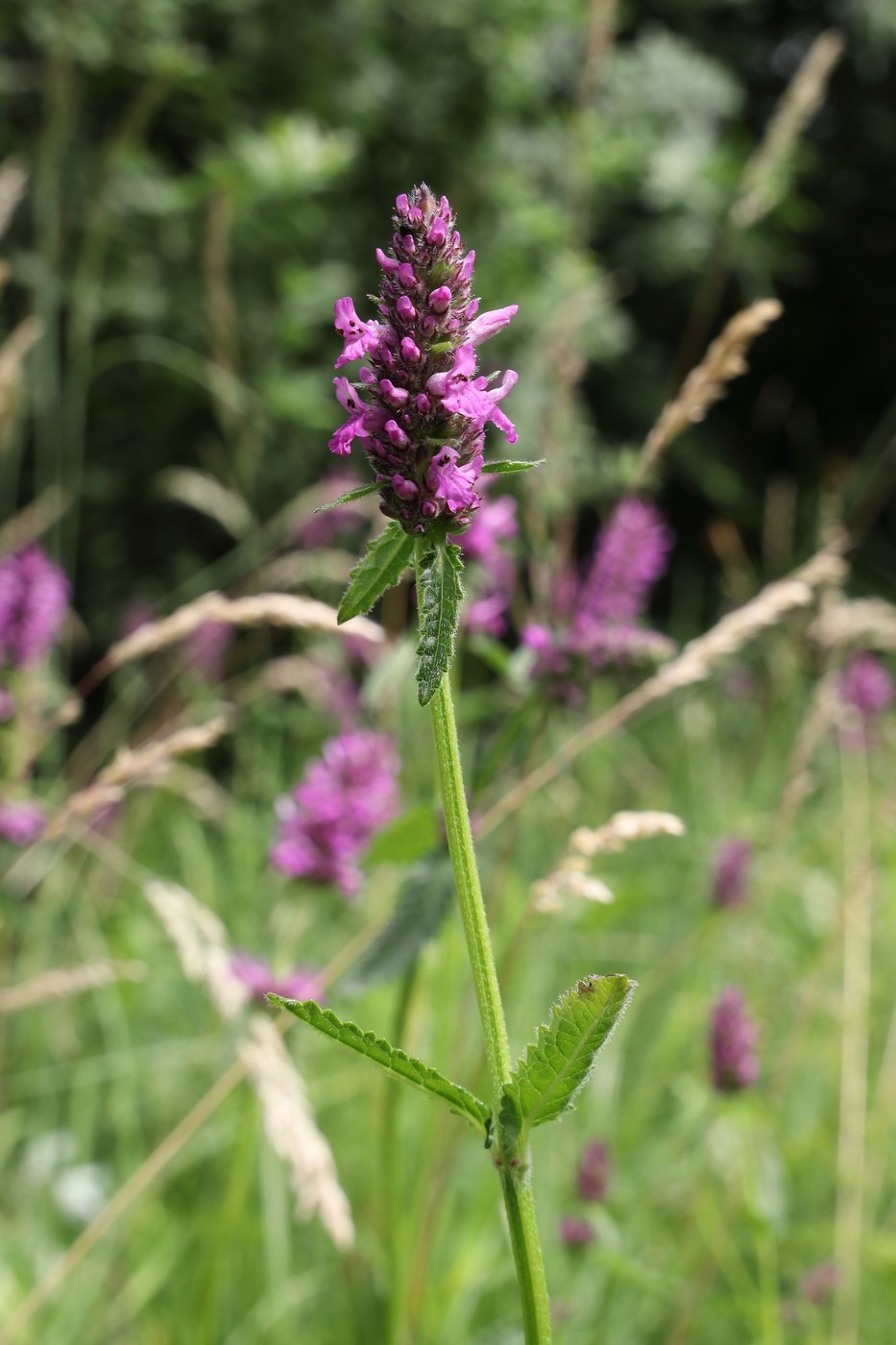
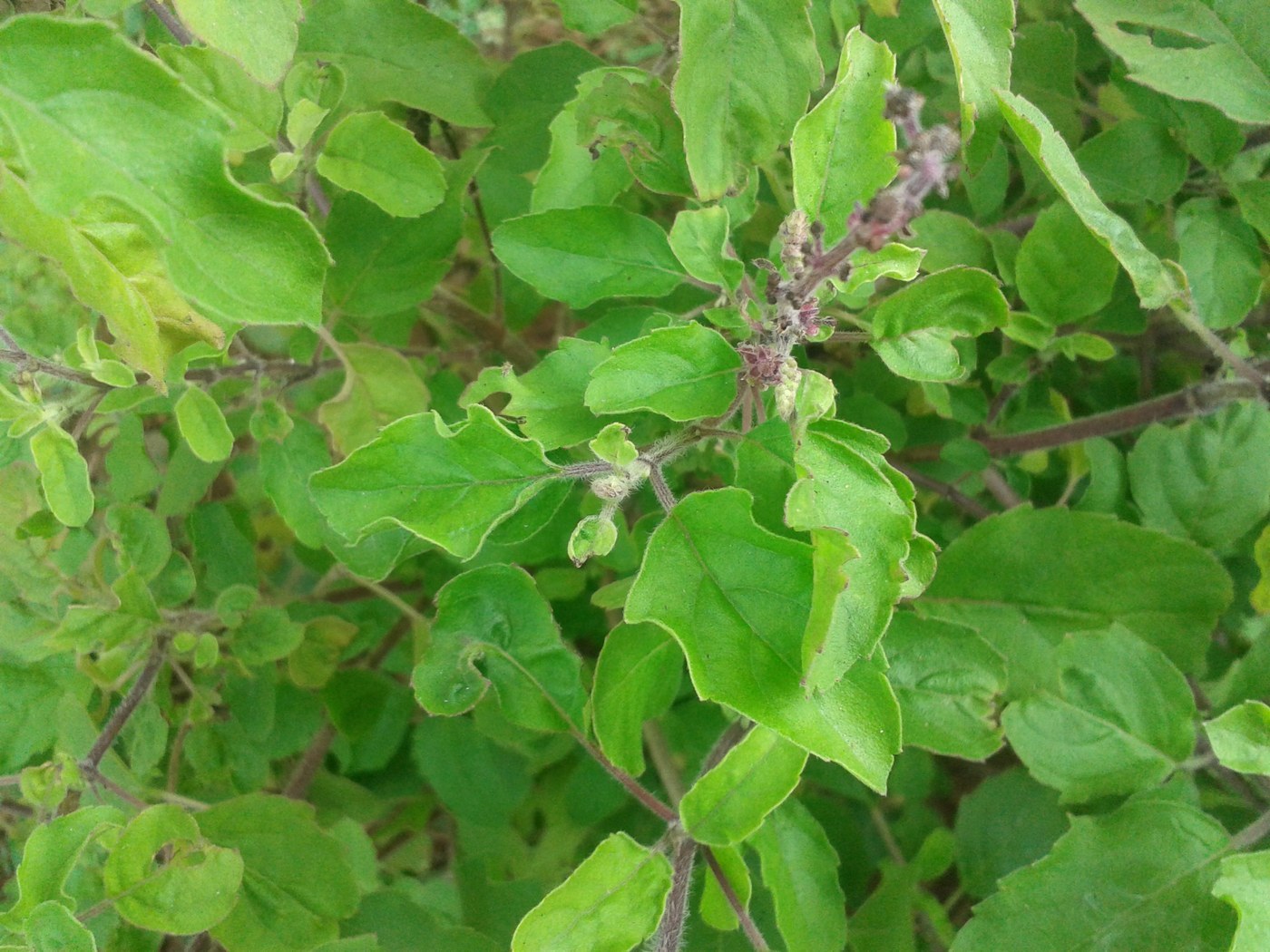
- Leaves: Oval, toothed, slightly hairy, green or purple-tinged, in opposite pairs; strongly clove-scented when crushed
- Stems: Square and often purplish, frequently hairy
- Flowers: Small purplish-white blooms in elongated whorled spikes
- Aroma: Spicy, clove-like and peppery — more pungent than sweet basil
- Habit: Erect, branching, bushy herb 30-60 cm tall
Care & growing
- Light: Full sun, at least 6 hours daily
- Water: Regular watering to keep soil lightly moist but not waterlogged
- Soil: Rich, well-drained soil
- Temperature: Warm-loving and frost-tender; perennial in tropical zones (10-11), grown as an annual elsewhere
- Feeding: Light feeding during the growing season
- Propagation: Easily from seed or cuttings; pinch flower spikes to keep the plant bushy and leafy
Habitat & origin
Holy basil is native to the Indian subcontinent and Southeast Asia, where it grows in tropical and subtropical conditions. It has been cultivated in India for thousands of years and is traditionally grown in courtyards and near homes and temples for religious purposes.
It is now grown around the world in gardens and containers as a sacred and ornamental plant.
Frequently asked questions
Is holy basil the same as sweet basil?
No. Holy basil (tulsi) is a different species with a more clove-like, peppery aroma, grown mainly as a sacred and ornamental plant, while sweet basil is the milder herb of Italian gardens.
Can holy basil survive winter?
Only in frost-free tropical climates. In temperate regions it is grown as an annual or kept indoors in a warm, sunny spot over winter.
How do I keep my tulsi plant bushy?
Pinch off the flowering spikes regularly and trim the top growth to encourage branching, since flowering otherwise slows leafy growth.
Holy Basil guides
In-depth guides for identifying, growing, and caring for Holy Basil.
How to Care for Holy Basil
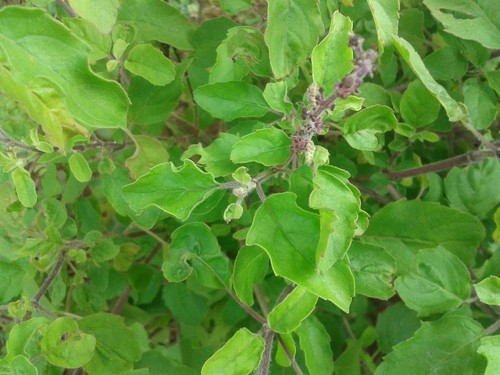
Holy basil is an aromatic, sun-loving tender perennial with fragrant foliage and delicate flower spikes, easy to grow in warmth.
Holy Basil Identification Guide
Identify holy basil (tulsi) by its hairy stems, slightly toothed aromatic leaves with a clove-like scent, and tall purple-tinged flower spikes.