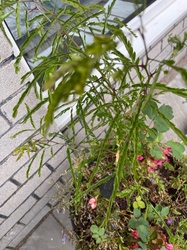
Honey Locust Identification Guide
Recognize honey locust by its fine fern-like compound leaves, branched trunk thorns, and long twisted seed pods.
Read the full Honey Locust encyclopedia entry →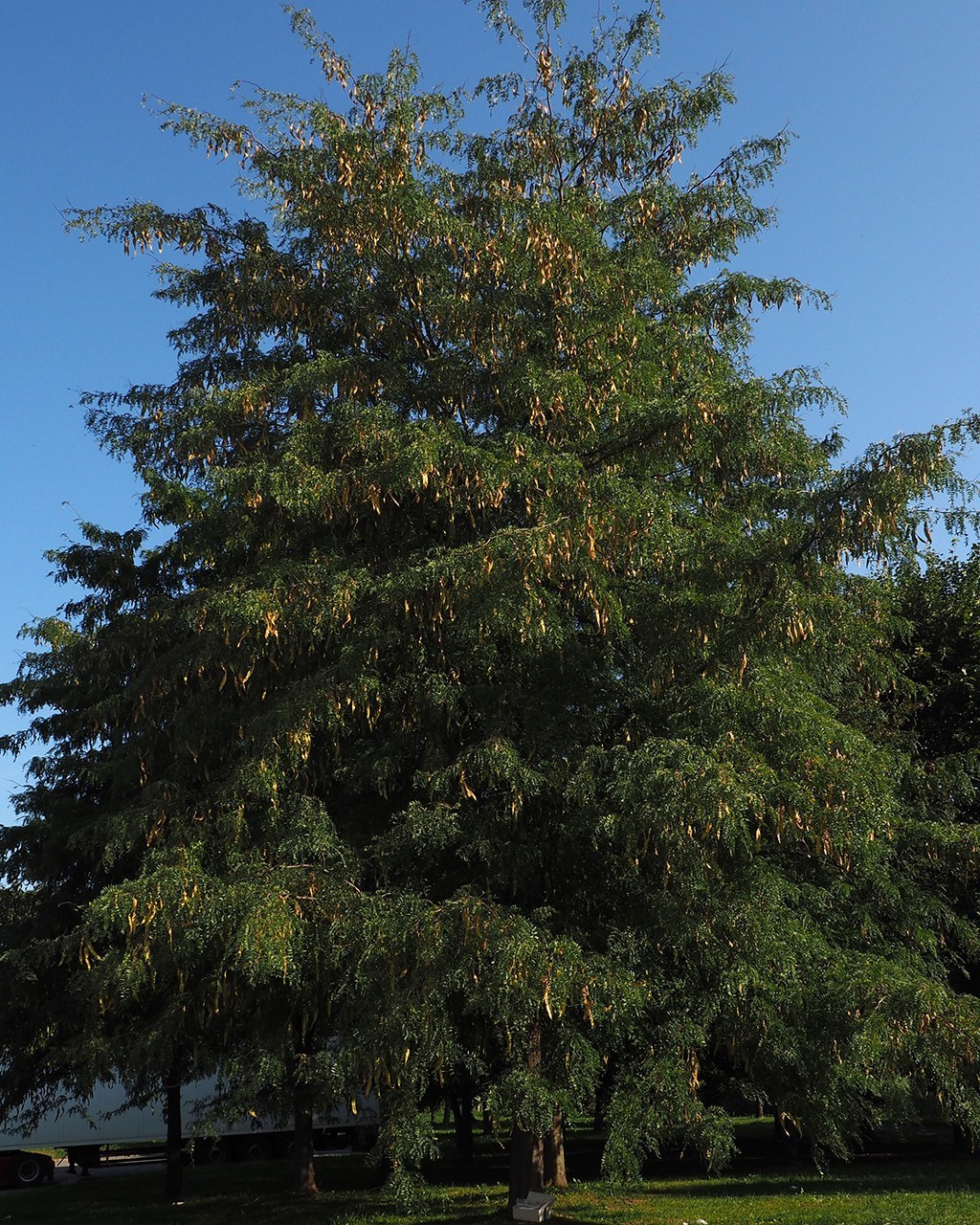
Key Identifying Features
Honey locust (Gleditsia triacanthos) is a fast-growing legume tree of central North America, notorious for its fierce branched thorns and prized in cultivation for its airy, dappled shade.
- Fine, fern-like pinnately or doubly compound leaves with many small leaflets
- Large, branched thorns on the trunk and branches (wild form)
- Long, flat, twisted brown seed pods up to 30-40 cm
- Open, spreading, lacy crown
Leaves & Stems
Leaves are pinnately compound, and often bipinnate (doubly compound) on the same tree, with many small leaflets (each 1-3 cm long), oval and finely toothed or smooth. The fine, fern-like foliage casts only light shade and emerges late in spring, turning a clear yellow in fall. Leaves are arranged alternately.
The wild tree's signature feature is its thorns: stout, often branched (three-pronged), reddish-brown spines up to 8-15 cm long that grow in clusters from the trunk and limbs. (Cultivated street trees are usually the thornless variety inermis.) Bark is gray-brown, smooth when young, developing long, flat, peeling plates with curling edges.
Flowers & Fruit
Small, fragrant, greenish-yellow flowers hang in narrow clusters in late spring. The fruit is a distinctive long, flat, leathery pod 20-40 cm long that becomes strongly twisted and contorted as it dries, turning reddish-brown to nearly black. The pods contain a sweet, sticky pulp between the seeds (the source of "honey" in the name) and persist on the tree into winter before falling.
How to Tell It Apart from Look-Alikes
- Black locust (Robinia): Has paired short thorns at leaf nodes (not branched trunk thorns), showy white pea flowers, and short smooth pods.
- Kentucky coffeetree: Doubly compound with larger leaflets, no thorns, and thick, wide flat pods.
- Mimosa / silk tree: Doubly compound but with pink powderpuff flowers.
Branched trunk thorns plus long twisted pods plus fern-like leaves are diagnostic for wild honey locust; thornless cultivars are recognized by the foliage and pods.
Where You'll Find It
Native to the moist bottomlands and river valleys of central North America but widely planted (in thornless, often podless cultivars) as a tough urban street and lawn tree because it tolerates drought, salt, compaction, and pollution and casts light shade.
Quick ID Checklist
- Fine fern-like compound or doubly compound leaves
- Branched stout thorns on trunk/branches (wild form)
- Long flat twisted brown seed pods
- Open lacy crown with light dappled shade
- Gray bark peeling in long curling plates
Frequently asked questions
How do I distinguish honey locust from black locust?
Honey locust has branched thorns on the trunk, fern-like doubly compound leaves, and long twisted pods, while black locust has paired thorns at the nodes, white pea flowers, and short flat pods.
Why do some honey locusts have no thorns?
Most landscape trees are the thornless cultivar (variety inermis), selected to remove the dangerous branched spines of the wild form.
What makes the seed pods distinctive?
They are long, flat, and become strongly twisted and contorted as they dry, hanging on the tree into winter, and contain a sweet pulp.
Is honey locust good for shade?
It casts a light, dappled shade because of its small fern-like leaflets, which is why lawns and gardens often thrive beneath it.
Honey Locust identified by the community
Recent Honey Locust specimens identified with Plant Identifier.