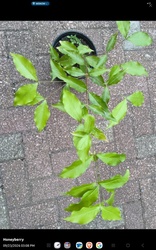
Honeyberry Identification Guide
A field guide to honeyberry (Lonicera caerulea, blue honeysuckle), recognizable by its oblong blue fruit with whitish bloom, paired leaves, and low bushy form.
Read the full Honeyberry encyclopedia entry →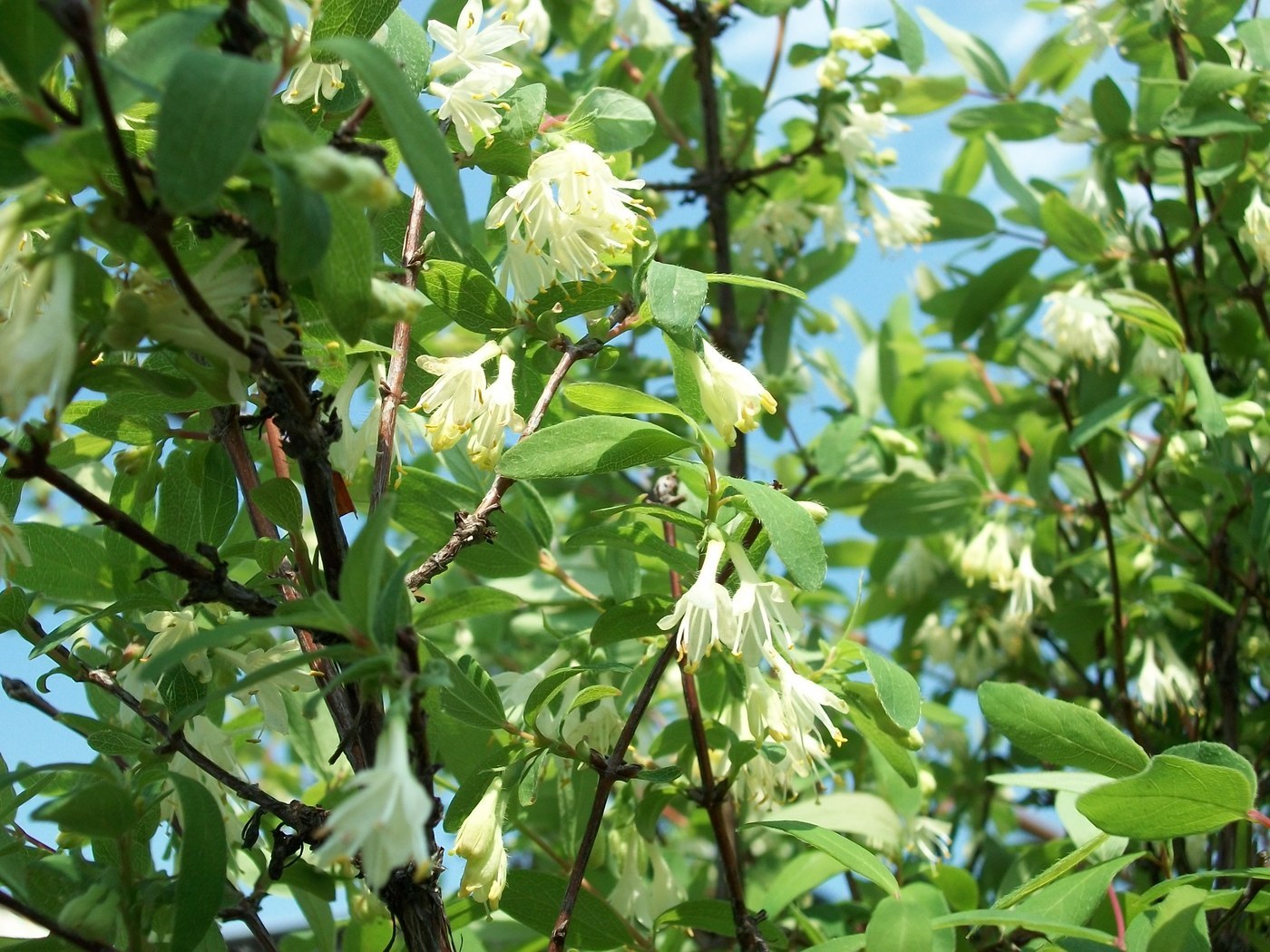
Key Identifying Features
Honeyberry — also called haskap or blue honeysuckle — is a deciduous bush honeysuckle (Lonicera caerulea), not a Ribes or bramble. It grows 3-6 ft tall in a rounded, twiggy mound. The standout features are its elongated, oval-to-cylindrical blue-black berries coated in a powdery whitish bloom, paired on the stems, and its opposite leaves (a honeysuckle trait).
- Opposite leaf arrangement (two leaves per node)
- Oblong, blueberry-blue fruit with a waxy bloom, often dimpled or rectangular
- Low, dense, multi-stemmed bush
- Shaggy, papery, peeling tan bark on older stems
Leaves & Stems
Leaves are simple, oval to oblong, 1-3 in. long, untoothed (entire margins), dull bluish- to gray-green, and arranged oppositely in pairs — a key honeysuckle feature distinguishing it from blueberries and currants. Young stems and leaves may be slightly hairy. Older stems show tan to gray bark that peels in thin papery strips, typical of honeysuckles. The shrub leafs out very early in spring and is extremely cold-hardy.
Flowers & Fruit
Flowers appear very early (sometimes late winter) as pairs of small, creamy-white to pale-yellow tubular blooms at the leaf axils. Each flower pair fuses to produce a single elongated berry. The fruit is the best ID clue: oblong, often irregular or boxy, 0.5-1 in. long, deep blue-black under a frosty whitish bloom, with soft, dark red-purple flesh inside. They ripen earlier than almost any other fruit, in late spring/early summer.
How to Tell It Apart from Look-Alikes
- Blueberry: Round berries with a five-pointed crown scar and alternate leaves; honeyberry fruit is elongated and leaves are opposite.
- Ornamental/invasive honeysuckles: Many bush honeysuckles have round red or orange paired berries — honeyberry's fruit is blue, oblong, and soft. Color and shape are the separators.
- Currants: Lobed maple-like leaves and clustered round berries; honeyberry has entire, oval, opposite leaves.
- Saskatoon/serviceberry: Round pomes with a crown; different toothed leaves.
Where You'll Find It
Honeyberry is native to cool circumboreal regions of Russia, Japan, and northern North America, growing in bogs, moist forest edges, and mountain slopes. As a cultivated plant it is grown in cold-climate gardens (hardy to very low temperatures). Look for it in northern gardens and ornamental plantings, often as paired bushes for cross-pollination.
Quick ID Checklist
- Low rounded bush, 3-6 ft
- Opposite, oval, untoothed leaves
- Papery peeling bark on older stems
- Paired creamy tubular flowers very early in season
- Elongated blue-black berries with whitish bloom
- Soft dark-purple flesh inside
Frequently asked questions
Is honeyberry the same as honeysuckle?
It is a species of bush honeysuckle (Lonicera caerulea). It differs from many ornamental honeysuckles by its blue, oblong fruit rather than round red or orange berries.
How do I distinguish honeyberry from blueberry?
Honeyberries are elongated/oblong with opposite leaves, while blueberries are round with a crown-shaped scar and alternate leaves.
When does honeyberry ripen?
Very early — often in late spring or early summer, before strawberries and well before blueberries.
Honeyberry identified by the community
Recent Honeyberry specimens identified with Plant Identifier.