
Honeysuckle Identification Guide
Identify honeysuckle by its twining vines, paired leaves, tubular two-lipped fragrant flowers, and clustered berries.
Read the full Honeysuckle encyclopedia entry →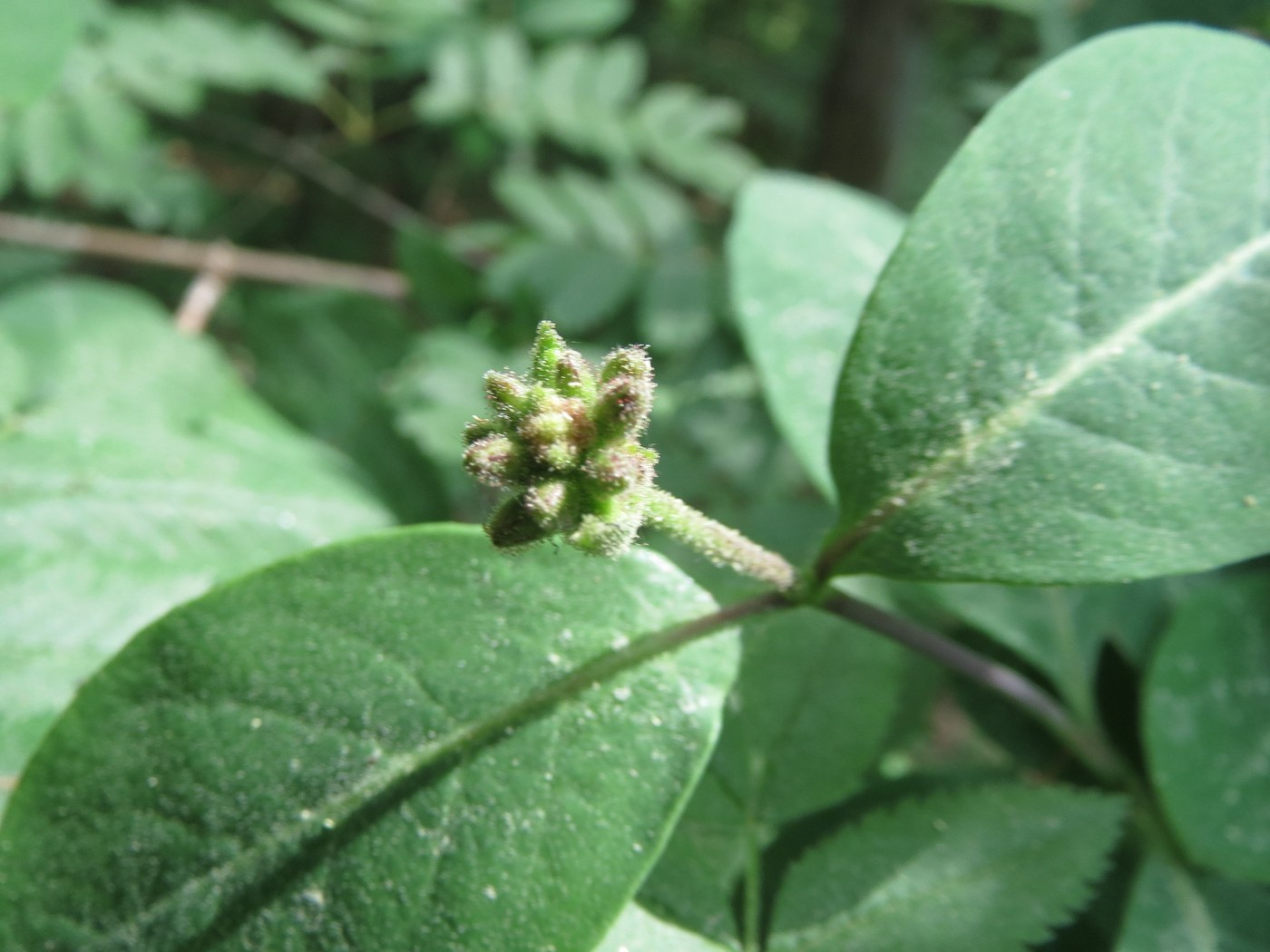
Key Identifying Features
Honeysuckle (Lonicera) is recognized as a twining vine or arching shrub bearing long, tubular, two-lipped flowers in pairs or whorls, usually intensely fragrant, followed by clusters of small berries. The flowers' long tubes hold nectar prized by bees, moths, and hummingbirds.
- Twining/climbing vine or arching shrub habit
- Tubular, two-lipped flowers in pairs or clustered whorls
- Sweet fragrance, strongest in evening
- Opposite leaves, sometimes fused around the stem
Leaves & Stems
Leaves are simple, oval, and opposite (in pairs along the stem). In climbing species the uppermost leaf pairs are often fused together around the stem to form a single disk through which the flower cluster emerges — a strong ID clue. Leaves are smooth-edged, green above and often paler or bluish beneath. Stems are woody, twining, hollow in some species, climbing by wrapping around supports (not by tendrils). Shrubby species form dense, arching, multi-stemmed bushes.
Flowers & Fruit
Flowers have a slender tube flaring into two lips — an upper lip of four fused lobes and a single lower lip — with long projecting stamens. Colors include white aging to yellow (the common woodbine), pink, red, orange, and cream, often bicolored. Many are richly scented at dusk. Climbing types bloom in whorled clusters at stem tips; shrub types bear paired flowers in leaf axils. Fruit is a cluster of small round berries — red, orange, blue, or black depending on species.
How to Tell It Apart from Look-Alikes
- Jasmine: Also fragrant and twining, but jasmine flowers are flat, star-shaped with many narrow lobes, not two-lipped tubes.
- Trumpet vine (Campsis): Larger trumpet flowers but with compound, toothed leaves, unlike honeysuckle's simple opposite leaves.
- Snowberry (also Lonicera family): Shrubby with white berries but small bell flowers.
The opposite (often fused) leaves + paired two-lipped tubular fragrant flowers + berry clusters confirm honeysuckle.
Where You'll Find It
Honeysuckle scrambles over hedgerows, fences, woodland edges, and trellises. Native woodbines grace wild hedges; ornamental species cover garden arbors. Some, like Japanese honeysuckle (Lonicera japonica) and Amur honeysuckle, are aggressive invasives in North America, smothering woodland understory and roadsides. Most tolerate sun or part shade and a wide range of soils.
Quick ID Checklist
- Twining vine or arching shrub
- Opposite leaves, top pairs often fused into a disk
- Tubular, two-lipped flowers in pairs/whorls
- Sweet fragrance, especially in evening
- Long projecting stamens
- Clusters of small berries
Frequently asked questions
What's a quick way to confirm a honeysuckle vine?
Look for opposite leaves where the topmost pair is fused into a single disk around the stem, with a cluster of tubular two-lipped flowers emerging from the center. Combined with a sweet evening fragrance, that's diagnostic.
How is honeysuckle different from jasmine?
Both are fragrant climbers, but honeysuckle has long tubular two-lipped flowers with protruding stamens, while jasmine has flat, star-shaped flowers with many narrow lobes. Honeysuckle also produces berry clusters.
Is all honeysuckle invasive?
No. Native woodbines are well-behaved, but some species like Japanese and Amur honeysuckle are aggressive invasives in North America, smothering hedgerows and woodland edges with dense growth.