
Horseradish Identification Guide
How to identify horseradish (Armoracia rusticana) by its large wavy basal leaves, tall white four-petaled flower spikes, and pungent thick taproot.
Read the full Horseradish encyclopedia entry →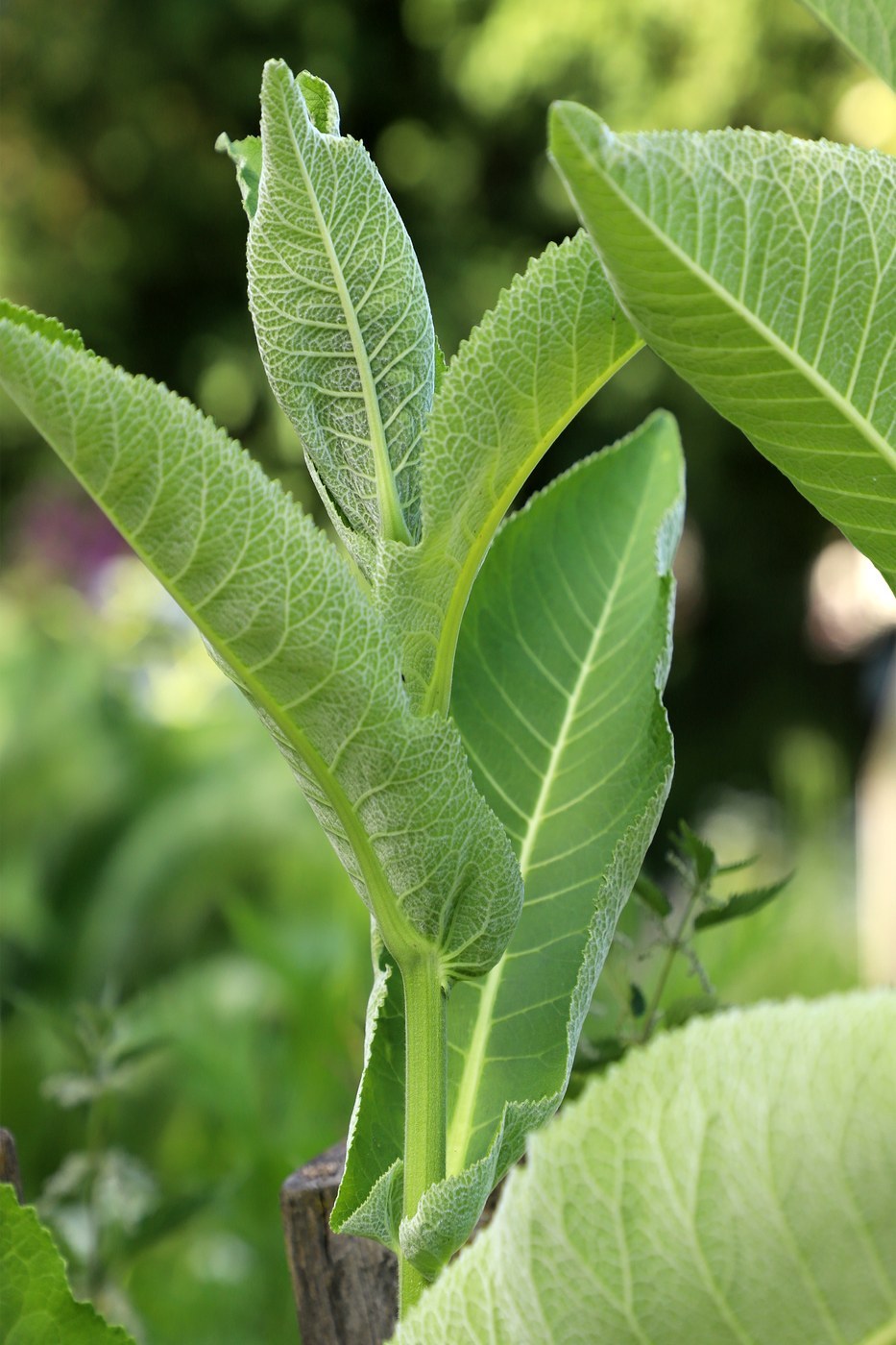
Key Identifying Features
Horseradish (Armoracia rusticana) is a hardy perennial in the mustard family, grown for its fiery root. Identify it by:
- Large, coarse, wavy-margined basal leaves in a clump.
- A thick, pale fleshy taproot with a sharp, sinus-clearing pungency when cut.
- Tall airy spikes of small white four-petaled flowers in late spring–summer.
- A robust, weedy clumping habit.
Leaves & Stems
The most conspicuous feature is the rosette of big basal leaves: each leaf blade is long-oblong to lance-shaped, 30–60 cm, on a stout stalk, with crinkled, scalloped, or wavy and toothed margins and a prominent pale midrib. They resemble oversized dock or romaine-like leaves. Upper stem leaves are smaller and narrower, sometimes deeply cut. Plants form sturdy clumps and can reach 0.6–1.5 m when flowering. The defining underground part is the thick, cylindrical, whitish taproot; when scraped or cut it releases a pungent, mustard-like, eye-watering aroma (from allyl isothiocyanate) — the surest confirming test.
Flowers & Fruit
In late spring to summer, a branched flowering stem rises bearing many small white flowers. Each has the classic mustard-family cross of four petals, about 6–8 mm across, in elongating clusters (racemes). The flowers are mildly fragrant. Seed pods often fail to set viable seed (the plant is largely sterile and spreads by root fragments), and where they form they are small rounded silicles. Most spread is vegetative.
How to Tell It Apart from Look-Alikes
- Dock (Rumex): similar large basal leaves, but dock has smooth or only slightly wavy margins, reddish flower/seed spikes, and no pungent mustard root.
- Comfrey (Symphytum): large rough leaves too, but hairy, with drooping bell flowers and a mucilaginous (not pungent) root.
- Burdock (Arctium): big leaves but woolly-white underneath and bears burrs.
- The mustard cross flowers + wavy toothed leaves + intensely pungent white root together are diagnostic — scrape the root and smell to be sure.
Where You'll Find It
Horseradish is native to southeastern Europe/western Asia but is naturalized and cultivated worldwide. Look for it in vegetable gardens, old homestead sites, field edges, ditches, roadsides, and waste ground, where it persists for years and forms expanding clumps in moist, rich, sunny-to-part-shade soil.
Quick ID Checklist
- Large basal leaves with wavy, scalloped, toothed margins
- Thick white taproot, intensely pungent when cut
- Tall branched spikes of small white four-petaled flowers
- Robust clumping perennial habit
- Spreads mainly by root, rarely setting viable seed
Wavy basal leaves plus a sinus-clearing white root confirm horseradish.
Frequently asked questions
How can I confirm a plant is horseradish?
Scrape or cut a piece of the thick white taproot and smell it: a sharp, eye-watering, mustard-like pungency confirms horseradish. The large wavy-edged basal leaves and white four-petaled flowers support the ID.
How do I tell horseradish from dock?
Both have large basal leaves, but dock leaves have smoother margins and reddish seed spikes, and the root is not pungent. Horseradish has wavy, toothed leaves and a sharply pungent white root.
What do horseradish flowers look like?
Small white flowers with four petals in a cross shape, borne in tall, branched, airy clusters from late spring into summer.
Why doesn't my horseradish set seed?
Cultivated horseradish is largely sterile and spreads mainly through root fragments, so it rarely produces viable seed. New plants come up readily from broken bits of root.