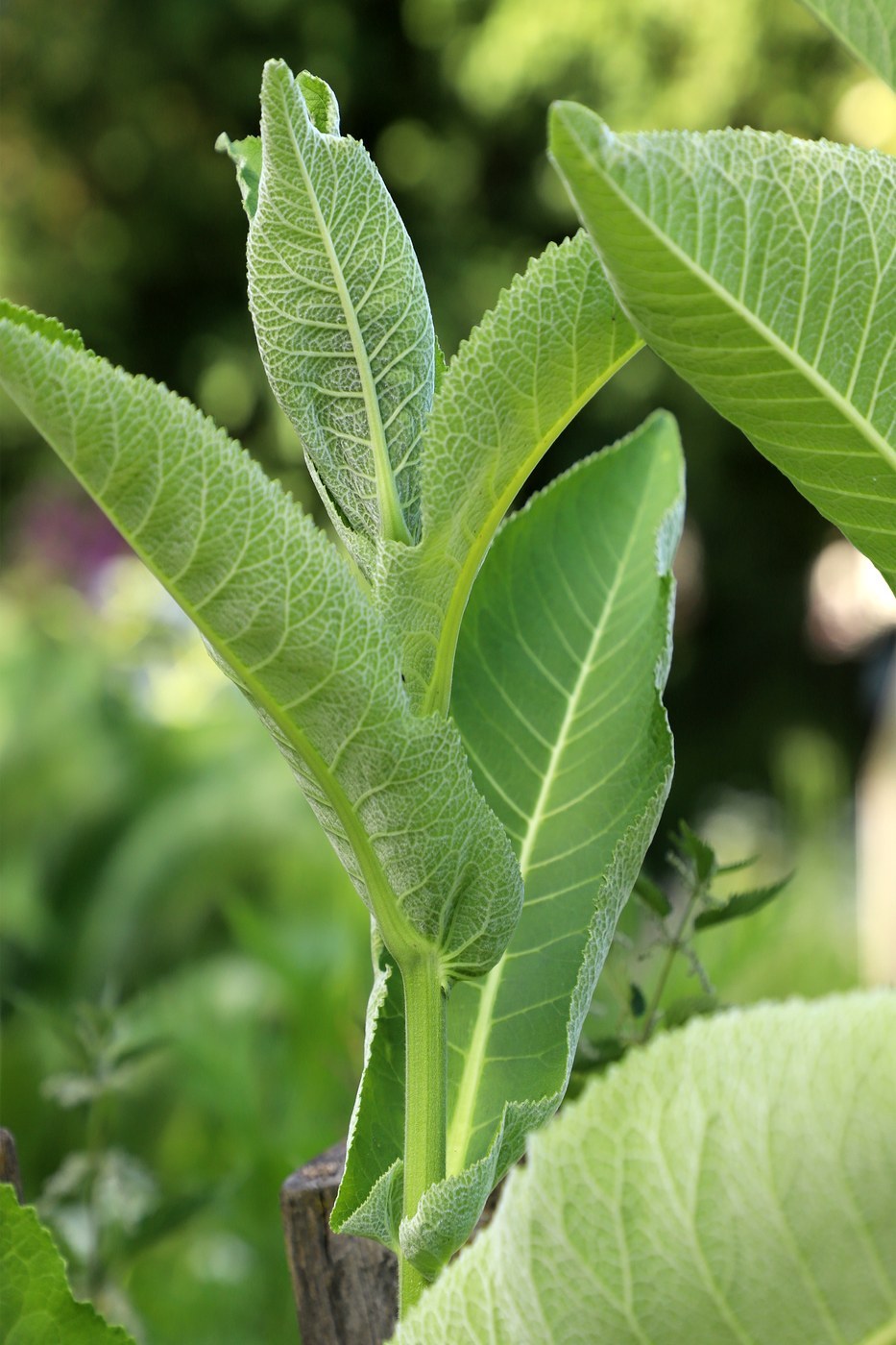
Horseradish
Armoracia rusticana
A hardy perennial in the cabbage family grown for its thick, white taproot. Vigorous and long-lived, it can become invasive once established.
- Light
- Full sun to partial shade
- Water
- Moderate; keep soil evenly moist
- Difficulty
- Easy
Got a plant like this?
Identify any plant from a photo, free.
Overview
Horseradish is a robust perennial valued for its long, white taproot.
Easy to grow to the point of being weedy, horseradish persists for years because even small root fragments left in the soil will resprout. It forms a vigorous, leafy clump that returns each spring.
How to identify it
- Large, coarse, wavy-edged basal leaves up to 60 cm (2 ft) long, somewhat dock-like
- Forms a leafy clump 60-120 cm (2-4 ft) tall
- Small four-petaled white flowers in branching sprays (it rarely sets viable seed)
- Thick, fibrous, white taproot with a strong smell when cut
- Spreads by root fragments and lateral roots
Care & growing
Horseradish is nearly indestructible.
- Light: Full sun to partial shade
- Water: Moderate, even moisture produces the best roots
- Soil: Deep, loose, fertile soil lets the taproot grow long and straight
- Temperature: Very cold-hardy; dies back in winter and returns each spring
- Feeding: Light feeding; too much nitrogen makes leaves at the root's expense
- Propagation: From root cuttings; contain it, as it spreads readily and is hard to remove
Habitat & origin
Native to southeastern Europe and western Asia, horseradish has been cultivated since antiquity and has naturalized across Europe, North America, and other temperate regions.
It grows in moist, fertile soils in fields, gardens, ditches, and waste ground, tolerating a wide range of conditions.
Frequently asked questions
Why is horseradish so hard to get rid of?
Any small piece of root left in the soil can sprout into a new plant, so it readily regrows and can become invasive.
How do I recognize horseradish?
Look for a clump of large, coarse, wavy-edged basal leaves up to 60 cm long, with a thick white taproot and sprays of small four-petaled white flowers.
Where does horseradish grow?
It thrives in moist, fertile soils in fields, gardens, ditches and waste ground across temperate regions, tolerating a wide range of conditions.
How do I propagate horseradish?
It grows easily from root cuttings. Be aware that it spreads aggressively, so plant it where it can be contained.
Horseradish guides
In-depth guides for identifying, growing, and caring for Horseradish.
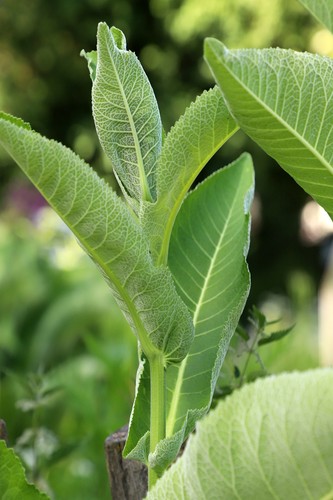
How to Care for Horseradish
Growing guide for horseradish (Armoracia rusticana), a hardy, vigorous perennial grown for its bold, coarse-textured foliage.
Horseradish Identification Guide
How to identify horseradish (Armoracia rusticana) by its large wavy basal leaves, tall white four-petaled flower spikes, and pungent thick taproot.