Horseweed Identification Guide
Identify horseweed (Erigeron canadensis), a tall, slender annual with a single bristly-hairy stem, crowded narrow leaves, and a top spray of tiny greenish-white rayless flower heads. Includes look-alike comparisons.
Read the full Horseweed encyclopedia entry →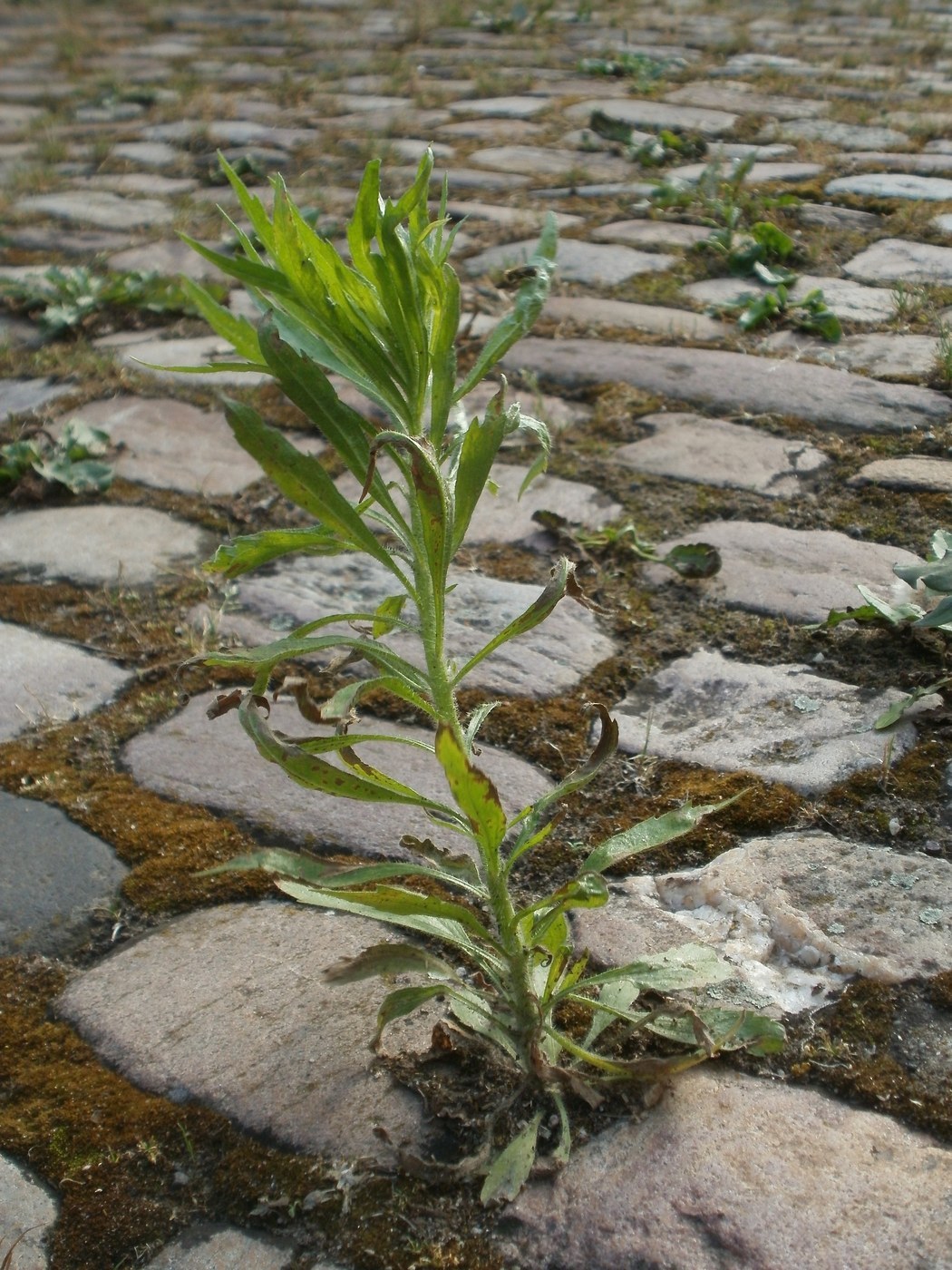
Key Identifying Features
Horseweed (Erigeron canadensis, syn. Conyza canadensis), also called marestail, is a tall, slender, single-stemmed annual in the aster family. Identify it by its erect, hairy, unbranched main stem densely lined with narrow leaves, topped late in the season by an open, branching spray of numerous tiny, greenish-white flower heads with barely visible rays.
- Tall, erect single stem, 1 to 6+ feet (sometimes 8 ft)
- Stem and leaves roughly hairy (bristly)
- Many crowded, narrow, untoothed-to-toothed leaves up the stem
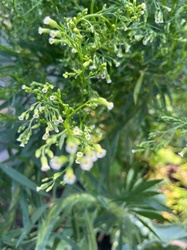
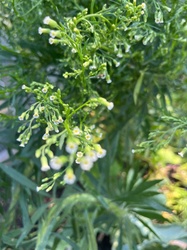
- Top spray of tiny rayless greenish-white flower heads
- Starts as a basal rosette
Leaves & Stems
Horseweed begins as a rosette of small spoon-shaped leaves, then sends up a tall, stiff, bristly-hairy stem that is usually unbranched until the flower cluster. The numerous leaves are alternate, narrow (linear to lance-shaped), and crowded densely along the stem, the lower ones sometimes toothed and the upper ones entire, with hairy margins. The leafy, hairy, telephone-pole-like stem topped only at the very top by flowers gives the plant a distinctive bottle-brush silhouette.
Flowers & Fruit
At the top, the stem branches into an open, elongated panicle of many small flower heads. Each head is tiny (about 0.2 inch), greenish-white to pale, with minute, barely protruding white ray florets and a small yellowish disk, so they look more like buds than showy daisies. After flowering, the heads produce tiny achenes with a tan pappus of fine bristles that drift on the wind in great numbers. Flowering runs from summer into fall.
How to Tell It Apart from Look-Alikes
- Goldenrods (Solidago): Have yellow flower heads and are perennial; horseweed's heads are tiny and greenish-white.
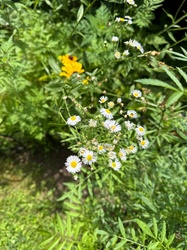
- Annual fleabane (Erigeron annuus): Has obvious daisy-like white-rayed heads about half an inch across on a branched leafy plant, not the tiny rayless heads of horseweed.
- Wild lettuce/sow thistle: Have milky sap and yellow flowers; horseweed has no milky sap.
- Pilewort/fireweed: Differ in leaf shape and softer stems.
The pairing of a tall single bristly leafy stem with a top cloud of tiny greenish-white rayless heads is diagnostic for horseweed.
Where You'll Find It
Horseweed is one of the most common weeds of disturbed ground: no-till crop fields, fallow land, roadsides, railways, gardens, vacant lots, and pavement edges. It thrives in full sun on many soil types and is notorious for evolving resistance to glyphosate and other herbicides, making it abundant in reduced-tillage agriculture. A single plant can release up to 200,000 wind-dispersed seeds.
Quick ID Checklist
- Tall erect annual, mostly single bristly stem
- Narrow leaves crowded up the stem, hairy
- Tiny greenish-white rayless flower heads in a top spray
- Rough-hairy stem and foliage; no milky sap
- Wind-blown bristly seeds in huge numbers
- Disturbed ground, fields, roadsides, pavement
Frequently asked questions
Why is horseweed also called marestail?
The tall, slender, leafy stem topped by a feathery spray of seed heads resembles a horse's or mare's tail, giving the plant its alternate common name.
How do I tell horseweed from annual fleabane?
Annual fleabane has clear daisy-like flowers with obvious white rays about half an inch across, while horseweed's heads are tiny, greenish-white, and have only minute, barely visible rays.
Why is horseweed so hard to control?
It produces enormous numbers of wind-blown seeds and has widely evolved resistance to glyphosate and other herbicides, making it especially common in no-till fields.
What does a young horseweed plant look like?
It starts as a low rosette of small spoon-shaped leaves before bolting into the tall, bristly, leafy single stem characteristic of the mature plant.
Horseweed identified by the community
Recent Horseweed specimens identified with Plant Identifier.