Hoya Carnosa Identification Guide
Identify Hoya carnosa, the wax plant, by its thick waxy leaves and spherical clusters of star-shaped, sweetly scented flowers.
Read the full Hoya Carnosa encyclopedia entry →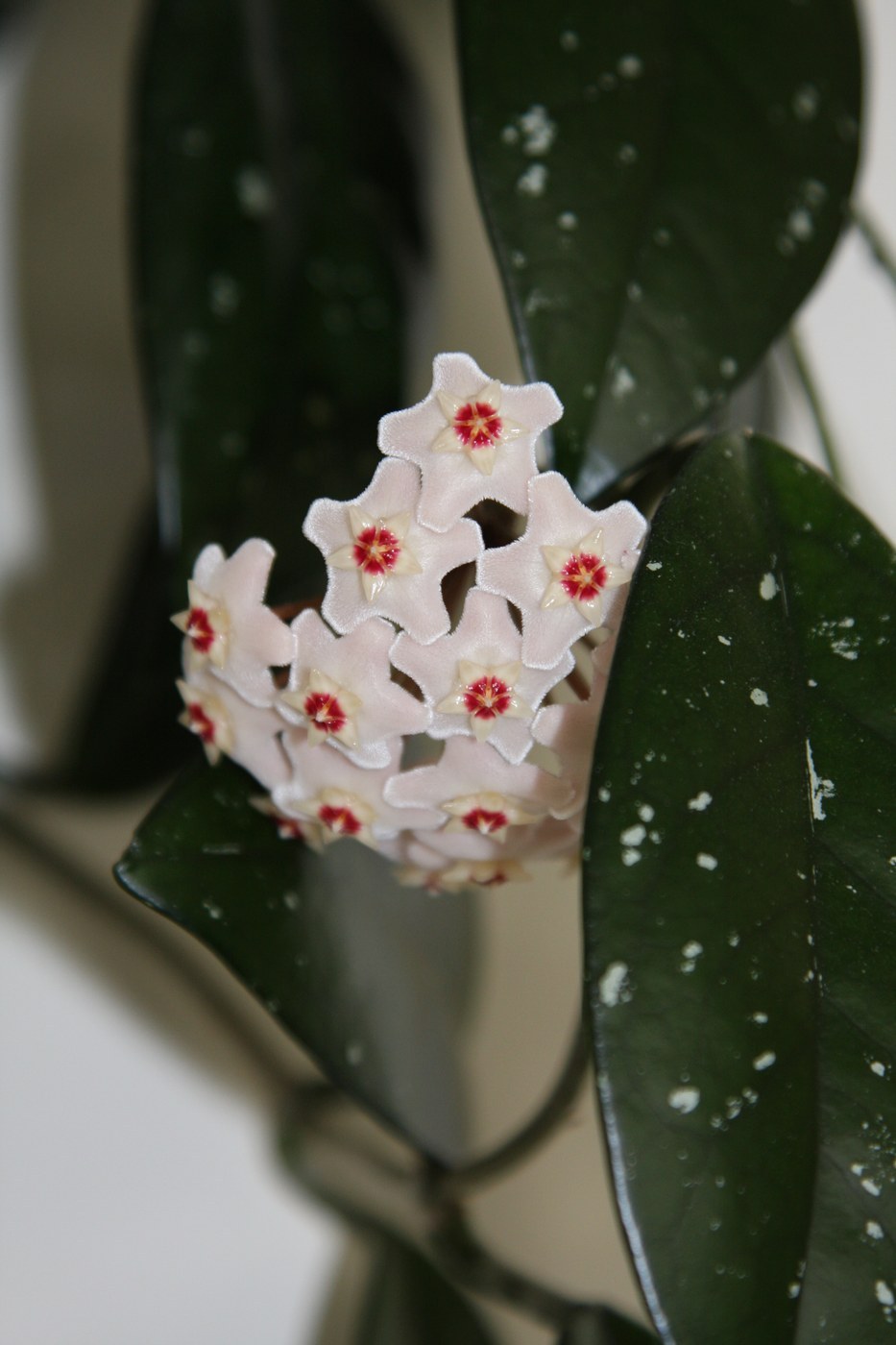
Key Identifying Features
Hoya carnosa, the wax plant or porcelain flower, is a long-lived trailing/climbing vine. Identify it by:
- Thick, waxy, succulent oval leaves
- Ball-shaped (umbel) clusters of star-shaped flowers with a glossy, porcelain look
- A twining, trailing vine habit with long tendrils
- Sweetly fragrant flowers, often producing nectar droplets
The waxy leaves plus spherical clusters of five-pointed star flowers are unmistakable.
Leaves & Stems
Leaves are opposite, thick, leathery and waxy, oval to elliptical, 2-4 inches long, deep green and often with a silvery speckling (especially in variety H. carnosa 'Krimson' or speckled forms). The stems are long, flexible, twining vines that produce bare leafless tendrils searching for support before leafing out. Plants climb or trail and can reach many feet long. Cut stems exude a milky latex.
Flowers & Fruit
The signature bloom is a rounded umbel of 15-40 small flowers, each a five-pointed waxy star — typically pale pink to white with a red/pink central crown (corona). They look almost artificial, like porcelain, and are intensely sweet-scented (strongest at night), often dripping sticky nectar. Flowers grow from persistent woody spurs (peduncles) — never remove these, as they rebloom yearly. Flowering occurs spring through fall on mature plants.
How to Tell It Apart from Look-Alikes
- Hoya kerrii (sweetheart hoya) has heart-shaped leaves, often sold as a single leaf.
- Hoya pubicalyx has longer, narrower speckled leaves and darker pink-to-near-black flowers.
- Hoya bella is smaller with flatter flower clusters and thinner leaves.
- Wax-leaved plants (e.g., Peperomia) lack the twining vine and star-flower umbels.
The oval waxy leaves with a twining vine and spherical pink-and-red star-flower clusters confirm H. carnosa.
Where You'll Find It
Native to East Asia and Australia, it grows as an epiphytic forest vine. As a houseplant it's a classic, grown in bright indirect light in hanging baskets or on trellises; it tolerates being root-bound and is famously easy and long-lived.
Quick ID Checklist
- Thick, waxy oval leaves, sometimes silver-speckled
- Twining/trailing vine with leafless tendrils
- Ball-shaped clusters of star-shaped flowers
- Flowers pale pink/white with a red central crown, sweetly scented
- Sticky nectar droplets; milky sap when cut
- Persistent flowering spurs (don't remove)
Match these and you have Hoya carnosa. Leave the bare flower spurs intact — new blooms emerge from them each season — and don't move the plant once buds form.
Frequently asked questions
Why won't my Hoya carnosa bloom?
It needs maturity, bright indirect light, and often a slightly pot-bound root system. Also never remove the woody flower spurs (peduncles) — flowers rebloom from them each year.
What are the sticky droplets on the flowers?
That's nectar, which Hoya carnosa flowers commonly exude. It's normal and a sign of healthy blooming, though it can drip onto surfaces below.
How is Hoya carnosa different from Hoya kerrii?
Carnosa has oval waxy leaves on a twining vine, while kerrii (the sweetheart hoya) has distinctive heart-shaped leaves, often sold as a single rooted leaf.
Why are there long bare stems with no leaves?
Those are searching tendrils that the vine sends out before producing leaves; given support and time, they leaf out and extend the plant.
Hoya Carnosa identified by the community
Recent Hoya Carnosa specimens identified with Plant Identifier.