
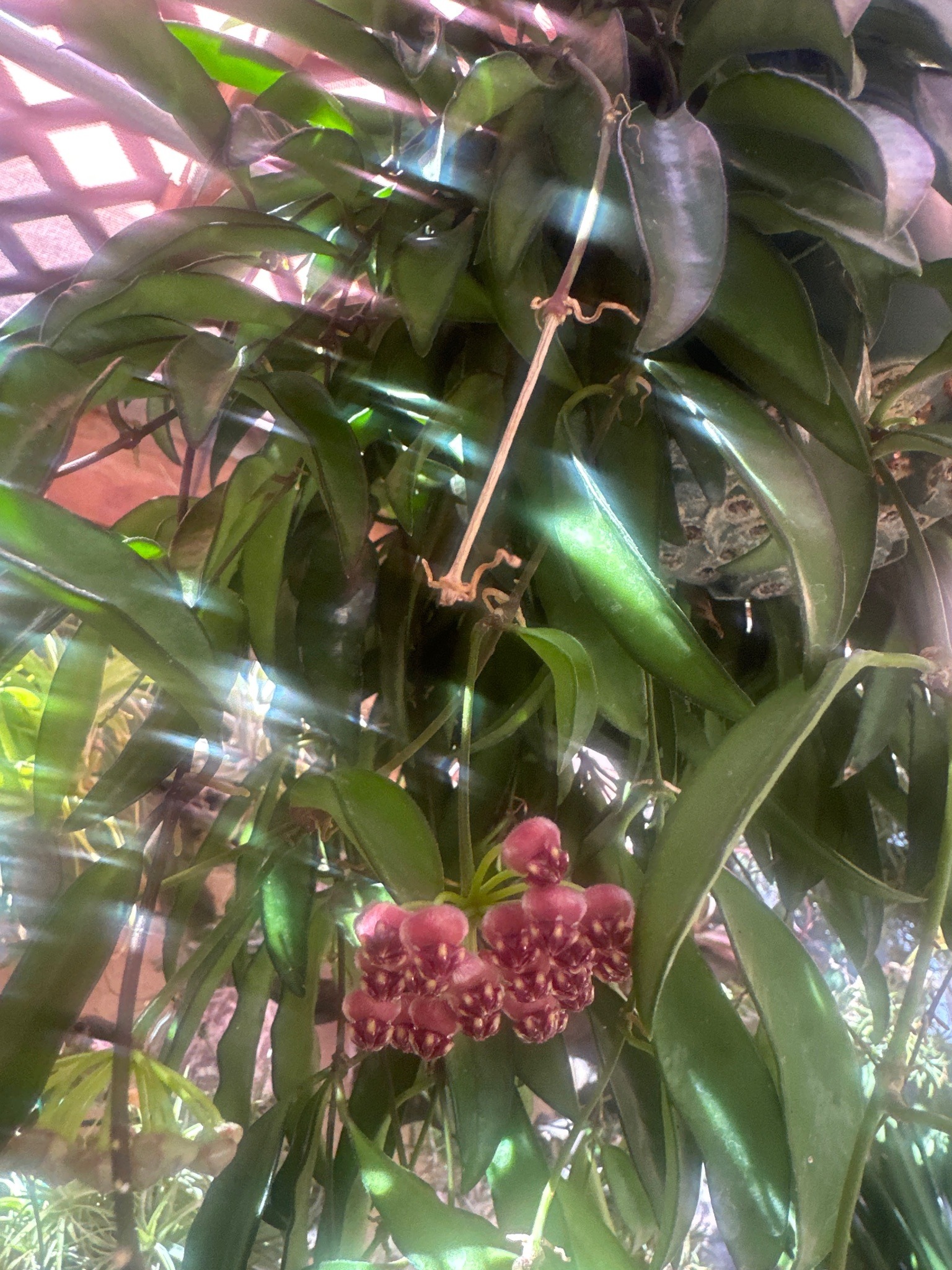
Wax Plant
Hoya carnosa
A popular vining epiphyte known for its thick, waxy, deep green leaves and tight umbels of star-shaped, velvety flowers with a waxy appearance.
- Light
- Bright, indirect light for 4 to 6 hours daily. Direct morning sun is tolerated, but strong afternoon light may scorch foliage.
- Water
- Water thoroughly when the top 1 to 2 inches of soil feel dry. Reduce watering significantly in autumn and winter during dormancy.
- Growth
- Evergreen vining or trailing epiphyte, with stems reaching 10 to 20 feet long indoors.
Care instructions
Provide bright, indirect sunlight and keep in a well-draining, airy potting mixture. Allow the soil to dry out partially between waterings. Feed with a balanced liquid fertilizer monthly during the active spring and summer growing season.
Growing details
Sunlight
Bright, indirect light for 4 to 6 hours daily. Direct morning sun is tolerated, but strong afternoon light may scorch foliage.
Watering
Water thoroughly when the top 1 to 2 inches of soil feel dry. Reduce watering significantly in autumn and winter during dormancy.
Soil
Lightweight, chunky, well-draining mix such as an orchid bark mix combined with potting soil and perlite, pH 6.0-7.0.
Hardiness zone
USDA Zones 10 to 11
Growth habit
Evergreen vining or trailing epiphyte, with stems reaching 10 to 20 feet long indoors.
Bloom season
Typically late spring through summer, producing clusters of pinkish-red to white waxy, star-shaped blossoms with a sweet fragrance.
Propagation
Propagate via stem cuttings taken in spring or summer, rooted in water, sphagnum moss, or lightweight potting mix.
Common pests & issues
Susceptible to mealybugs, scale insects, and root rot if kept overwatered or in poorly draining soil.
Similar species
Hoya pubicalyx (has narrower foliage often with silver flecks) and Dischidia species (similar growth habit but usually smaller leaves).