
Huckleberry Identification Guide
Recognize huckleberry (Vaccinium and Gaylussacia species) by its small round blue-to-black berries, alternate oval leaves, and low woodland or mountain shrub form.
Read the full Huckleberry encyclopedia entry →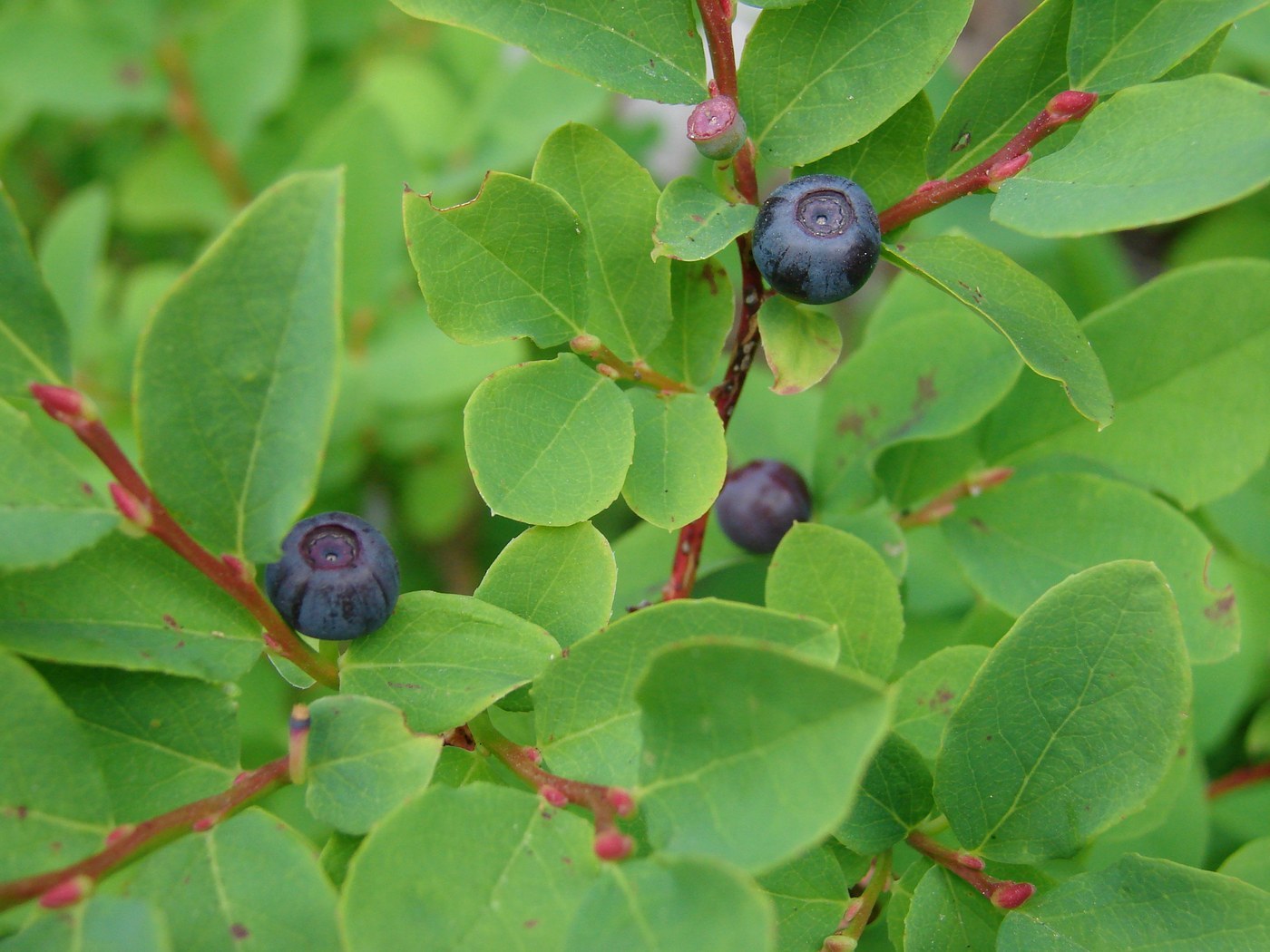
Key Identifying Features
"Huckleberry" covers several small woodland and mountain shrubs in Vaccinium (like blueberries) and Gaylussacia (true huckleberries). They are low, twiggy, deciduous (sometimes evergreen) shrubs, 1-6 ft tall, bearing small, round, blue, purple, red, or black berries singly or in small clusters. The crowned tip on the berry and alternate oval leaves are reliable clues.
- Low, branching shrub of forests and mountain slopes
- Small round berries with a tiny five-pointed crown at the tip
- Alternate, simple, oval leaves with smooth or finely toothed edges
- Often grows in dense colonies on acidic soil
Leaves & Stems
Leaves are alternate, oval to elliptic, 1-2 in. long, often glossy, with smooth or finely toothed margins; many species show tiny resin dots on the underside (especially true Gaylussacia huckleberries). Foliage frequently turns red or bronze in autumn. Stems are slender, woody, and often reddish or greenish on new growth, sometimes with fine angled ridges. The plants spread by rhizomes into thickets.
Flowers & Fruit
Flowers are small, urn- or bell-shaped, white to pinkish, nodding singly or in short clusters in spring — typical of the blueberry family. Fruit ripens in mid- to late summer: round berries 5-10 mm, ranging blue, purple-black, or red, with the persistent five-pointed calyx crown at the end. True (Gaylussacia) huckleberries contain about 10 noticeable, larger seeds, whereas blueberries have many tiny soft seeds — a useful in-hand test.
How to Tell It Apart from Look-Alikes
- Blueberry: Very closely related; huckleberries (Gaylussacia) have ~10 larger seeds and resin-dotted leaves, while blueberries have many tiny seeds. In the West, "huckleberry" often just means a wild Vaccinium.
- Bilberry: Similar small dark berries on low shrubs; mostly a regional naming difference.
- Nightshade / pokeweed berries: Borne in clusters on non-woody or vining plants and lack the crown scar; huckleberries have the crown and a woody shrub habit.
- Buckthorn: Berries lack the crown and grow on taller shrubs/trees with different leaves.
Confirm the crown scar, alternate oval leaves, and woody low-shrub habit to identify a huckleberry.
Where You'll Find It
Huckleberries thrive in acidic, well-drained soils of coniferous forests, mountain slopes, clearings, bogs, and heathlands across North America. Western mountain huckleberries are famous in the Pacific Northwest and Rockies; eastern Gaylussacia grow in woods and barrens. Look in partly shaded forest understory and burned or logged openings.
Quick ID Checklist
- Low woody shrub, 1-6 ft, in forest or mountain habitat
- Alternate oval leaves, sometimes resin-dotted beneath
- Small white-to-pink urn-shaped spring flowers
- Round berries with a five-pointed crown at the tip
- ~10 larger seeds (true huckleberry) vs many tiny seeds (blueberry)
- Acidic woodland or heath soil
Frequently asked questions
What is the difference between a huckleberry and a blueberry?
True huckleberries (Gaylussacia) have about ten larger seeds and resin-dotted leaves, while blueberries have many tiny soft seeds. In the western U.S., 'huckleberry' often just means a wild Vaccinium.
What is the crown on the berry tip?
It is the persistent five-pointed calyx left from the flower, a hallmark of the blueberry/huckleberry family that helps separate them from clustered berries on other plants.
Where do huckleberries grow?
In acidic soils of coniferous forests, mountain slopes, bogs, and heathlands, especially in the Pacific Northwest, Rockies, and eastern North American woods.