How to Care for Hydrangea
Keep bigleaf hydrangeas lush with morning sun, consistently moist soil, and correct timing on pruning to protect the blooms.
Read the full Hydrangea encyclopedia entry →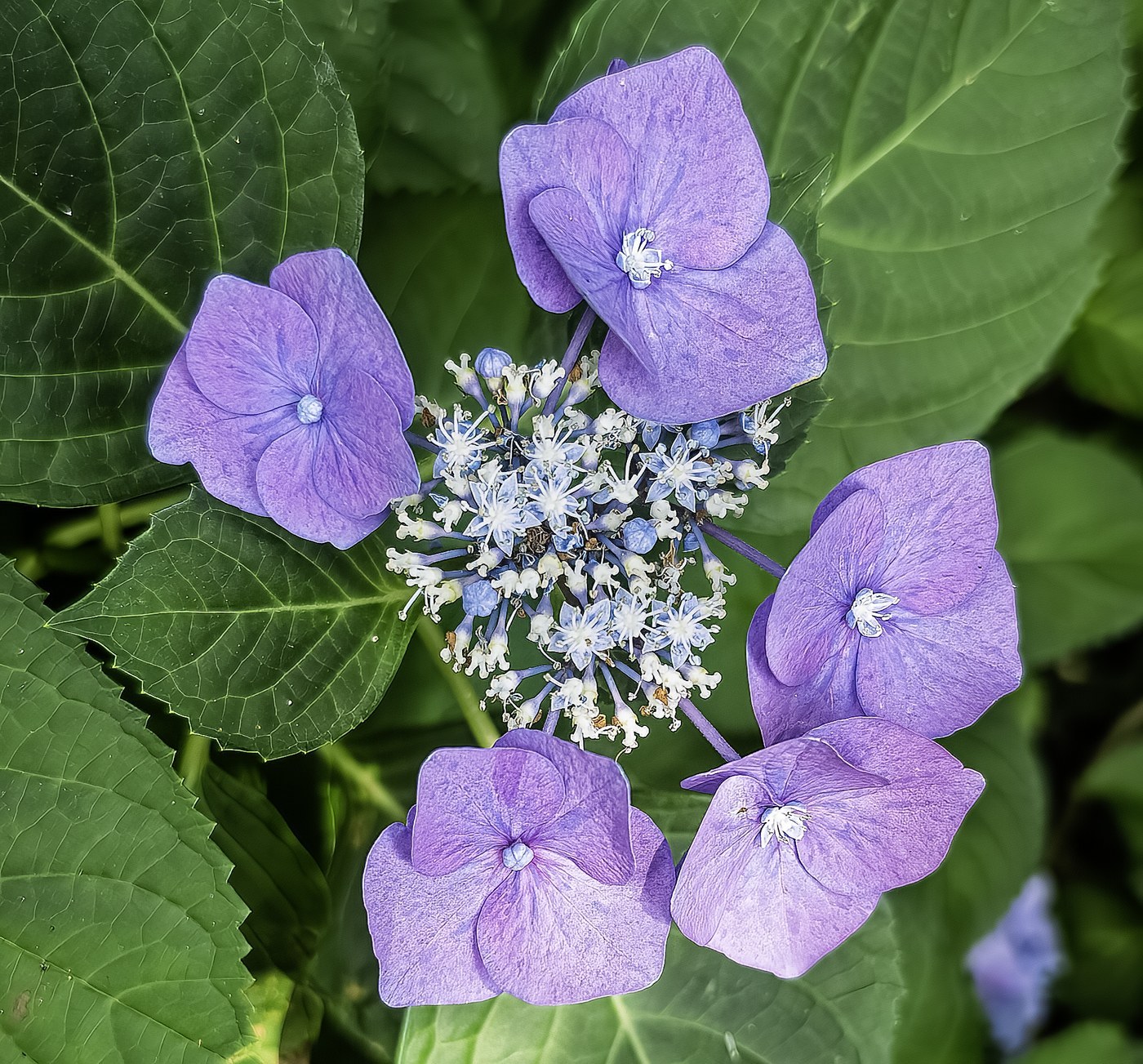
The bigleaf hydrangea (Hydrangea macrophylla) is a beloved deciduous shrub famed for its billowing mophead and lacecap flowerheads. It rewards attentive watering and thoughtful pruning with a long, showy summer display.
Light
Hydrangea macrophylla flowers best with morning sun and afternoon shade. Hot afternoon sun scorches the large leaves and causes flowers to wilt and fade quickly, while deep shade reduces blooming. A bright spot sheltered from midday glare gives the healthiest foliage and the most flowers.
Water
This shrub is thirsty. Its very name references water, and the broad leaves lose moisture rapidly. Keep the soil consistently moist, watering frequently and deeply during warm weather so the plant never wilts from dryness. A generous organic mulch conserves moisture and keeps the shallow roots cool.
Soil & Potting
Grow in rich, moisture-retentive but well-drained soil high in organic matter. Bigleaf hydrangeas dislike drying out and also resent standing water. In containers, use a large pot with a quality loam-based mix and check moisture daily in summer. Soil chemistry famously affects flower color: acidic soils tend to yield blue tones and alkaline soils pink, on cultivars that respond to pH.
Humidity & Temperature
Hydrangeas enjoy mild, humid conditions and cool summers. They are hardy but their flower buds, formed the previous year on many cultivars, can be damaged by hard late frosts. Shelter from cold, drying winds and avoid frost pockets to protect next season's blooms.
Feeding
Feed in spring with a balanced shrub fertilizer as growth resumes, and optionally again in early summer. Avoid heavy late-season feeding, which encourages soft growth vulnerable to frost. For those managing flower color, specialty color-enhancing feeds can nudge blooms bluer or pinker on responsive varieties.
Propagation
Propagate easily from softwood cuttings in early summer, rooting non-flowering shoots in a moist, gritty mix under cover. Layering low branches into the soil is another reliable method. Cuttings root within a few weeks and make sturdy young plants by the following season.
Repotting / Pruning
Pruning timing is critical because many bigleaf hydrangeas bloom on old wood. On these, prune right after flowering, removing spent heads down to a strong pair of buds and thinning old stems; do not cut hard in spring or you remove the flower buds. Reblooming types are more forgiving. Repot container plants every year or two into fresh mix.
Common Problems & Pests
Wilting in heat is usually a watering signal and recovers with a deep soak. Watch for powdery mildew and leaf spot in crowded, humid conditions, plus occasional aphids, spider mites, and scale. Improve airflow and water at the base rather than overhead. Failure to bloom most often traces to spring pruning, frost-killed buds, or too much shade.
Seasonal Care Tips
Mulch in spring and feed as growth starts. Water diligently all summer, especially for containers and newly planted shrubs. Deadhead and prune old-wood types straight after flowering. Leave dried flowerheads on in cold climates as slight winter protection for the buds beneath, then tidy in early spring.
Frequently asked questions
Why won't my hydrangea bloom?
The most common causes are pruning at the wrong time (removing old-wood flower buds), a hard late frost killing the buds, or too much shade. Prune old-wood types right after flowering and site them in morning sun.
How do I change my hydrangea's flower color?
On responsive bigleaf cultivars, acidic soil pushes flowers toward blue and alkaline soil toward pink. Color-adjusting soil treatments and feeds can shift the balance, though white varieties do not change.
Why does my hydrangea wilt on hot afternoons?
The large leaves lose water faster than the roots can supply it. Give afternoon shade, mulch to keep roots cool, and water deeply; plants usually perk back up by evening.
When should I prune my hydrangea?
For classic mophead and lacecap types that bloom on old wood, prune just after flowering. Avoid cutting them back in spring, which removes the buds that would have flowered.
Hydrangea identified by the community
Recent Hydrangea specimens identified with Plant Identifier.