
Incense Cedar Identification Guide
How to identify Incense Cedar (Calocedrus decurrens) by its flat sprays of long scale leaves, distinctive duck-bill cones, fragrant foliage, and cinnamon fibrous bark of western forests.
Read the full Incense Cedar encyclopedia entry →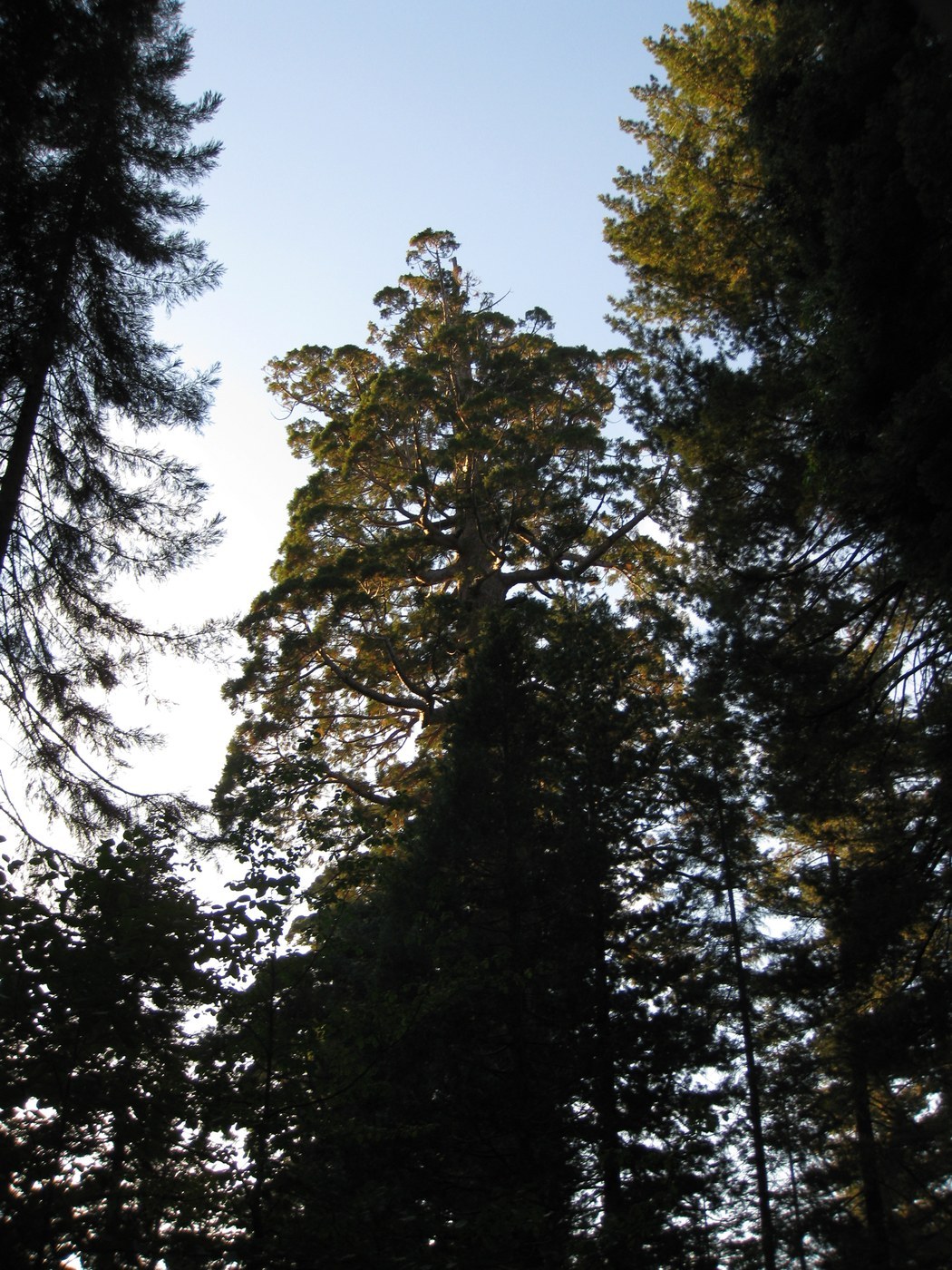
Key Identifying Features
Incense Cedar (Calocedrus decurrens) is a tall western conifer recognized by flattened sprays of bright green, elongated scale-like leaves, strongly aromatic foliage (the classic pencil-wood/incense smell), cinnamon-red, deeply furrowed fibrous bark, and unusual duck-bill or flask-shaped cones. A columnar, dense crown and fragrant foliage set it apart at a glance.
Leaves & Stems
- Foliage scale-like but elongated, in flattened sprays, with the scales in whorls of four appearing as long-pointed segments — the individual scales look stretched out compared with arborvitae.
- Bright green and glossy on both sides (little white marking beneath).
- Crushed foliage is richly aromatic, smelling of pencil shavings/incense.
- Bark cinnamon-red to reddish-brown, thick, deeply furrowed and fibrous/shaggy.
- Crown narrow, dense, and columnar in the open; trunk often buttressed and tapering.
Flowers & Fruit
- Seed cones small, about 0.75 to 1 inch, distinctive: they open into a "duck bill" or flask shape with usually six scales, the central pair spreading apart like an open beak.
- Cones reddish-brown, hanging, releasing winged seeds.
- The open duck-bill cone is essentially diagnostic.
How to Tell It Apart from Look-Alikes
- Western redcedar (Thuja plicata) has shorter scale segments, white butterfly-shaped marks beneath the sprays, and small rosette-like cones — not duck-bill cones.
- Port Orford cedar and arborvitae have more rounded, smaller-scale sprays and different (small woody or rounded) cones.
- Junipers bear berry-like cones, not woody duck-bill cones.
- The long flat scale sprays + duck-bill cones + cinnamon fibrous bark + incense scent confirm Incense Cedar.
Where You'll Find It
Mixed-conifer forests of the mountains of California, Oregon, western Nevada, and into Baja, especially the Sierra Nevada and Cascades at low to mid elevations, often alongside ponderosa pine, sugar pine, and Douglas-fir. Widely planted as an ornamental and the traditional wood for pencils.
Quick ID Checklist
- Flat sprays of long, bright green scale leaves (whorls of 4)
- Duck-bill / flask-shaped cones (~1 inch, 6 scales)
- Cinnamon-red, deeply furrowed fibrous bark
- Foliage strongly aromatic (pencil/incense scent)
- Columnar crown in western mixed-conifer forests
Frequently asked questions
What is the easiest way to identify Incense Cedar?
Look for its small duck-bill or flask-shaped cones that open into a beak, plus flat sprays of long bright-green scale leaves, cinnamon fibrous bark, and a strong pencil-wood aroma when crushed.
How is it different from Western redcedar?
Incense Cedar has longer scale segments, glossy green undersides without white butterfly marks, and unique duck-bill cones. Western redcedar has white markings beneath and small rosette-shaped cones.
Why does the foliage smell so strong?
Incense Cedar foliage and wood are rich in aromatic oils, producing the distinctive incense or pencil-shaving scent that gives the tree its name. Its wood is the traditional material for pencils.
Is it a true cedar?
No. Despite the name it is not a true cedar (Cedrus). It is Calocedrus decurrens, in the cypress family, more closely related to arborvitae and redcedars.