Inchplant Identification Guide
Identify the Inchplant (Tradescantia) by its jointed fleshy stems that root at one-inch intervals, clasping pointed leaves, and three-petaled flowers.
Read the full Inchplant encyclopedia entry →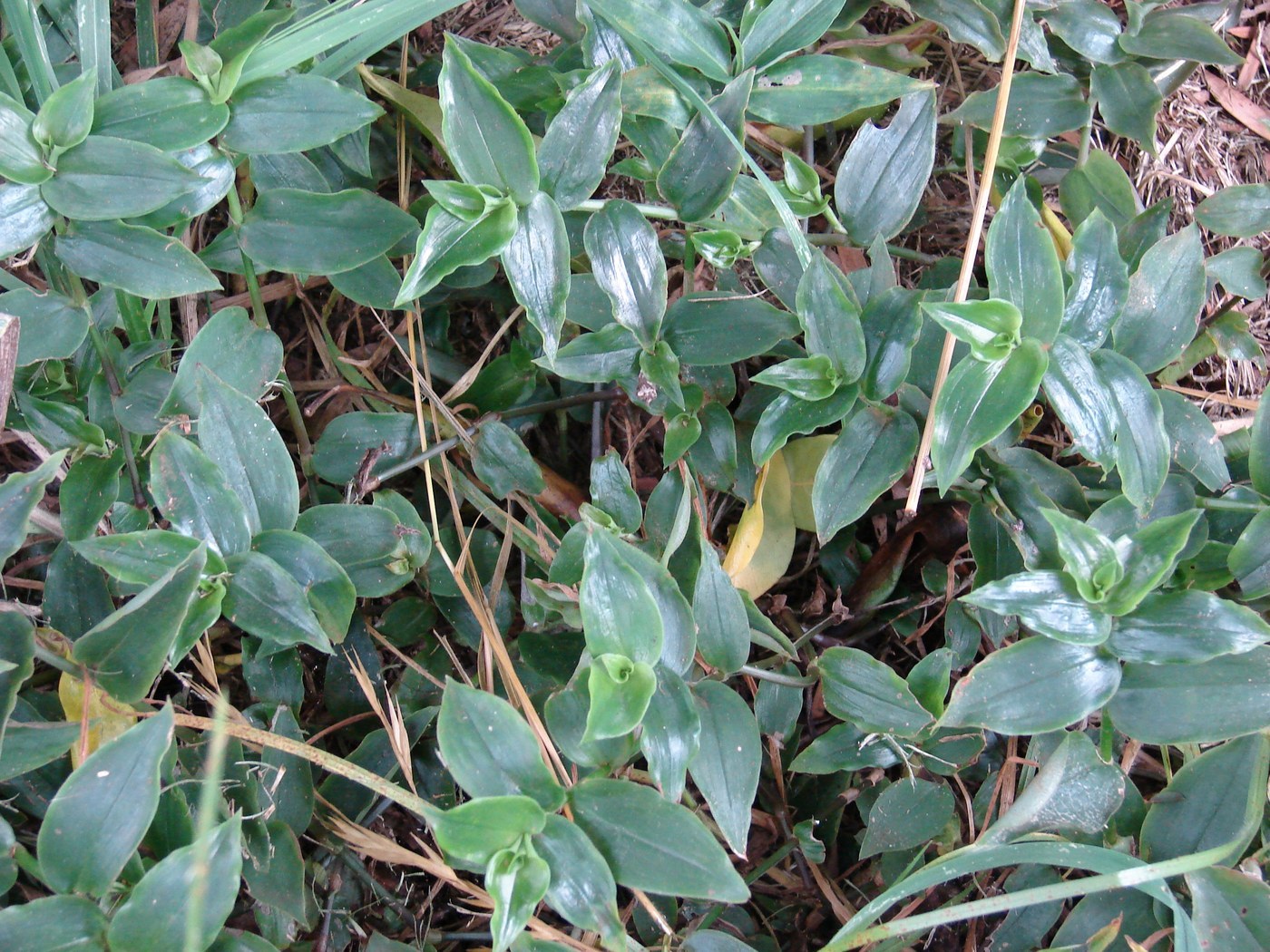
Key Identifying Features
Inchplant is a common name for trailing Tradescantia species (notably T. zebrina and T. fluminensis), the same group as Wandering Dude/Spiderwort. Identify it by:
- Fleshy, jointed stems with nodes spaced roughly an inch apart (the source of the name)
- Pointed, oval leaves that clasp the stem at swollen nodes
- Three-petaled flowers (pink, purple, or white)
- A fast-trailing, easily rooting habit
Leaves & Stems
The segmented, succulent stems are the key trait: each node is spaced about one inch apart and the stem snaps cleanly at the joint, rooting wherever it touches soil. Leaves are lance-shaped to oval with a pointed tip and a sheathing base that wraps the stem. Depending on the species/cultivar, the top may be plain green, silver-striped (T. zebrina), or cream-variegated, while the underside is frequently purple. Leaves often have a slight sheen and fine hairs.
Stems are brittle and trailing, growing quickly to spill over a pot edge. In bright light they take on purple and pink tones; in shade they green up and stretch with longer internodes.
Flowers & Fruit
Inchplant flowers are small but distinctive: three rounded petals with six prominent stamens bearing bright yellow anthers, often subtended by two leaf-like bracts at the stem tips. Colors range from bright magenta-pink to lavender to white depending on species. Each bloom lasts about a day. Fruit is a small dry capsule, rarely significant indoors.
How to Tell It Apart from Look-Alikes
- Callisia repens (Turtle Vine/Creeping Inchplant): smaller, rounder, tightly packed leaves; a related but daintier trailer.
- Pothos / Philodendron: also trailing, but with heart-shaped leaves and no swollen jointed nodes or sheathing leaf bases; stems are not as brittle/segmented.
- Tradescantia pallida (Purple Heart): same genus but with solid purple, narrow, fuzzy leaves and an upright-sprawling form.
The jointed inch-spaced fleshy stems + clasping pointed leaves + three-petaled flowers confirm an Inchplant.
Where You'll Find It
Native to Mexico and Central America, Inchplant is grown worldwide as a houseplant and hanging-basket trailer, and outdoors as a groundcover in warm climates. It can become invasive in frost-free regions, spreading from broken fragments. It thrives in bright indirect light with regular watering and roots almost effortlessly from cuttings — a beginner favorite.
Quick ID Checklist
- Fleshy, jointed stems with nodes about an inch apart
- Stems snap at the joint and root readily
- Pointed oval leaves clasping the stem, often purple underneath
- Three-petaled pink, purple, or white flowers
- Fast-trailing, easily propagated habit
Frequently asked questions
Why is it called an Inchplant?
The name comes from the stem nodes, which are spaced roughly an inch apart. The fleshy stems snap cleanly at these joints and root easily, so the plant spreads an inch at a time.
Is the Inchplant the same as Wandering Dude?
Essentially yes. Inchplant, Wandering Dude, and Spiderwort are all common names for trailing Tradescantia species like T. zebrina and T. fluminensis. They share jointed stems and clasping leaves.
How do I tell an Inchplant from a trailing pothos?
Inchplant has fleshy, jointed stems with swollen nodes and clasping pointed leaves often purple underneath, while pothos has heart-shaped leaves on non-jointed stems. The brittle, segmented stem is the giveaway.
Can I grow a new plant from a broken piece?
Very easily. A snapped stem segment placed in water or moist soil roots within days at the nodes. This is also why Inchplant can become invasive outdoors in warm climates.
Inchplant identified by the community
Recent Inchplant specimens identified with Plant Identifier.