Inchplant
Tradescantia fluminensis
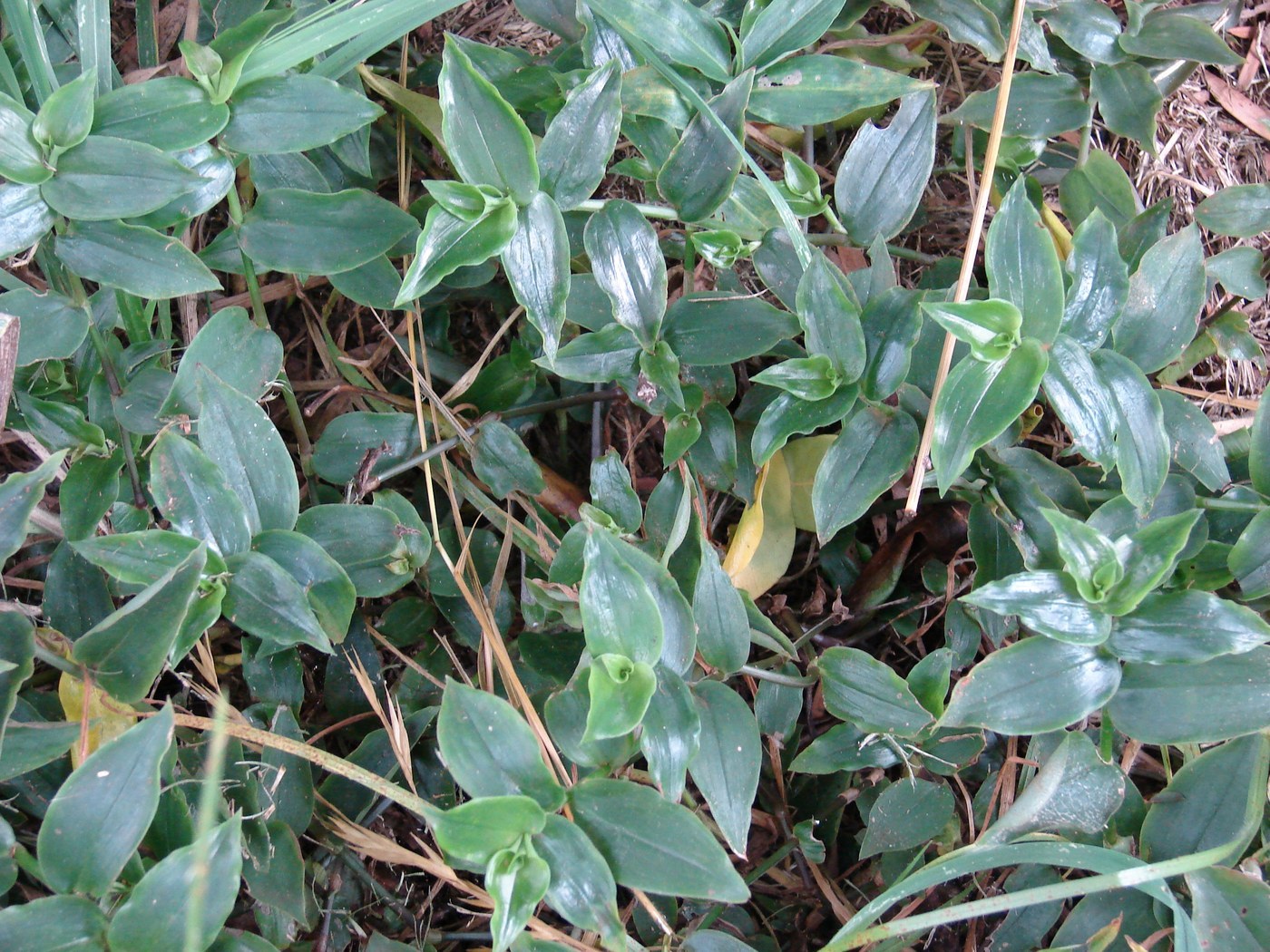
A vigorous trailing plant with small, glossy, pointed leaves that root readily along the stem about every inch. Easy to grow and propagate, it comes in plain green and variegated cream-striped forms.
- Light
- Bright indirect light
- Water
- Weekly; keep lightly moist
- Difficulty
- Easy
Got a plant like this?
Identify any plant from a photo, free.
Overview
Inchplant is a fast-spreading trailing member of the Tradescantia genus, named for the way it roots at nodes spaced roughly an inch apart along the stem. The plain green species and its variegated 'Tricolor' and white-striped forms are common houseplants.
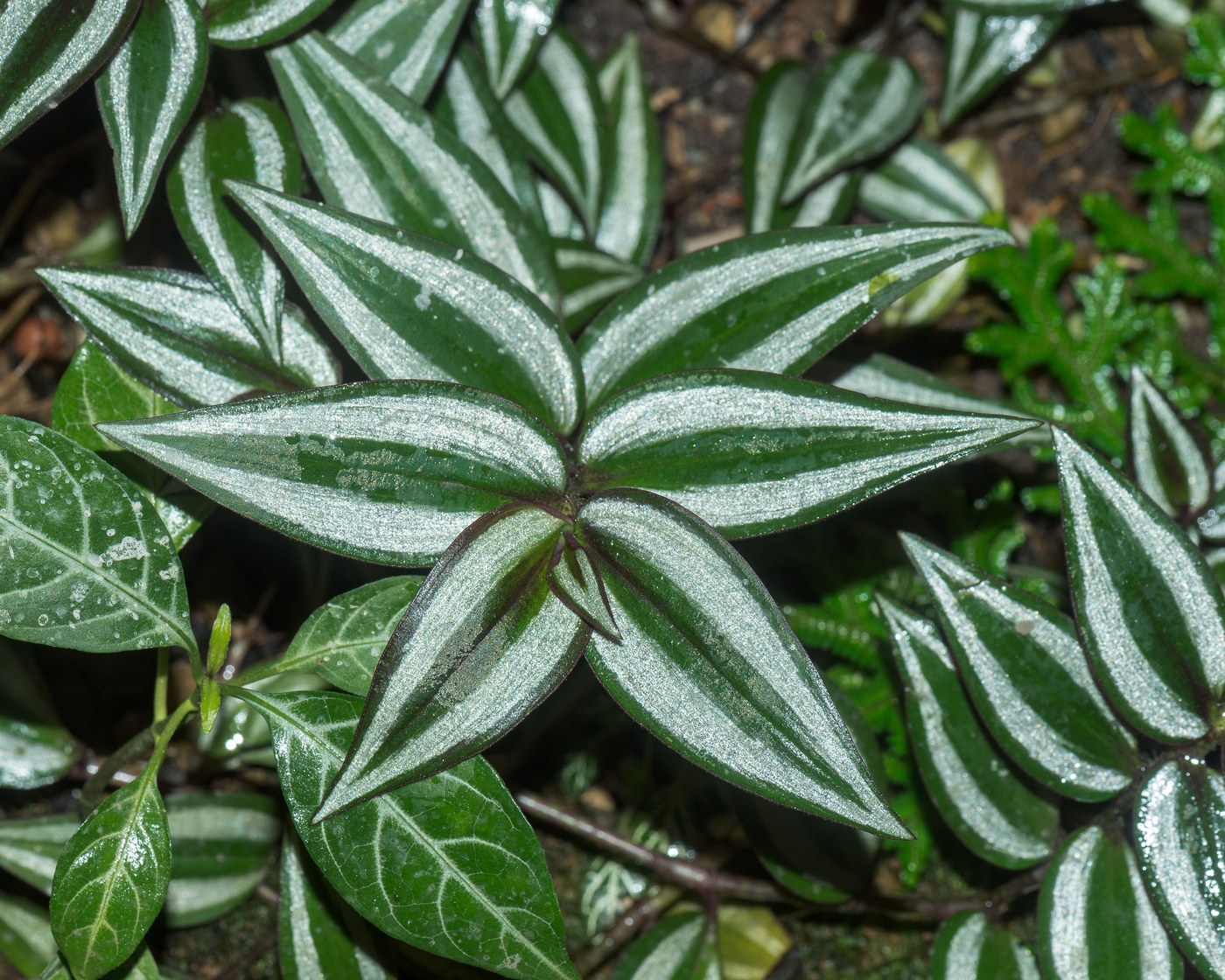
It is closely related to and often confused with the silver-striped Tradescantia zebrina (also called wandering dude). Inchplant is exceptionally easy, growing quickly and rooting from almost any cutting, which also makes it invasive outdoors in mild climates.
How to identify it
Recognize it by:
- Leaves: Small, oval, pointed, glossy green (or striped cream/white in variegated forms), about 1-2 inches long
- Stems: Succulent, trailing, rooting at the nodes roughly every inch
- Flowers: Small, three-petaled white flowers
- Habit: Dense, sprawling, fast-growing mats
- Underside: Green to slightly purple-tinged, unlike the deep purple of T. zebrina
Care & growing
- Light: Bright indirect light; variegated forms need good light to keep their stripes
- Water: Keep lightly moist; water about weekly when the surface begins to dry
- Soil: Standard well-draining potting mix
- Temperature: 60-80F (16-27C); not frost hardy
- Feeding: Light feeding monthly in the growing season
- Propagation: Extremely easy; cuttings root in days in water or soil
- Tip: Pinch frequently to keep it bushy and prevent legginess
Habitat & origin
Native to southeastern Brazil and neighboring South America, where it grows as a groundcover along riverbanks and in moist, shaded forest (the name fluminensis refers to rivers).
It is grown worldwide as an easy houseplant, but has escaped cultivation and become a serious invasive weed in mild, moist climates such as New Zealand, Australia, and the southeastern United States.
Frequently asked questions
Is inchplant the same as wandering dude?
They are closely related Tradescantia species often sharing common names. Inchplant (T. fluminensis) has smaller green leaves, while wandering dude (T. zebrina) has larger silver-and-purple striped leaves.
Why is the variegation disappearing?
Low light causes variegated forms to revert to green. Provide bright indirect light and prune out any all-green stems.
How do I propagate it?
Take stem cuttings and place them in water or soil. They root within days, making it one of the easiest plants to multiply.
Can I grow it outdoors?
Only in containers, or where it cannot escape. In mild, moist climates it is a highly invasive weed that smothers native plants.
Inchplant guides
In-depth guides for identifying, growing, and caring for Inchplant.
How to Care for Inchplant
Grow Tradescantia fluminensis, the fast, trailing Inchplant, with bright indirect light and lightly moist soil for lush, cascading vines.
Inchplant Identification Guide
Identify the Inchplant (Tradescantia) by its jointed fleshy stems that root at one-inch intervals, clasping pointed leaves, and three-petaled flowers.
Inchplant identified by the community
Real specimens identified with Plant Identifier.