
How to Care for Indian Hawthorn
Grow Indian Hawthorn, a compact evergreen shrub with spring flowers, for easy low-maintenance hedges in sun and well-drained soil.
Read the full Indian Hawthorn encyclopedia entry →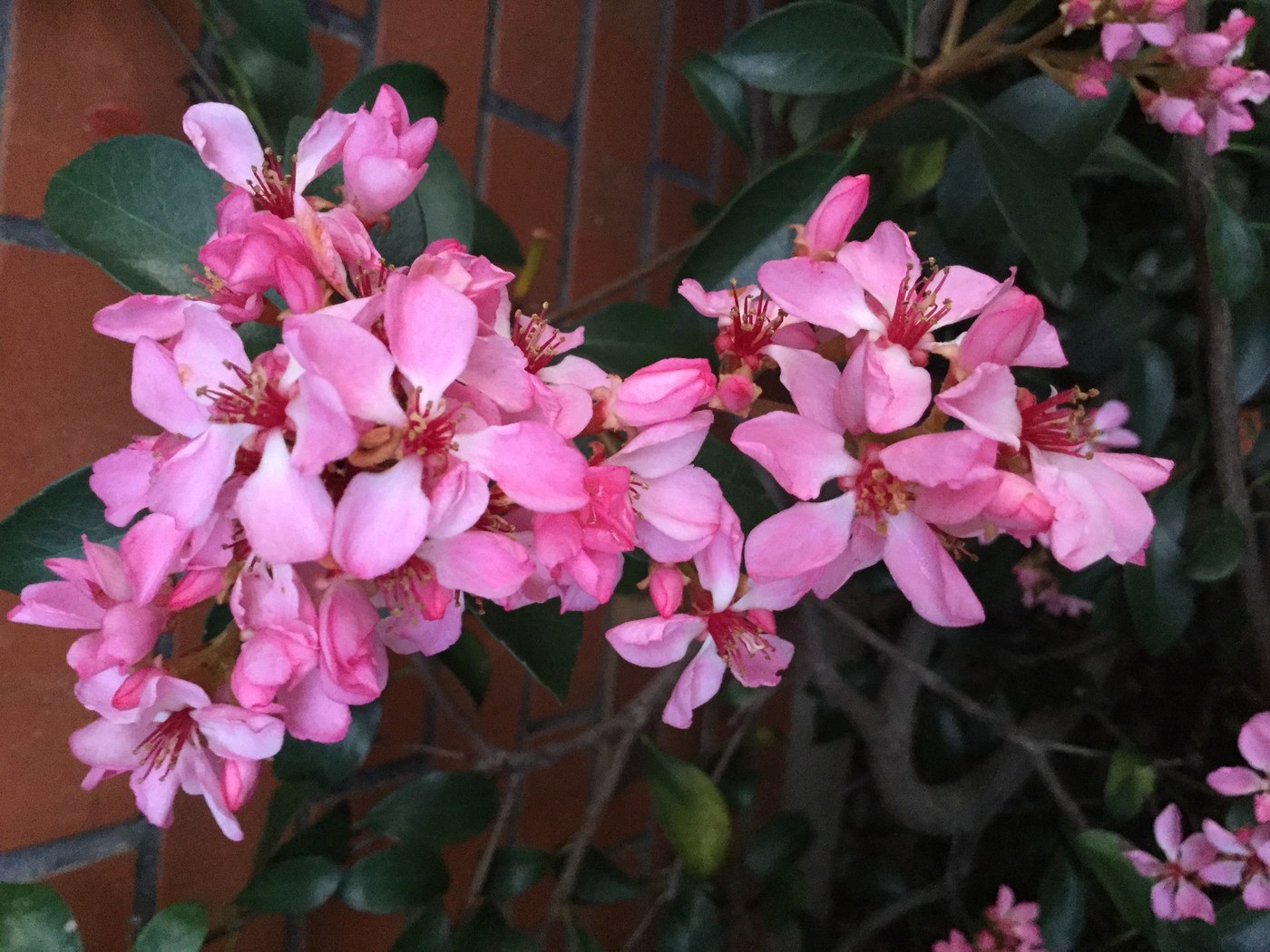
Indian Hawthorn (Rhaphiolepis indica) is a compact, rounded evergreen shrub grown for its leathery dark-green leaves and clusters of pink or white spring flowers followed by ornamental blue-black berries. It is a low-maintenance, drought-tolerant staple of warm-climate landscapes and foundation plantings.
Light
Plant in full sun to part shade. Full sun produces the densest habit and heaviest flowering, while too much shade thins the growth and reduces blooms while increasing susceptibility to leaf spot. At least six hours of sun is ideal.
Water
Water regularly during the first growing season to establish deep roots. Once established, Indian Hawthorn is quite drought-tolerant and needs only moderate, occasional deep watering during dry spells. It resents constantly wet feet, so let the soil dry somewhat between waterings.
Soil & Potting
Grows in a wide range of soils but demands good drainage. Sandy loams and well-drained garden beds are ideal; heavy, soggy clay invites root problems. It tolerates a range of pH and even coastal, salty conditions. In containers use a well-draining shrub or general potting mix.
Humidity & Temperature
Best suited to mild, warm climates (roughly USDA zones 8 to 11). It handles heat and coastal exposure well and tolerates light frost, but hard freezes can damage foliage and buds. Good air circulation reduces the humidity that fosters leaf disease.
Feeding
Feed lightly with a balanced or slow-release shrub fertilizer in early spring as growth begins. Avoid excess nitrogen, which spurs soft growth that is more prone to leaf spot. A single spring feeding is usually sufficient for established plants.
Propagation
Propagate from semi-hardwood cuttings taken in summer, treated with rooting hormone and kept in a moist, well-drained medium under humidity. Seeds from the berries can also be sown, though named cultivars are best cloned from cuttings to preserve their form and flower color.
Repotting / Pruning
Indian Hawthorn has a naturally tidy, mounded shape and needs little pruning. Trim lightly just after flowering to shape and maintain density, since flower buds form on old wood and hard late pruning removes next year's blooms. Repot container specimens every couple of years into fresh mix.
Common Problems & Pests
Entomosporium leaf spot is the major concern, causing reddish spots and defoliation in wet, crowded, or shady conditions; improve airflow, avoid overhead watering, and remove fallen leaves. Fire blight can occasionally strike. Watch for aphids, scale, and occasional caterpillars, treating with insecticidal soap or horticultural oil as needed.
Seasonal Care Tips
Enjoy the flower flush in spring, then prune lightly right after bloom. Feed in early spring and water through summer dry spells until established. In fall and winter, ease off watering; in cooler zones, protect from hard freezes and clean up fallen foliage to limit overwintering leaf spot.
Frequently asked questions
How much should I prune Indian Hawthorn?
Very little. It keeps a naturally compact mound. Trim lightly just after flowering to shape it, since buds set on old wood and heavy late pruning removes next spring's flowers.
Why does my Indian Hawthorn have spotted, dropping leaves?
That is typically Entomosporium leaf spot, worsened by shade, crowding, and wet foliage. Improve air circulation, water at the base, remove fallen leaves, and give it full sun.
Is Indian Hawthorn drought-tolerant?
Once established, yes. Water regularly the first season to build deep roots, after which it needs only occasional deep watering during extended dry periods.
Can I grow Indian Hawthorn in a container?
Yes. Use a well-draining potting mix and a pot with drainage holes, place it in full sun, and repot every couple of years. Its compact size suits patios and entryways.