Indian Hawthorn
Rhaphiolepis indica
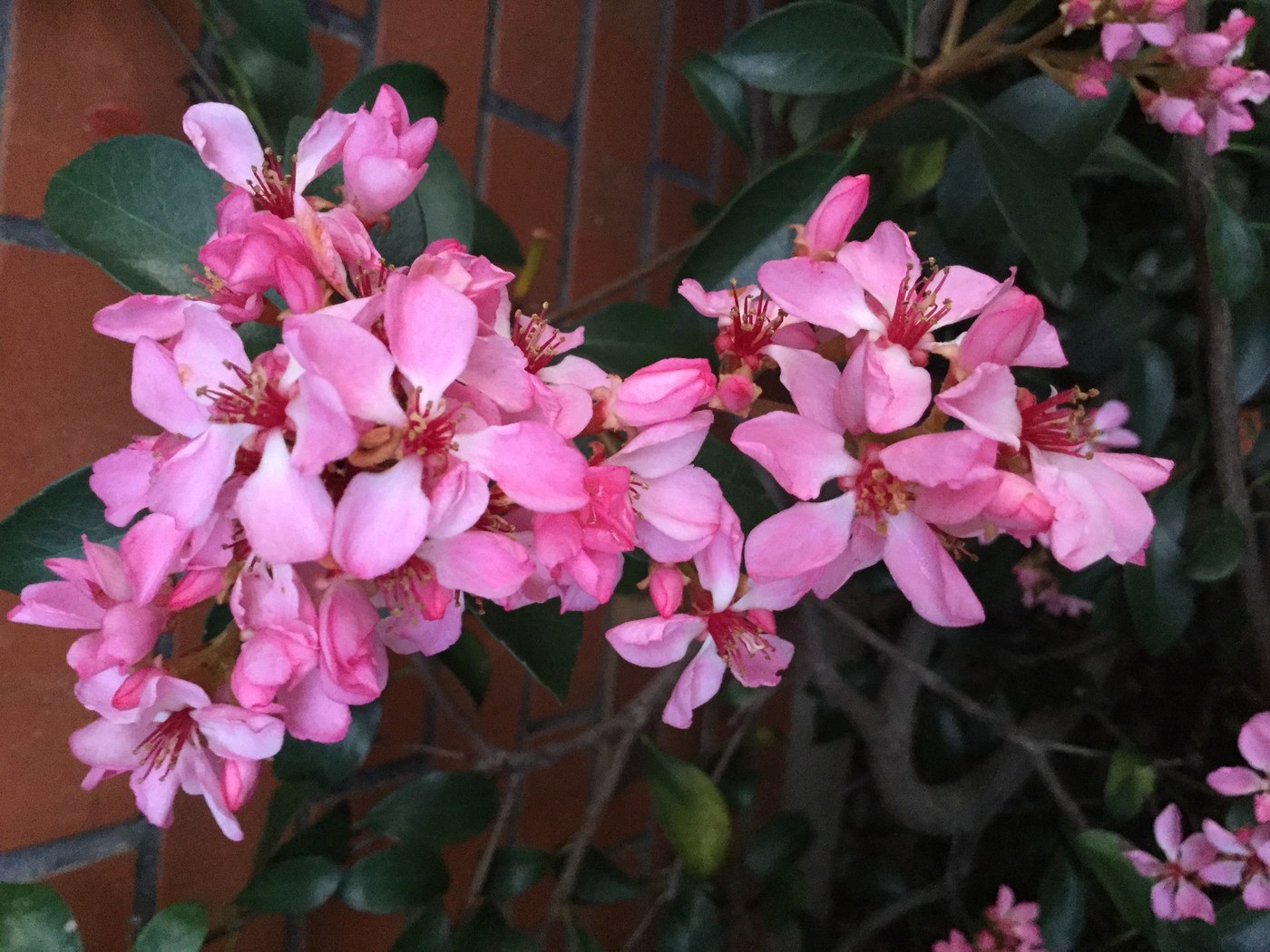
Indian hawthorn is a compact evergreen shrub with leathery leaves, fragrant pink or white spring flowers, and blue-black berries. It is a low-care favorite for warm-climate landscapes.
- Light
- Full sun to part shade
- Water
- Moderate; drought-tolerant once established
- Difficulty
- Easy
Got a plant like this?
Identify any plant from a photo, free.
Overview
Indian hawthorn (Rhaphiolepis indica) is a dense, mounding evergreen shrub in the rose family, widely planted in mild climates for its neat habit and reliable spring bloom. Clusters of small, fragrant white-to-pink flowers cover the plant, followed by dark blue-black berries.
Its leathery, dark green foliage and naturally rounded form mean it needs little pruning to stay tidy, making it a go-to for low-maintenance foundation plantings, hedges, and mass plantings.
Tough and tolerant of heat, salt, and coastal conditions, it does best with good air circulation, since dense or shaded plantings are prone to leaf spot.
How to identify it
A compact, naturally rounded evergreen shrub.
- Flowers: clusters (panicles) of small, fragrant, 5-petaled white to pink blooms in spring
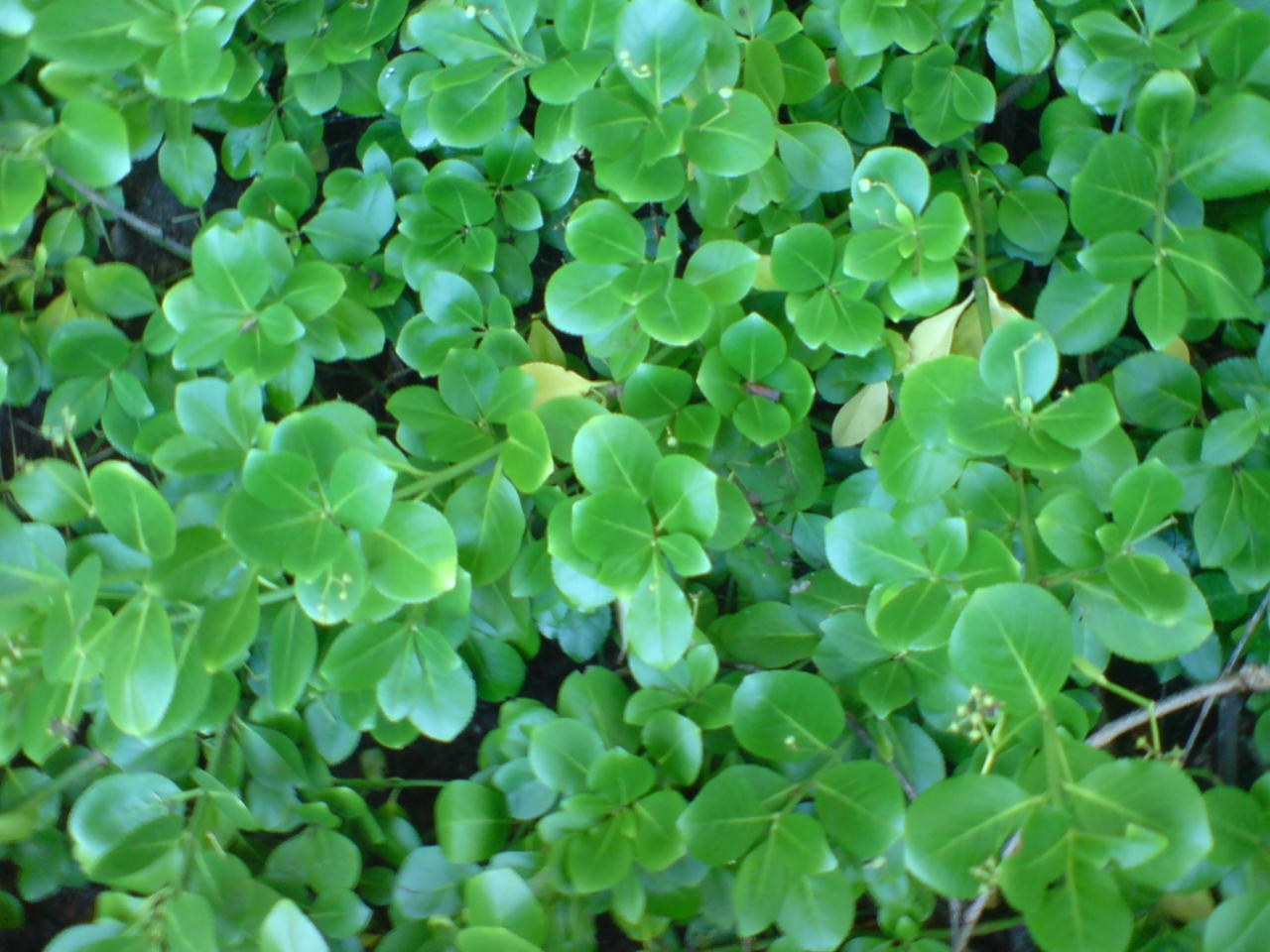
- Leaves: thick, leathery, dark green, oval with finely toothed edges; reddish when new and in cold weather
- Fruit: small blue-black berries (pomes) ripening late summer into fall
- Habit: dense, mounded, slow-growing, typically 3–6 ft tall and wide
- Form: tidy and self-shaping, rarely needing pruning
Care & growing
Easygoing in warm climates.
- Light: full sun for best flowering and disease resistance; tolerates part shade
- Water: moderate while establishing; drought-tolerant afterward
- Soil: adaptable but needs good drainage; tolerates salt and sandy coastal soils
- Temperature: hardy in USDA zones 8–11
- Feeding: light spring feeding with balanced fertilizer
- Pruning: minimal; shape lightly after flowering if needed
- Propagation: semi-hardwood cuttings; provide airflow to limit Entomosporium leaf spot
Habitat & origin
Rhaphiolepis indica is native to southern China and Southeast Asia, growing in open woodlands and on slopes in warm, humid conditions; related species and hybrids extend to Japan.
It is now one of the most common landscape shrubs in the warm regions of the southern United States, California, the Mediterranean, and similar climates, valued for coastal and urban toughness.
Frequently asked questions
Why does my Indian hawthorn have leaf spots?
Entomosporium leaf spot is common, especially in shade, crowding, or overhead watering. Improve airflow, give full sun, and avoid wetting the foliage.
How big does Indian hawthorn get?
Most forms stay a compact 3–6 ft tall and wide, with dwarf cultivars even smaller, making it ideal for low hedges.
Is Indian hawthorn evergreen?
Yes, it holds its leathery dark green leaves year-round in its hardiness range (zones 8–11).
Does Indian hawthorn need pruning?
Very little—it forms a naturally rounded shape. Light shaping after flowering is all that's usually needed.
Indian Hawthorn guides
In-depth guides for identifying, growing, and caring for Indian Hawthorn.
How to Care for Indian Hawthorn
Grow Indian Hawthorn, a compact evergreen shrub with spring flowers, for easy low-maintenance hedges in sun and well-drained soil.
Indian Hawthorn Identification Guide
Identify Indian Hawthorn (Rhaphiolepis) by its rounded evergreen form, leathery toothed leaves, clusters of white-to-pink spring flowers, and blue-black berries.