
How to Care for Indian Paintbrush
Growing guide for Indian Paintbrush (Castilleja coccinea), a fiery wildflower prized for its scarlet bracts and challenging, host-dependent nature.
Read the full Indian Paintbrush encyclopedia entry →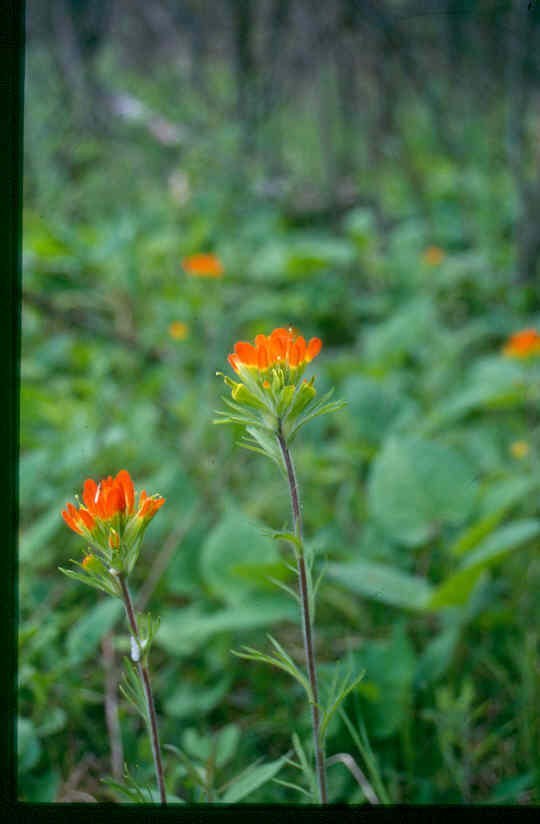
Indian Paintbrush is a striking North American wildflower whose vivid scarlet-orange bracts light up prairies and open woodlands. It is one of the most rewarding but genuinely difficult natives to cultivate because it is hemiparasitic, tapping into the roots of neighboring plants to thrive.
Light
Give Indian Paintbrush full sun, ideally six or more hours of direct light per day. In the wild it colonizes open meadows and sunny slopes, and shade produces weak, floppy growth with muted bract color. In very hot southern gardens a little afternoon relief is tolerated, but bright exposure is essential for strong flowering.
Water
Consistent with its stated low-to-moderate needs, this plant wants well-drained soil that stays on the drier side. Water young plants during establishment, then taper off; mature stands are quite drought-tolerant. Standing moisture and heavy, soggy ground are the fastest way to lose it, so never let it sit wet.
Soil & Potting
Use a lean, sharply drained, sandy or gravelly soil that is low in fertility. Rich, amended garden beds actually work against this wildflower. The critical requirement is a companion host: sow it alongside grasses, penstemon, blue-eyed grass, or other prairie natives whose roots it can attach to. Without a host plant nearby, seedlings rarely persist. It resents transplanting, so direct-sow where it will grow.
Humidity & Temperature
Indian Paintbrush is adapted to open, breezy continental conditions and tolerates a wide range of temperatures once established. It handles cold winters well and does not need supplemental humidity. Good air movement helps keep the crown dry and healthy.
Feeding
Do not fertilize. This is a low-nutrient specialist that draws much of what it needs from its host plant, and added feed encourages competing weeds and lush, disease-prone growth. Lean soil is a feature, not a problem.
Propagation
Propagation is by seed and requires patience. The tiny seeds need cold stratification, so fall sowing outdoors or a period of moist chilling in the refrigerator improves germination. Scatter seed directly among established host plants and press it into the surface, as light aids germination. Because the roots must find a host early, seedlings started in isolation usually fail.
Repotting / Pruning
This wildflower dislikes disturbance and is not suited to containers or repotting; grow it permanently in place. Pruning is minimal. You may leave spent stalks to self-sow, or tidy them after seed drops. Avoid cultivating or hoeing near the crown, which damages the fragile root connections to its hosts.
Common Problems & Pests
The most common failure is not a pest but cultural: seedlings damp off or die out when grown without a host plant or in soil that is too rich or too wet. Root rot follows poor drainage. Established plants have few serious insect problems, though aphids may cluster on tender new growth and can be rinsed off with water.
Seasonal Care Tips
Sow seed in autumn so winter cold breaks dormancy naturally. Expect blooms in late spring into early summer. Let plants set and drop seed to maintain a self-perpetuating colony, since individual plants are often short-lived. Provide little to no water in the dormant season and resist the urge to enrich the soil.
Frequently asked questions
Why is Indian Paintbrush so hard to grow?
It is hemiparasitic, meaning its roots must attach to a neighboring host plant such as a grass or penstemon to draw water and nutrients. Grown alone in rich or wet soil, seedlings usually fail, which is why it is rated a hard plant.
Do I need to plant something alongside it?
Yes. Sow it directly among compatible prairie hosts like native grasses, penstemon, or blue-eyed grass so the young roots can connect to a host early in life.
Can I grow Indian Paintbrush in a pot?
It is not well suited to containers because it resents transplanting and needs a permanent host relationship. Direct-sowing it into a sunny, lean, well-drained bed gives far better results.
Should I fertilize it?
No. It is adapted to low-nutrient soils and pulls resources from its host. Fertilizer encourages weeds and weak growth, so keep the soil lean.