How to Care for Indian Pipe
Indian Pipe is a ghostly woodland plant that cannot be cultivated; the focus is protecting it in the wild.
Read the full Indian Pipe encyclopedia entry →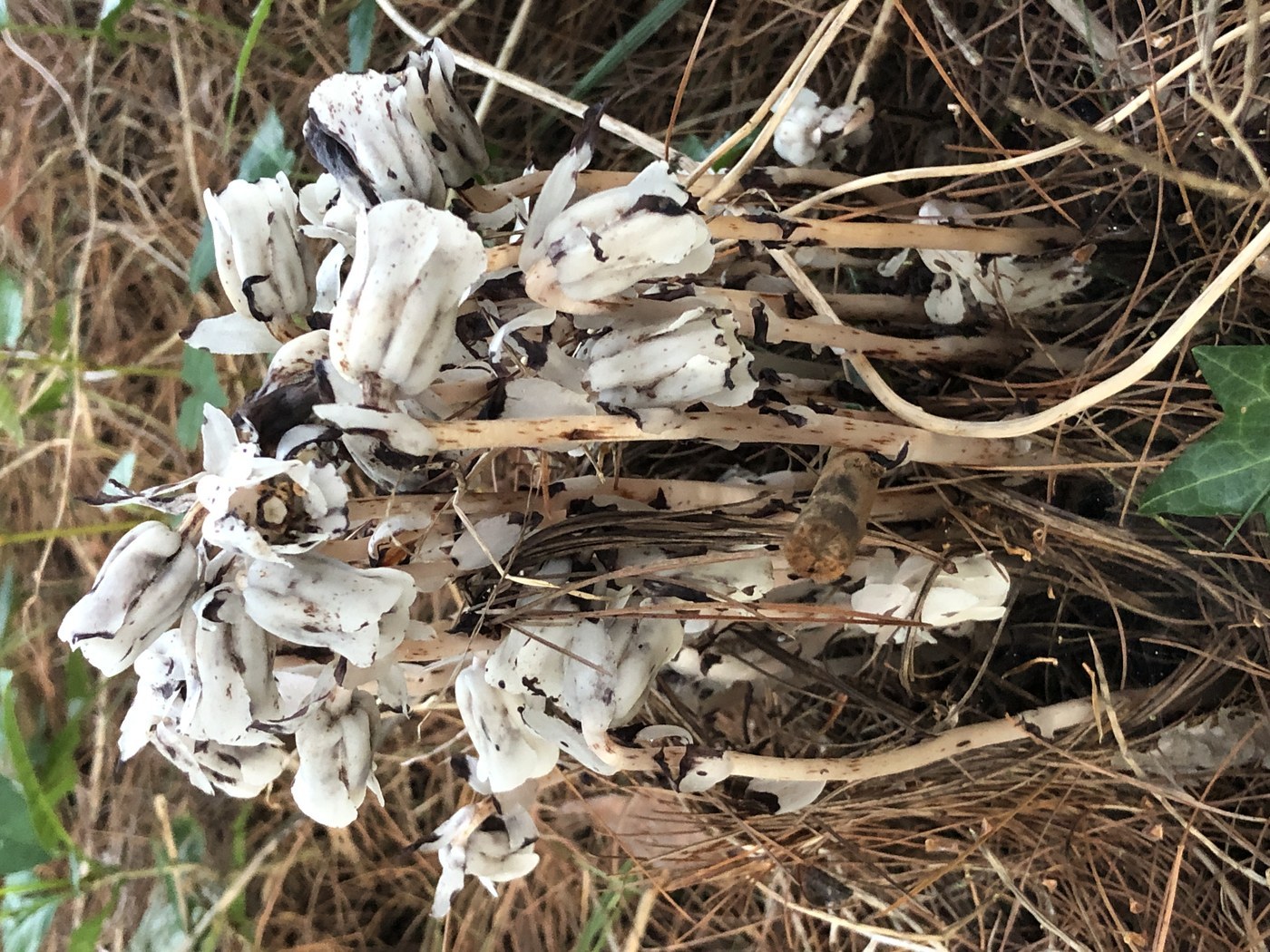
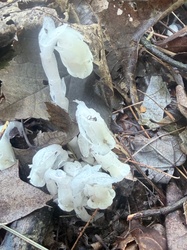
Indian Pipe (Monotropa uniflora) is a ghostly white, waxy woodland plant that lacks chlorophyll entirely. Rather than making its own food through photosynthesis, it draws nourishment through a complex partnership with mycorrhizal fungi that are themselves linked to the roots of forest trees. This dependence makes it one of the very few plants that essentially cannot be transplanted or cultivated by ordinary means.
Light
Indian Pipe grows in deep shade on the dim forest floor. Because it does not photosynthesize, it has no need for light and is found in the darkest, most sheltered parts of mature woodlands beneath a dense canopy. Any attempt to grow it in a garden bed with normal light exposure will fail.
Water
It occurs naturally in consistently moist, humus-rich forest floors, often appearing after summer rains. The steady moisture of undisturbed leaf litter and decaying wood is essential to the fungal network it relies on. It cannot be watered into establishment like a conventional plant.
Soil & Potting
This species requires the intact, living soil ecosystem of a mature forest, thick with decomposing leaf litter, wood, and an established web of mycorrhizal fungi tied to specific trees. This entire underground network cannot be replicated in a pot or reproduced with ordinary potting mixes, which is why Indian Pipe resists all cultivation.
Humidity & Temperature
It favors the cool, humid, stable microclimate of a shaded forest interior. High ambient humidity and buffered temperatures under a closed canopy are part of the conditions it depends on, and these cannot be meaningfully recreated in a garden or container setting.
Common Problems & Pests
The main challenge with Indian Pipe is that it simply cannot be grown or moved. Disturbing the soil or fungal network kills it, and the plant quickly blackens and dissolves once picked or uprooted. The best care is stewardship: leaving wild colonies and their surrounding forest floor completely undisturbed.
Seasonal Care Tips
Indian Pipe emerges seasonally, typically appearing in summer and early autumn after rainfall, then blackening and disappearing as it sets seed. If you are fortunate enough to have it appear in a woodland you tend, the only appropriate action is to protect the habitat: avoid raking away leaf litter, avoid compacting the soil, and preserve the surrounding trees whose roots sustain the fungal partners.
Frequently asked questions
Can I grow Indian Pipe in my garden?
No. It depends on a living mycorrhizal fungal network tied to specific forest trees and cannot be transplanted, potted, or cultivated by conventional means.
Why is Indian Pipe white instead of green?
It lacks chlorophyll and does not photosynthesize. Instead it draws all its nourishment through fungi connected to nearby tree roots, so it has no need for green pigment.
Why does it turn black when picked?
Once disturbed or removed from its habitat, the plant loses its fungal lifeline and quickly blackens and dissolves. Leaving it in place is the only way it survives.
When does Indian Pipe appear?
It typically emerges in summer and early autumn, often after rain, then blackens and disappears as it sets seed later in the season.
Indian Pipe identified by the community
Recent Indian Pipe specimens identified with Plant Identifier.