
Irish Yew Identification Guide
How to identify Irish Yew (Taxus baccata 'Fastigiata') by its strongly upright columnar form, spirally radiating dark needles, and red arils. Notes its origin as a single cultivar.
Read the full Irish Yew encyclopedia entry →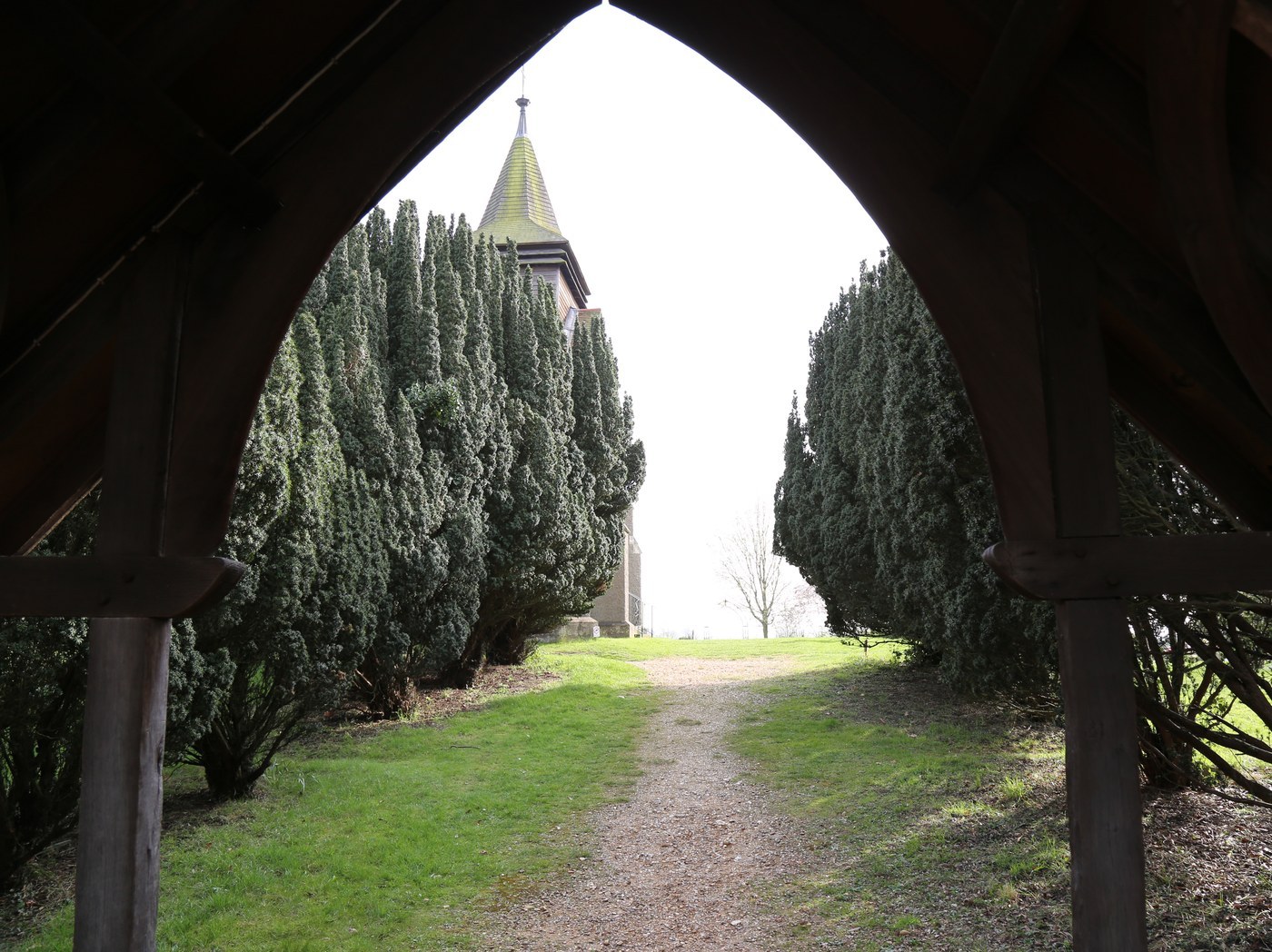
Key Identifying Features
Irish Yew (Taxus baccata 'Fastigiata') is a distinctive upright, columnar cultivar of English yew. Its signature is the strongly vertical, narrow, broadly columnar habit with branches sweeping upward, plus dark, almost blackish-green needles that radiate all around the shoots rather than lying in flat rows. Like all yews, it bears red fleshy arils.
Leaves & Stems
- Needles flat, 0.5 to 1.2 inches, very dark green, glossy above, dull pale green below (no white bands), soft and flexible with a pointed tip.
- Unlike wild English yew, the needles on Irish Yew tend to be arranged radially, spiraling around the upright shoots, contributing to a dense, plush look.
- Branches strongly ascending/erect, packed tightly to form a narrow column or broad obelisk that may splay with age.
- Bark thin, reddish-brown, scaly and flaking; old trunks often fluted and multi-stemmed.
Flowers & Fruit
- Usually female (the original clone is female), bearing single seeds in bright red, cup-shaped, open-tipped arils.
- Male yews release pollen from small cones in late winter to spring.
How to Tell It Apart from Look-Alikes
- Wild English yew has a broad, spreading crown and needles in flat two-ranked rows; Irish Yew is unmistakably columnar with radiating needles.
- Italian cypress and columnar junipers share an upright form but have scale-like or awl-like foliage and woody/berry cones, not flat soft needles and red arils.
- Columnar Japanese yew cultivars are hardier and slightly different in needle arrangement, but Irish Yew's classic origin is the English yew species.
- The combination of columnar shape + flat dark needles + red arils is diagnostic.
Where You'll Find It
A classic ornamental of formal gardens, churchyards, cemeteries, and avenues, especially in Britain, Ireland, and mild temperate climates worldwide. Every Irish Yew descends from cuttings of two trees found in County Fermanagh, Ireland, in the 1700s, so all share the same upright clone.
Quick ID Checklist
- Strongly upright, columnar habit with erect branches
- Very dark green needles radiating around the shoots
- Undersides plain pale green (no white bands)
- Red fleshy arils with an open tip (female plants)
- Reddish flaky bark
Frequently asked questions
What makes Irish Yew look different from ordinary yew?
Irish Yew is a columnar cultivar: its branches sweep strongly upward into a narrow column and its dark needles radiate around the shoots, whereas wild English yew spreads broadly with needles in flat rows.
Why do all Irish Yews look identical?
Every Irish Yew is a clone propagated by cuttings from original trees discovered in County Fermanagh, Ireland, in the 1700s, so they all share the same upright form.
How do I tell it from a columnar juniper or cypress?
Irish Yew has flat, soft needles and red fleshy arils. Columnar junipers and cypresses have scale-like foliage and woody or berry-like cones.