Irish Yew
Taxus baccata 'Fastigiata'
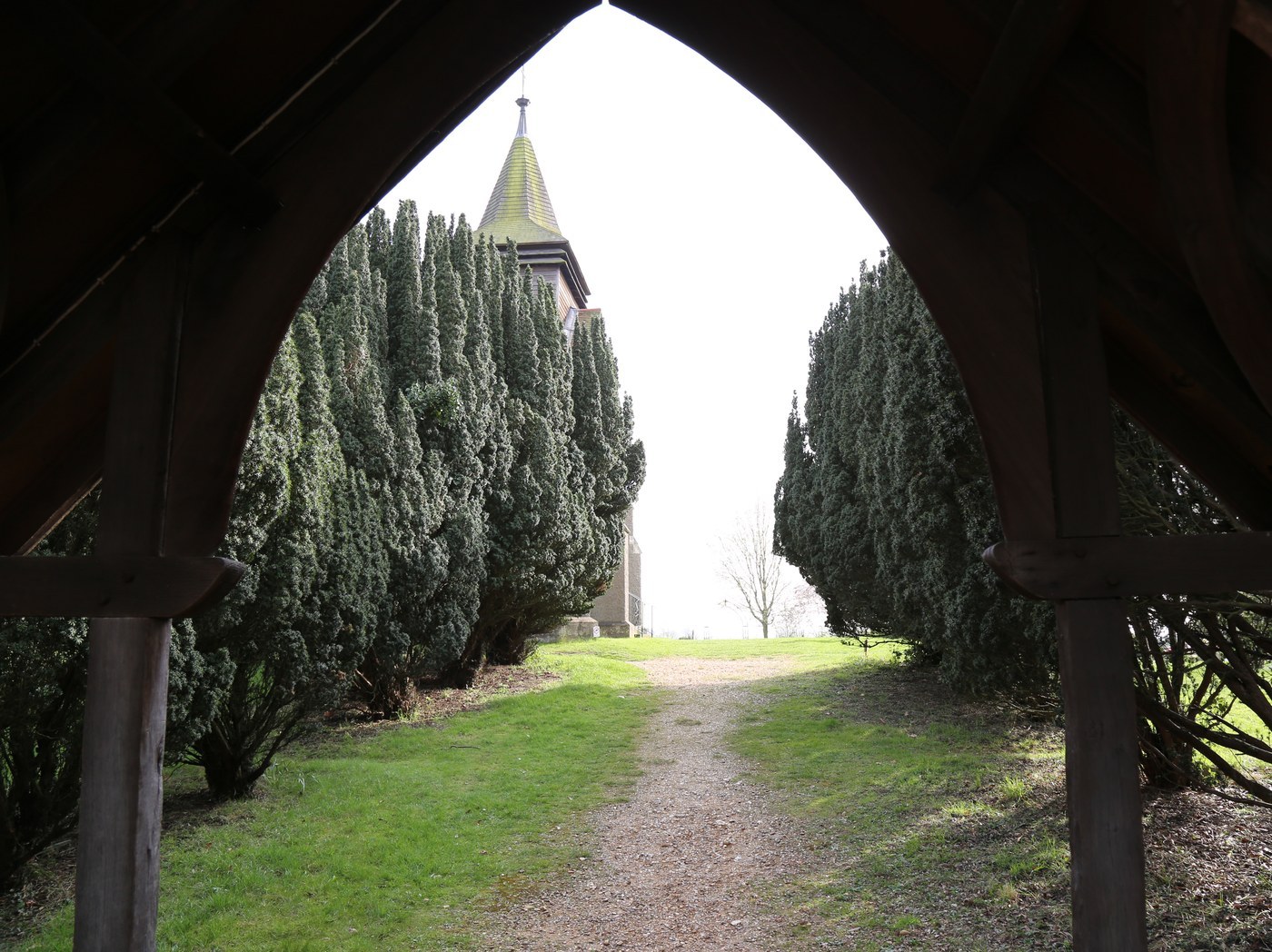
Irish Yew is a distinctive columnar cultivar of English yew with a tight, upright form, dark needles whorled around the stems, and red arils.
- Light
- Full sun to shade
- Water
- Moderate; well-drained soil
- Difficulty
- Easy
Got a plant like this?
Identify any plant from a photo, free.
Overview
Irish Yew (Taxus baccata 'Fastigiata') is an upright, columnar form of the English yew, all descended from two female trees found around 1740 at Florencecourt in County Fermanagh, Ireland.
Its narrow, fastigiate habit and dark evergreen foliage make it a classic formal accent in gardens, churchyards, and cemeteries.
How to identify it
- Habit: Strongly upright and columnar, with branches ascending in a tight cluster.
- Needles: Dark green, flat, about 0.5–1.2 in, radiating spirally around the shoots (not flatly two-ranked like the species).
- Fruit: Red, fleshy, cup-shaped arils on female plants.
- Bark: Reddish-brown, flaking.
- Size: Typically 10–30 ft tall, narrow.
Care & growing
Irish Yew tolerates full sun to shade and is very forgiving, but needs good drainage.
- Water: Moderate; avoid waterlogged soil.
- Soil: Well-drained, neutral to alkaline tolerated; adaptable.
- Temperature: Hardy USDA zones 6–7 (slightly less hardy than Japanese yew).
- Feeding: Light; not demanding.
- Propagation: From cuttings to preserve the columnar form (seedlings revert to spreading habit).
Habitat & origin
All Irish Yews trace back to the original Florencecourt, Ireland specimens; the parent species, Taxus baccata, is native to Europe, North Africa, and southwest Asia.
Irish Yew is planted ornamentally worldwide in formal gardens, churchyards, and cemeteries for its solemn, columnar form.
Frequently asked questions
Where did Irish Yew come from?
From two female yews discovered around 1740 at Florencecourt in County Fermanagh, Ireland; all cultivated plants descend from them.
Why is its shape so upright?
It is a naturally fastigiate (columnar) mutation, propagated by cuttings to keep the narrow form.
Does it produce berries?
Female plants bear red, fleshy arils; the original Florencecourt trees were female.
Irish Yew guides
In-depth guides for identifying, growing, and caring for Irish Yew.
How to Care for Irish Yew
Grow the columnar Irish Yew as a dense, dark-green evergreen accent; it tolerates sun or shade and thrives in well-drained soil with modest care.
Irish Yew Identification Guide
How to identify Irish Yew (Taxus baccata 'Fastigiata') by its strongly upright columnar form, spirally radiating dark needles, and red arils. Notes its origin as a single cultivar.