
How to Care for Iron Cross Begonia
Grow the dramatic puckered foliage of Iron Cross Begonia with bright indirect light, high humidity, and careful watering.
Read the full Iron Cross Begonia encyclopedia entry →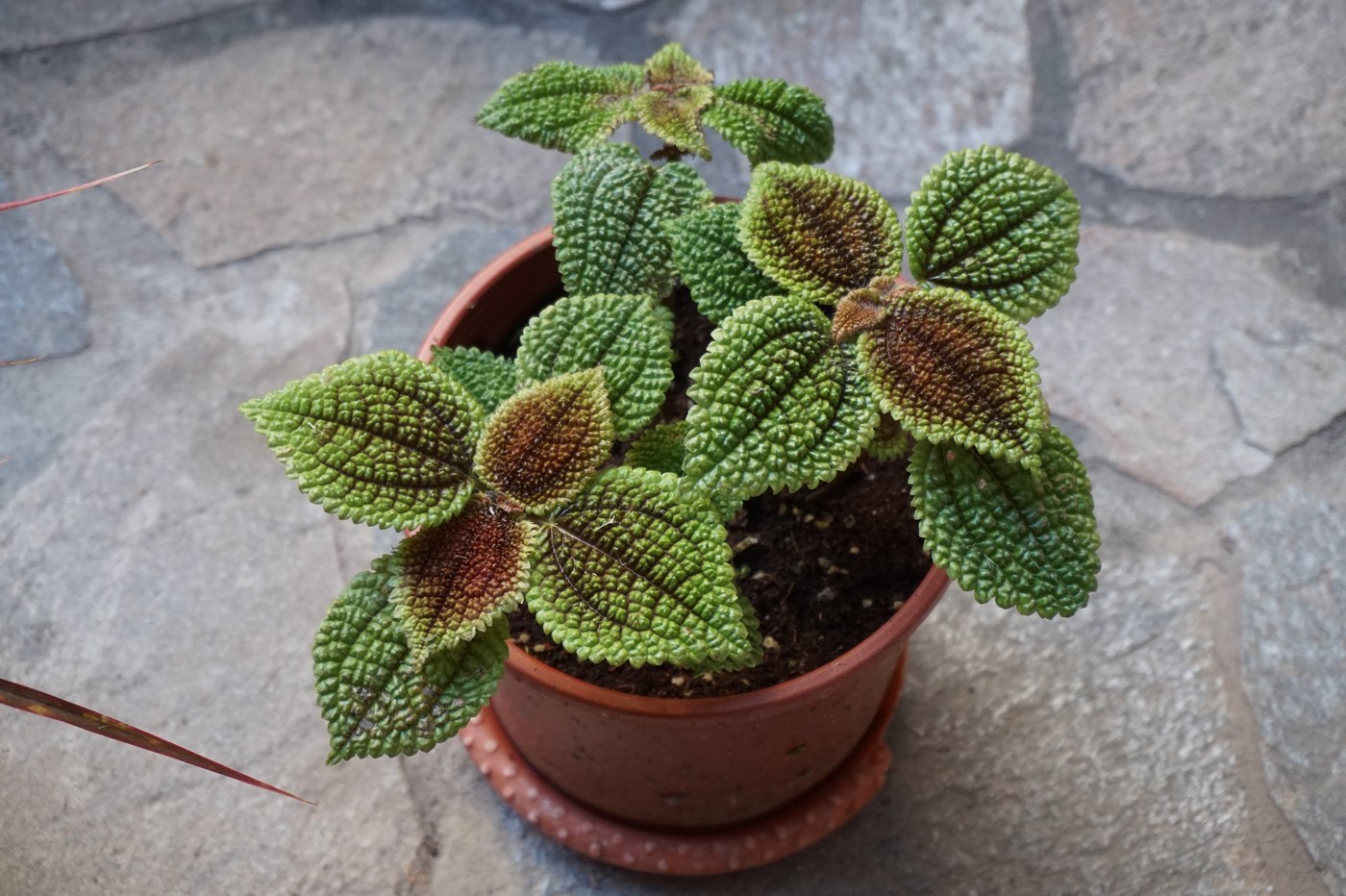
The Iron Cross Begonia (Begonia masoniana) is a rhizomatous begonia prized for its bright green, heavily puckered leaves stamped with a bold chocolate-brown cross-shaped pattern. It is a moderately demanding foliage plant that rewards steady humidity and a gentle hand with water.
Light
Give it bright, indirect light such as an east-facing window or a spot set back from a brighter one. Strong direct sun scorches the textured leaves and bleaches their color, while deep shade flattens the pattern and stretches the plant. Filtered light preserves the rich contrast of the cross marking.
Water
Water when the top inch of soil dries, then moisten evenly and let excess drain away. Keep water off the leaves, whose puckered surface holds droplets and invites fungal spotting and rot. This begonia resents both soggy soil and complete drought, so aim for lightly moist but never wet, and reduce frequency in the low light of winter.
Soil & Potting
Use a light, airy, fast-draining mix; a blend of potting soil with added perlite, orchid bark, and a little coarse sand suits its shallow rhizome. Rhizomatous begonias have small root systems, so choose a wide, shallow pot rather than a deep one, and always use drainage holes to prevent standing water around the rhizome.
Humidity & Temperature
High humidity, ideally 50 percent or more, keeps the foliage looking its best; dry indoor air causes crisp brown leaf edges. Boost moisture with a pebble tray, a humidifier, or grouping plants, but avoid misting the leaves directly. Keep temperatures warm and stable, roughly 65 to 75 degrees Fahrenheit, and shield the plant from cold drafts and sudden chills.
Feeding
Feed during spring and summer with a balanced liquid fertilizer diluted to half strength every three to four weeks. Iron Cross Begonias are light feeders, and too much fertilizer can burn the fine roots and scorch leaf margins. Stop feeding in fall and winter when growth slows.
Propagation
Propagate easily from leaf or rhizome cuttings. Lay a healthy leaf flat on moist mix and pin it down, or cut sections of rhizome each with a growth point and set them on the surface of damp soil. Keep warm, humid, and lightly moist, and new plantlets will form in several weeks.
Repotting / Pruning
Repot only every couple of years or when the rhizome crowds the pot edge, moving up just one shallow size. Trim away any dead or damaged leaves at the base to keep the plant tidy and improve airflow. Pinching back leggy growth encourages a fuller, more compact habit.
Common Problems & Pests
Overwatering and water sitting on the leaves are the main causes of trouble, leading to powdery mildew, botrytis, and rhizome rot. Watch for mealybugs tucked into leaf joints and for spider mites in dry air. Brown crispy edges point to low humidity, while pale, washed-out leaves signal too much direct sun.
Seasonal Care Tips
In spring and summer, provide steady warmth, bright indirect light, and regular light feeding as the plant grows actively. In fall and winter, cut back on water and stop fertilizing, keep it away from cold windows and heating vents, and maintain humidity against dry indoor heat.
Frequently asked questions
Why are the leaf edges turning brown and crispy?
Crispy brown margins almost always indicate low humidity or dry air from heating vents. Raise humidity with a pebble tray or humidifier, keep the plant away from drafts and radiators, and make sure the soil is not drying out completely.
Can I mist an Iron Cross Begonia?
It is better not to. The puckered leaves trap water and are prone to fungal spotting and rot when wet. Increase ambient humidity with a humidifier or pebble tray instead of misting the foliage directly.
What kind of pot is best?
Because it grows from a shallow rhizome with a small root system, use a wide, shallow pot with drainage holes rather than a deep one. This keeps the rhizome from sitting in excess moisture.
How do I propagate it?
Take leaf or rhizome cuttings. Pin a healthy leaf flat on moist mix or lay rhizome sections with a growth node on damp soil, then keep them warm and humid until plantlets form over several weeks.