Iron Cross Begonia
Begonia masoniana
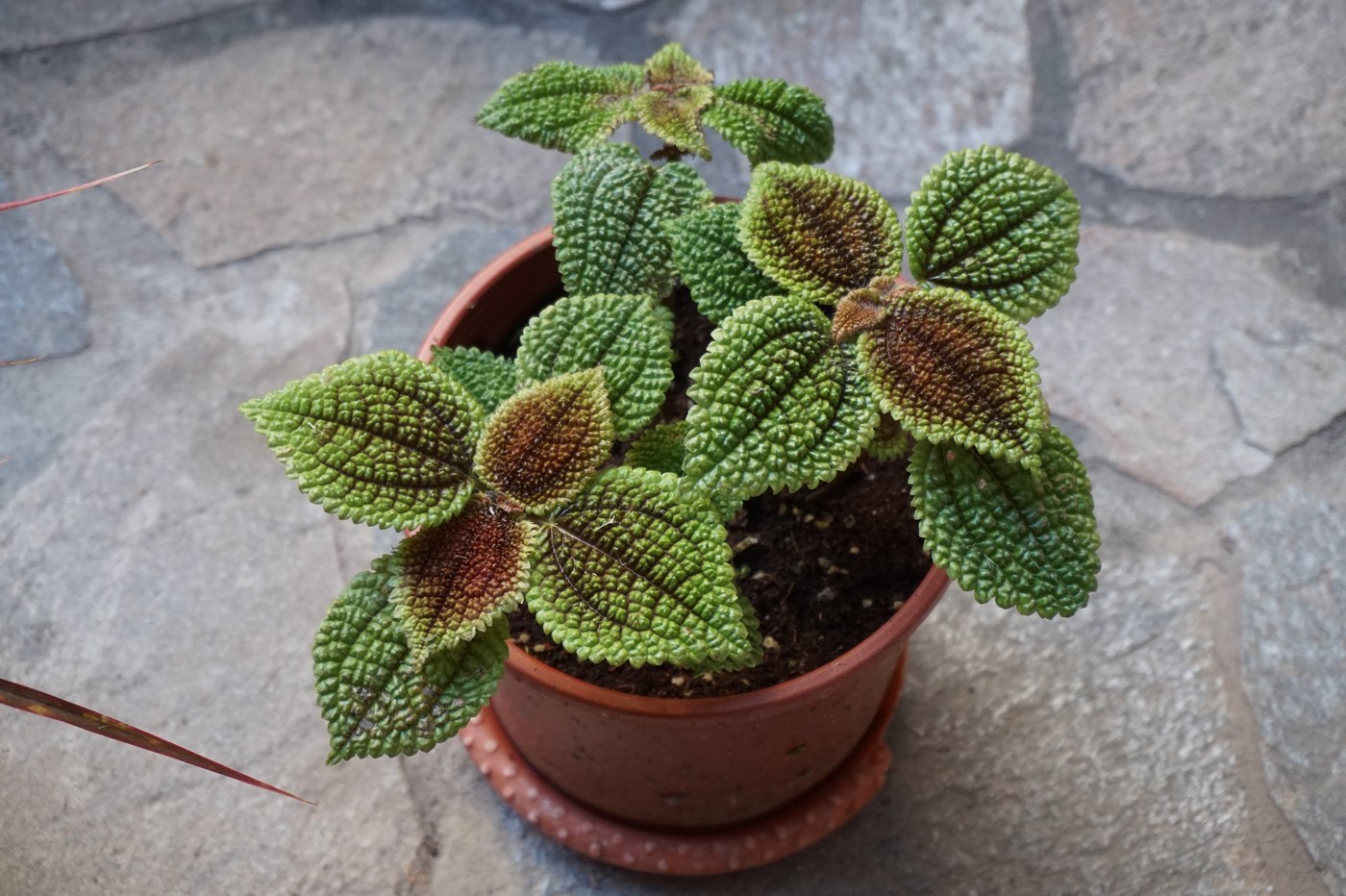
The iron cross begonia is a distinctive rhizomatous begonia grown for its puckered, bright green leaves marked with a bold dark brown cross-shaped pattern resembling an iron cross emblem.
- Light
- Bright indirect light
- Water
- When top inch dries; avoid wet leaves
- Difficulty
- Moderate
Got a plant like this?
Identify any plant from a photo, free.
Overview
The iron cross begonia is one of the most striking foliage begonias, named for the dramatic chocolate-brown markings radiating from the center of each leaf in a cross-like pattern.
Native to Southeast Asia, Begonia masoniana is a rhizomatous begonia grown purely for its textured, heavily puckered leaves rather than its modest flowers. It rewards careful watering and good humidity with bold, sculptural foliage.
How to identify it
Recognize it by:
- Leaves: large, heart-shaped, bright apple-green, heavily puckered (bullate) with a rough texture
- Markings: a bold, dark brown to purple cross or star pattern at the leaf center
- Hairs: surface covered in fine reddish bristly hairs
- Habit: low, spreading, rhizomatous clump
- Flowers: small, greenish-white, insignificant compared to the foliage
Care & growing
Light: Bright indirect light; direct sun bleaches and scorches the leaves.
Water: Water when the top inch dries; keep evenly moist but never soggy. Water at the soil line, keeping foliage dry to prevent mildew.
Soil: Light, airy, well-draining mix.
Temperature: 65-80F; appreciates humidity but dislikes water sitting on leaves.
Feeding: Diluted balanced fertilizer during the growing season.
Propagation: From leaf or rhizome cuttings, a classic technique for rhizomatous begonias.
Habitat & origin
Begonia masoniana is native to southern China and parts of Southeast Asia, growing in warm, humid, shaded forest conditions.
It is grown worldwide as a collectible foliage houseplant, valued for its unusual leaf pattern and texture.
Frequently asked questions
Why does it have a cross on the leaves?
The dark brown cross-shaped marking is a natural pigmentation pattern that gives the plant its name; it resembles a German iron cross emblem.
Should I mist the leaves?
Avoid wetting the puckered, hairy leaves, as trapped moisture invites powdery mildew. Raise humidity with a pebble tray instead.
How do I propagate it?
Take leaf cuttings or sections of rhizome; rhizomatous begonias root readily from both.
Why are the leaves so textured?
The heavily puckered, bullate surface and fine reddish bristly hairs are natural features that give the foliage its distinctive sculptural look.
Iron Cross Begonia guides
In-depth guides for identifying, growing, and caring for Iron Cross Begonia.
How to Care for Iron Cross Begonia
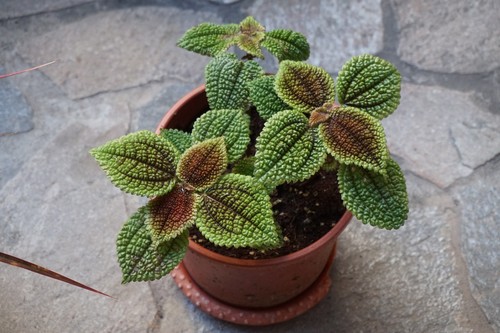
Grow the dramatic puckered foliage of Iron Cross Begonia with bright indirect light, high humidity, and careful watering.
Iron Cross Begonia Identification Guide
Identify the Iron Cross Begonia (Begonia masoniana) by the dark chocolate cross-shaped mark on each puckered, lime-green leaf and its rhizomatous growth.