
Ironweed Identification Guide
Identify Ironweed by its flat-topped clusters of intensely red-purple flower heads, tall tough stems, and willow-like toothed leaves in late-summer wet meadows.
Read the full Ironweed encyclopedia entry →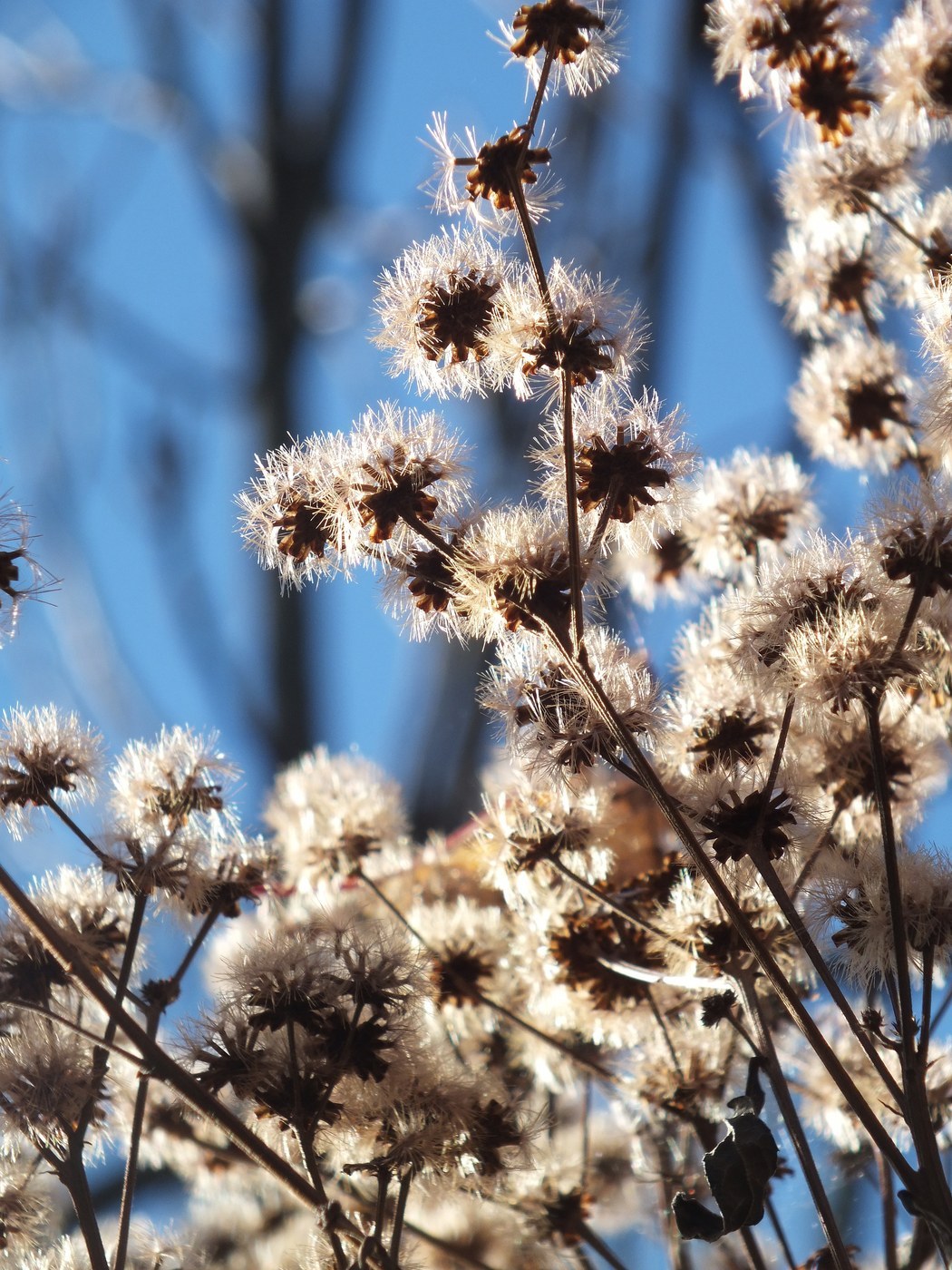
Key Identifying Features
Ironweed (Vernonia spp., such as V. noveboracensis and V. fasciculata) is a tall, tough late-summer perennial of moist meadows, named for its rigid "iron" stems and rusty old seed heads. Recognize it by:
- Loose, flat-topped to branched clusters of vivid reddish-purple (magenta) flower heads
- An exceptionally deep, saturated purple color unlike most other prairie flowers
- Tall, stiff, leafy stems 3-7 feet tall
- No ray petals, just fuzzy tufts of disk florets per head
Leaves & Stems
The stems are erect, sturdy, and often reddish-tinged, branching only near the top. Leaves are alternate, lance-shaped to narrowly elliptical (willow-like), 4-10 inches long, with finely toothed (serrated) edges and a pointed tip; they are dark green and somewhat rough. The undersides may be lightly hairy. The combination of tall tough stems + many narrow toothed leaves gives Ironweed a leafy, robust look before it blooms.
Flowers & Fruit
Each flower head is small but holds many tiny tubular disk florets (no rays), opening into a fuzzy purple tuft; dozens of heads form a branched, somewhat flat-topped cluster at the top. The color is a rich red-violet to magenta-purple, one of the deepest purples in the late-summer landscape. Bloom time is mid to late summer into fall (July-September). As seeds ripen, the heads turn rusty brown (another origin of the "iron" name). Seeds bear a tuft of purplish-brown bristles for wind dispersal. Butterflies and bees flock to the flowers.
How to Tell It Apart from Look-Alikes
- Joe-Pye Weed (Eutrochium): similar height and habitat but flowers are dusty pink-mauve, leaves are whorled (3-5 per node), not alternate, and clusters are more domed.
- Blazing Star (Liatris): purple but in a single tall spike, with grass-like leaves, not branched flat clusters.
- New England Aster: purple but with obvious ray petals (daisy-like); Ironweed has no rays.
- Thistles: spiny leaves and bracts; Ironweed leaves are toothed but not spiny.
The deep magenta-purple rayless tufts in branched clusters on tall toothed-leaf stems confirm Ironweed.
Where You'll Find It
Ironweed favors moist to wet ground in full sun: wet meadows, prairie swales, stream and pond banks, ditches, pastures, and floodplains across the eastern and central U.S. Livestock avoid its bitter foliage, so it often persists in grazed fields.
Quick ID Checklist
- Vivid red-purple (magenta) flower heads with no ray petals
- Branched, roughly flat-topped flower clusters
- Tall, stiff stems 3-7 ft
- Alternate, willow-like, finely toothed leaves
- Moist/wet sunny meadows and stream banks
- Blooms late summer; seed heads turn rusty brown
Frequently asked questions
How do I tell Ironweed from Joe-Pye Weed?
Both are tall late-summer wetland plants, but Ironweed has deep magenta-purple flowers and alternate, toothed leaves, while Joe-Pye Weed has dusty pink-mauve flowers and whorled leaves (3-5 per node). Color and leaf arrangement are the quickest cues.
Why is it called Ironweed?
The name refers to its tough, rigid stems that are hard to pull or break, and to the rusty iron color the seed heads take on as they mature in fall.
Does Ironweed have petals?
Not the daisy-like ray petals. Each head is made entirely of small tubular disk florets that form a fuzzy purple tuft, which distinguishes it from asters that have obvious rays.
Where does Ironweed grow?
In moist to wet sunny habitats such as wet meadows, prairie swales, stream and pond banks, ditches, and pastures throughout the eastern and central United States, where it is a favorite of butterflies.